Mastering Casey Powell’s Signature Behind-The-Back Lacrosse Shot
Considered one of the all-time greats in lacrosse, Casey Powell popularized the behind-the-back shot that has become his signature move. Though Powell did not invent the behind-the-back shot, he practiced it relentlessly and perfected it to a level few have matched. The key to nailing this unorthodox shot is timing – catching the defender off guard as you swing your stick around your back and whip it forward to launch the ball.
Timing and misdirection are everything. As you curl around the goal crease with a defender on your hip, sell the move like you’re about to roll back for a standard wind-up shot. But at the last second, swiftly bring the stick behind your back with an elbow flick while stepping forward, and release the ball before the defense knows what hit them. Powell makes it look effortless! But it requires expert stick handling and body control to get the mechanics down.
New players should not get discouraged. Even the great Powell needed years of practice on the blacktop as a kid to master this highlight reel shot. Start slowly and focus on the fundamentals. Work on your behind-the-back passing to get a feel for the movement. Gradually increase speed and power. Don’t neglect your off-hand either! Being ambidextrous gives you even more options to fake out defenders.
While flashy, the behind-the-back shot is also incredibly practical in game situations. If a defender overcommits, it’s the perfect counter. The sudden change of direction and concealment of the stick behind your body make it almost impossible to block. Goalies get caught off guard by the deceptive delivery. However, take high percentage shots first, and use the behind-the-back as a gadget play when the defense gives you an opening.
Casey Powell brought playground moves to the big stage and inspired generations of lacrosse players. But don’t let the legend’s skills discourage you. With practice and perseverance, any motivated athlete can master the behind-the-back shot and other lacrosse fundamentals. Keep grinding, have fun with it, and one day you might have your own signature go-to move!
Powell’s Ideal Lacrosse Shaft Flex and Curve

When selecting a lacrosse shaft, flex and curve are key factors that impact performance and personal preference. As one of the sports’ most iconic figures, Casey Powell has clear insights into his ideal shaft specs that can inform your gear choices.
For midfield playmakers like Powell, the optimal flex is a medium stiff shaft with a little bit of bend and snap. Powell favors the 30-70 flex range for his handles. This blend of stiffness and responsiveness helps him cradle and protect the ball, while still offering some “whip” for blistering shots and quick releases.
Keep in mind your position and style – attackmen and defenders may opt for more flexible shafts to boost handling and ball control, while goalies need maximum stiffness for blocking shots. For beginners, err on the side of flexibility as you develop proper mechanics and strength.
In addition to flex profile, Powell endorses a medium-high curve at the top of the shaft near the head. This allows for a deeper pocket and more ball control, while adding extra leverage for passing and shooting over distance. Too much curve, however, can reduce accuracy. Aim for 4-6 inches of curve – enough for enhanced mechanics without being cumbersome.
Personal preference rules when choosing flex and curve. Consider drilling multiple shaft options to determine what works best for you before permanently stringing a head. Grip the shaft, perform practice shots and cradles, and get a sense of the balance and maneuverability. The right flex and curve for a legend like Powell won’t necessarily match your style and needs.
Powell revolutionized offensive playmaking in lacrosse. But even the pros constantly fine-tune their gear. Be open to experimenting with shaft flex and curve profiles as you hone your skills. Don’t be afraid to go against the grain until you dial in equipment that accentuates your strengths on the field.
Casey Powell’s Rise to Lacrosse Greatness and Legacy
In the world of lacrosse, few names ring out like Casey Powell’s. His jaw-dropping highlights redefined offensive playmaking and positioned Powell as a superstar in the sport.
After learning the game on the streets of upstate New York, Powell took his tenacious practice mentality to Syracuse University. There he helped lead the Orange to three straight national titles in the early 1990s, cementing his legacy as one of the NCAA’s all-time greats.
Powell’s dazzling skills translated seamlessly into a lengthy pro career. He dominated in both the old Major Indoor Lacrosse League (MILL) and outdoor Major League Lacrosse (MLL), earning championship rings and MVP honors for his gravity-defying goals.
However, Powell’s impact stretched far beyond his on-field brilliance. His box office appeal brought unprecedented mainstream attention to lacrosse and drove participation growth. Powell also mentored young players and helped Native American communities reconnect with the sport’s indigenous roots.
Now retired, Powell remains one of lacrosse’s most revered ambassadors. He inspires new generations to push the sport’s possibilities with the same relentless work ethic that fueled his rise. Even decades later, lacrosse enthusiasts continue mimicking Powell’s signature moves on backyards and blacktops nationwide.
From his roots as an awestruck kid trying to emulate his idols, Powell grew into an icon who shaped the course of lacrosse. His electrifying skills, championships, and mainstream crossover appeal etched his name into the annals of lacrosse legend. But his lasting legacy will be the passion he ignited in others to work tirelessly and expand their limits in the sport they love.
What is the Regulation Size For Lacrosse Goals?
When playing lacrosse, the goal is quite literally where you want to be. But what are the proper dimensions for a regulation lacrosse goal?
According to official NCAA, NFHS, and FIL rules, lacrosse goals should measure 6 feet by 6 feet. The goal sits centered within a circular crease around the front with a radius of 9 feet.
The 6-by-6 foot sizing applies to both men’s and women’s lacrosse at all levels. This goal mouth size is ideal for the game’s dynamics, providing adequate shooting space while allowing properly positioned goaltenders the ability to protect the cage.
The goal frame consists of two vertical pipes spaced 6 feet apart, connected by a top crossbar sitting 6 feet above the ground. Pipe diameter must be between 1.5 and 2 inches. The backposts extend vertically from the crossbar and anchor to the ground at an angle no more than 10 degrees from perpendicular.
Nets attach to the back posts and side posts to capture made shots. Goal wrapping and mesh pockets are prohibited. Though not mandated, most goals today also utilize a bottom pipe to stabilize the frame and prevent bending.
While youth and casual play sometimes use smaller 4-by-4 foot goals, the 6-foot width is regulation for accredited lacrosse across all ages, skill levels, and genders. This size goal has withstood the test of time, challenging both shooters and goalies for generations.
So whether you’re an elite college athlete or backyard warrior, look for regulation 6′ x 6′ sizing when shopping for lacrosse goals. Mastering angles and placement within the consistent 6-foot frame will translate directly to higher levels of the sport down the road.
Lacrosse Stick Materials – Titanium vs Aluminum vs Composite

When constructing a lacrosse stick, manufacturers have several material options to balance durability, weight, and performance. Titanium, aluminum, and composite materials each have advantages and tradeoffs for lacrosse shaft construction.
Titanium lacrosse shafts provide an ultra lightweight feel for effortless dodging and shooting. Pure titanium has the highest strength-to-weight ratio of the three. However, its high expense limits titanium mostly to elite-level sticks. durability can also be a concern.
Aluminum brings a better balance of strength and affordability. 6061 aluminum alloy is a popular choice, offering a step up from basic alloys in stiffness, ductility, and corrosion resistance. The improved durability makes aluminum a great choice for high school and college players. But increased weight compared to titanium results in some loss of speed.
Composite shafts constructed from fibers suspended in epoxy resin matrices combine high strength and low weight. Materials like carbon fiber or Kevlar provide impressive rigidity and vibration dampening at just a fraction of metal’s weight. This makes composites popular in professional leagues. However, composite construction has higher costs and lacks the resilience of metal alloys.
For heads, both composites and titanium have become more common thanks to their stiff, yet flexible properties for ball control. But aluminum remains a staple head material due to cost considerations.
Personal preference and play style help determine ideal construction materials. For developing offensive players, composite and titanium provide exceptional quickness benefits. Defenders and goalies may favor more resilient but heavier aluminum. Just ensure the pocket and head are properly strung for optimal playability.
When engineered properly, all three materials can deliver high performance sticks. As skills progress, don’t be afraid to experiment with different lacrosse shaft and head constructions to unlock preferences that maximize strengths on the field.
Perfecting the Quick Stick Lacrosse Technique and Fundamentals
In lacrosse, the quick stick technique allows players to catch and release the ball in one fluid motion before defenders can react. Mastering the quick stick accelerates offense and keeps defenses guessing.
The keys to quick stick proficiency are soft hands and fast mechanics. As the ball approaches, relax your hands to “absorb” the pass with a cradle. Synchronize your catching and throwing motions to immediately whip the ball towards the goal in a single, silky movement.
Body positioning primes the quick stick. On passes from behind, rotate your torso back to “catch behind the ear” and step forward as you redirect the ball out front. When receiving laterally, open your stance upfield while catching and turning in one pivot.
Quick stick shots generate velocity through the entire kinetic chain. Utilize hip rotation and trunk torque for power. Keep wrists loose while snapping with controlled follow-through. Accuracy comes from upper body stability and firm bottom hand grip throughout the release.
Start slow without defenders to connect mechanics. Once catching and passing simultaneously feels natural, speed up the motions. Then incorporate quick sticks into dynamic drills that mimic game movements and angles.
A proficient quick stick makes defenders constantly wrong-footed. The immediate ball redirection doesn’t allow them to recover positioning. Goalies can’t anticipate shots as easily when releases come from unpredictable angles.
Like any technique, mastery requires repetition. But honing quick stick fundamentals will pay dividends with faster offense, improved passing lanes, and more high-percentage scoring. The quick stick turns any catch into an instant scoring threat.
Gripping the Lacrosse Stick – Key Elements for Control and Power
A lacrosse stick becomes an extension of a player’s hands. Proper gripping technique is essential for precise ball control, fluid cradling, and shooting power.
For optimum control, choke up on the stick to give maximum leverage. Thumbs should rest gently on the shaft, while the fingers and heel of the bottom hand grip firmly. Keeping the hands close together improves handling.
Grip tension matters. New players often squeeze too tight, causing rigid mechanics. Maintain a relaxed but secure clasp. This allows for quicker reactions and smoother passing and catching.
Hand positioning sets the foundation. Top hands control aim, while bottom hands provide strength. Keep top hands toward the middle of the shaft to enhance accuracy. Place bottom hands near the butt end for leverage in passing and shooting.
Staggering hands slightly boosts both power and precision. Spreading top and bottom hands 6-8 inches apart makes the stick an extension of the arms, creating extra whip.
During cradling, lightly grip with the top hand to let the shaft flex and absorb checks. Roll the shaft in the fulcrum of the bottom hand to keep the head hovering above the shoulders.
Experiment with grips to find what offers the best feel. Some players prefer two narrow grips, while others space their hands wide. Personalize to your strengths.
Proper hand positioning and grip pressure unlock a lacrosse stick’s full potential. Master the nuances of gripping fundamentals to take control of every pass, catch, and shot.
Increase Shot Power By Mastering Proper Lacrosse Shooting Form
Generating velocity on shots is critical for beating goalies. While strength helps, proper shooting form is the key to overpowering netminders with sizzling shots.
Load up and sequence the kinetic chain for maximum energy transfer. Start by stepping toward the target, rotating the back hip and shoulders. Next, drive with the legs to torque the core muscles.
As you whip the stick forward, snap your wrists while extending your lead arm for follow-through. This sequences power from the lower body up for optimal speed.
Keep the head outside the shoulders during the windup to widen your stroke. Allow the shaft to flex fully on the downswing for extra spring at release. Follow through toward your target.
For sidearm crank shots, sink into your legs and explode upward through the ball as you sweep across. Overhands and underhands rely more on trunk rotation and wrist snap.
Accuracy comes from head stability and eye discipline. Keep your head still and eyes locked on the target throughout the shooting motion. Develop repeatable mechanics that align the stick head each shot.
Master shooting on the run to threaten from anywhere. Sync your shooting motion to foot strikes while driving from the legs to maintain velocity on the go.
Refine form by video recording your shot and scrutinizing each phase. Small tweaks make a big difference. And don’t forget to strengthen your legs, core and shoulders in the weight room!
Conditioning Drills To Improve Lacrosse Speed and Endurance

Success in lacrosse requires athleticism to run the field and endure at a high level. Dedicated conditioning builds the stamina, speed, and strength for excelling in the sport’s dynamic movements.
Sprints are a staple for acceleration. Incorporate ladder drills with lateral shuffles and crossovers to improve change of direction. Add weighted vests or sled pushes for more resistance when training straight-line bursts.
Develop game-specific endurance with intense shuttle runs from goal to goal. Simulate shifts on attack and defense with short sprints and recovery jogs. Interval training with timed floor circuits or rowing machines also boosts cardiovascular capacity.
Plyometric exercises enhance power in the hips and legs for changes of direction. Lateral jumps, tuck jumps, and box jumps will prime explosive first steps. Ankles weights advance plyometrics by increasing resistance.
Don’t neglect strength training for the upper body and core. Pull-ups, push-ups, and planks fortify lacrosse’s key muscles. Unilateral moves with dumbbells prevent imbalance and injury.
Tailor programming toward game situations. As the season approaches, emphasize full-field running and position-specific drills. Mimic shifts on offense and defense in practice to maximize time on field.
Proper rest and nutrition support training. Hydrate and refuel completely between sessions. Get adequate sleep for recovery. With smart conditioning, you’ll have the physical edge to excel.
Customizing Your Lacrosse Stick – Pocket Styles, Sidewall Strings and More
One of the coolest parts of lacrosse is customizing your stick’s stringing and pockets to match personal style and maximize performance.
Pockets range from shallow to deep, depending on position and preference. Attackmen typically like quicker shallow pockets for quicker releases and passing. Deeper pockets help midfielders retain possession on checks. It’s all about optimizing control vs whip.
Mesh, synthetic, and traditional leather lacrosse heads each string up differently. Know the nuances of your head to achieve the desired pocket shape. Experienced stringers can also tweak pocket placement and channel depth.
Sidewall stringing fine-tunes hold and handling. Straighter strings offer more grip and control for big midfielders. More curved sidewalls create channels in the mesh for whip on shots and passes downfield.
Custom dyeing the stick head and shaft is another way to stand out. Dye sublimation processes allow for unique color fades and graphic prints. Match the pattern and colors to your team, or go wild with creativity!
If assimilating a new stick, don’t be afraid to tweak and experiment until the pockets feels like an extension of your hands. Break it in properly before games and keep it restrung as the mesh wears.
Your lacrosse stick is an expression of personal style. Take time to customize and care for your most important piece of equipment. With the right adjustments, your pocket can feel like magic.
Lacrosse Goalie Gear and Equipment Recommendations
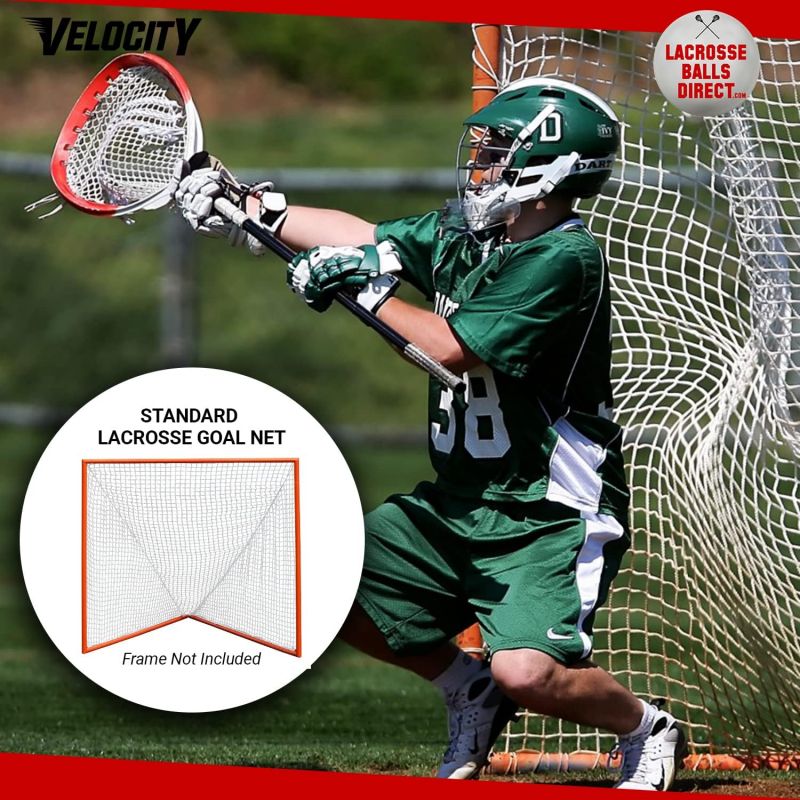
Goalies serve a crucial role as the last line of defense in lacrosse. To protect the net effectively, goalies require specialized protective gear and equipment.
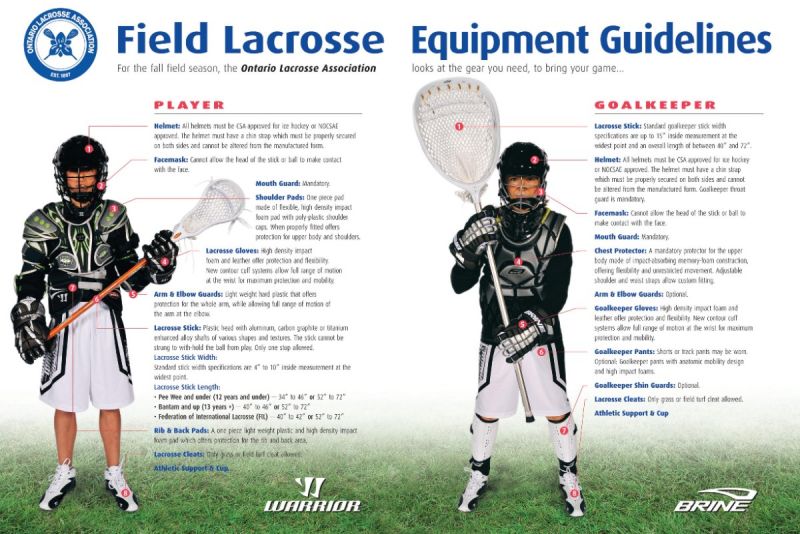
A goalie helmet with full face mask provides critical protection for the head from point blank shots. Look for larger helmets with extended side and chin padding. Throat protectors are also essential.
For the torso, goalies wear heavily padded chest protectors and specialized goalie-cut shoulder pads offering full arm mobility. Arm guards and gloves provide shielding on the hands and wrists.
On the lower body, goalie pants feature extra thick foam panels on the thighs, knees and hips where most shots impact. Cleated shoes provide traction for quick lateral movements across the crease.
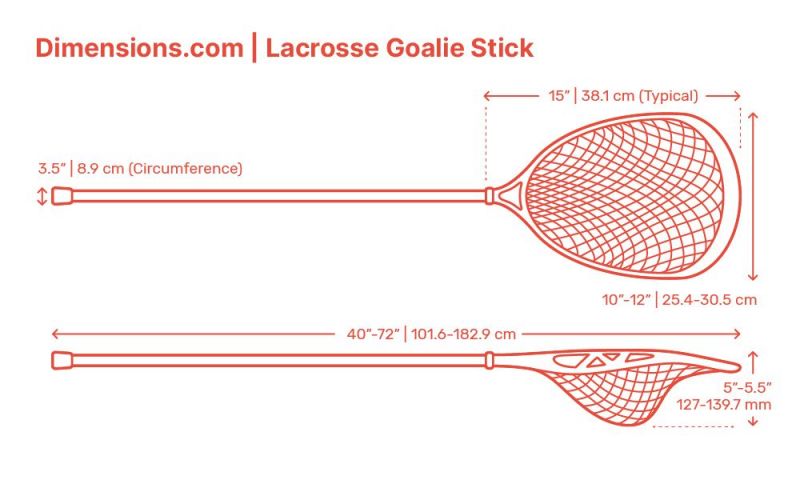
Unique goal sticks also differ from field sticks in shape and stringing to optimize blocking. Wider heads, deeper pockets and angled sidewalls knock down shots. Long shafts up to 72 inches control clears.
Beyond gear, goalies should keep multiple game balls on hand to find the best grips. Stay hydrated and loose between the pipes. And track shot locations to study shooting tendencies.
The right goalie equipment instills confidence to command the crease. Dial in gear over time as you determine preferences that enhance reaction time while providing full coverage against blistering shots.