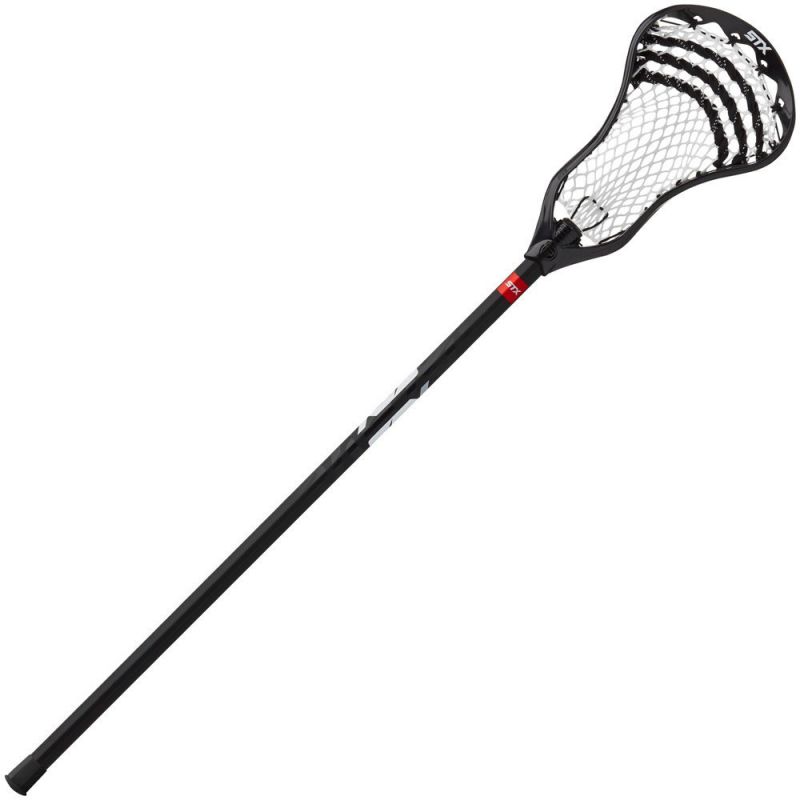
Choosing the Right Pocket Type for Your Position
As a women’s lacrosse player, one of the most important aspects of stringing your stick is selecting the ideal pocket type for your position and playing style. The pocket is the woven mesh part of the head where you carry and cradle the ball. The shape, depth, hold, and release of the pocket can dramatically impact your control, passing, catching, and shooting.
For attackers like midfielders and crease attackmen who handle the ball a lot, a medium to deep pocket with a nice bit of hold is ideal. You’ll want more ball control and the ability to cradle tightly in traffic. A pocket with a soft mesh and mid to high whip on passes will help you retain possession for quick sticks and feeds. Consider a channel or a modified channel if you take most of the draws.
In contrast, low pocket styles with minimal whip are better for defenders. A shallow pocket with a quick release helps you protect your stick on checks and move the ball quickly in transitions. Goalies also do best with a flatter pocket to make saves and clear quickly.
Think about if you want a pre-manufactured pocket style or a fully customized stringing job. Pre-made pockets like traditional or mark 2V profiles have set depths and shapes, while a custom stringing allows you to fine-tune the pocket exactly to your preference. Talk with your coach too for advice on the best pocket type for your strengths. With the right pocket for your position, you’ll have much better control and feel on the field.
Using Soft Mesh for More Hold and Control
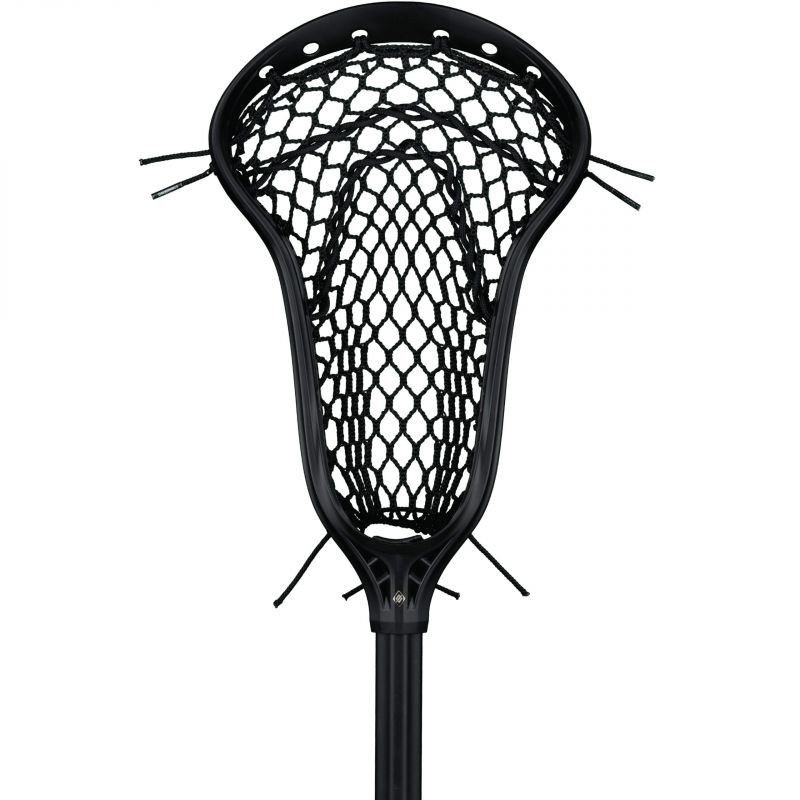
When stringing your women’s lacrosse stick, one of the key decisions is choosing the type of mesh to use in the pocket. For most players, a soft mesh is the best option for optimal hold and control of the ball.
Soft mesh is typically made out of materials like multi-strand nylon that have some give and flexibility to them. This allows the pocket to mold around the ball better and really grip it in the sweet spot. The softness also absorbs some of the impact on catches, helping improve ball retention.
Heavier soft mesh pockets tend to bag out with use into nice deep pockets for superior ball control. This allows you to cradle and carry the ball securely with less worry about gravity dislodging it. The depth of the pocket formed helps keep the ball tucked in the mesh during pokes and checks too.
In addition to hold, soft mesh generates good whip on passes and shots. Whip refers to the flex and launch imparted on the ball during its release. Superior whip gives you better passing accuracy and more velocity on shots. With soft mesh, you get a nice channel and pocket movement on your follow through after passing or shooting.
While some very elite players can utilize hard meshes for a quick release, most women’s lacrosse athletes will benefit more from the control of a soft mesh. The right soft mesh helps you hold your stick at the ideal angle, generates spin on shots, and allows you to cradle smoothly while maneuvering around defenders.
Consider mesh made of materials like multi-strand nylon, polyester or traditional leathers and rawhide if you want the best blend of grip, hold and whip. Getting the mesh type right is crucial, as your pocket is the main point of control between you and the ball.
Adjusting Stringing Based on Your Skill Level
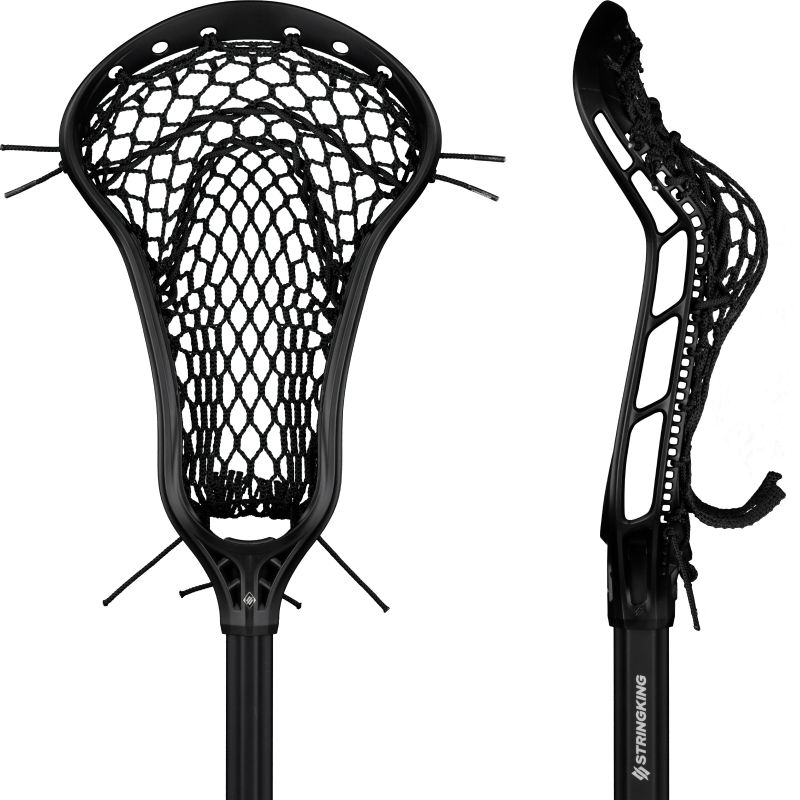
When stringing a women’s lacrosse stick, it’s important to tailor the pocket and stringing to your current skill level and abilities. Advanced players can use more complex stringing to maximize ball control, but beginners will want an easier pocket to learn with.
For new women’s lacrosse players, the ideal beginner pocket has a bit more depth and hold to help control the ball while cradling and carrying. Soft mesh with minimal whip supports better catching as you build hand-eye coordination. A basic mid or high pocket with simpleOne nylon gives you a larger sweet spot to receive passes.
Intermediate players looking to advance their stick skills and handling can begin experimenting with lower pocket placements and increased whip. Pulling the top string tighter lowers the pocket and narrows the sweet spot for faster passing and shooting. More defined channels with enhanced whip improve ball speed and accuracy.
Advanced women’s lacrosse athletes who want maximum ball control and finesse can string pockets with intricate shooting strings, unique sidewall patterns, rolled top strings, and custom whip. Very elite players may even remove their bottom string or use hard mesh for lightweight sticks with exceptionally quick releases.
No matter your skill level, focus on getting the right depth and pocket shape first before tweaking other areas. If you over-string as a beginner, it can actually hurt your development and retention. Don’t be afraid to continually modify your stringing as you improve either. Your pocket profile should evolve with you over time as you master new techniques.
Talk with coaches and experienced players for recommendations on optimal stringing for your abilities too. With the right adjustments tailored to your skills, you’ll notice major improvements in your handling and performance.
Focusing on the Right Whip and Release
When stringing a women’s lacrosse stick, finding the ideal balance of whip and release is crucial for optimal performance. Whip refers to the flex and launch imparted on the ball during shooting or passing, while release focuses on the quickness of the ball leaving the pocket.
In general, you want sufficient whip to generate speed and spin on your shots and passes, but not so much that the ball rattles around in the pocket. Controlled whip gives you accuracy. Too much can make the ball launch unpredictably. For quicker releases, tie the top string tighter and use less shooting string.
Midfielders benefit from more of a medium pocket with decent whip for cradling and quick sticks in traffic. Attack players can go deeper with a little extra whip for better ball control around the crease. Defenders need a flatter pocket and minimal whip for fast clears.
Test your pocket whip and release with different types of throws. Overhand shots should have a tight spiral and speed. Quick sticks should launch smoothly and hit their target. Clears need to spring out on target quickly.
If you notice the ball wobbling or deflecting off-target frequently, your whip may be too high. If the ball barely comes out on passes or gets stuck, your pocket may be too stiff without enough give.
Make adjustments like loosening or tightening top strings, adding or removing shooting strings, or switching mesh types. It can take some trial and error to balance hold with release. Don’t be afraid to continually tweak your whip and channel for ideal performance.
Overall, focus on getting the right mix of defined pocket, controlled whip, and quick release tailored to your position and style of play. This will give you the best handling and consistency when cradling, passing, and shooting the ball.
Making Sure the Pocket Depth Matches Your Style
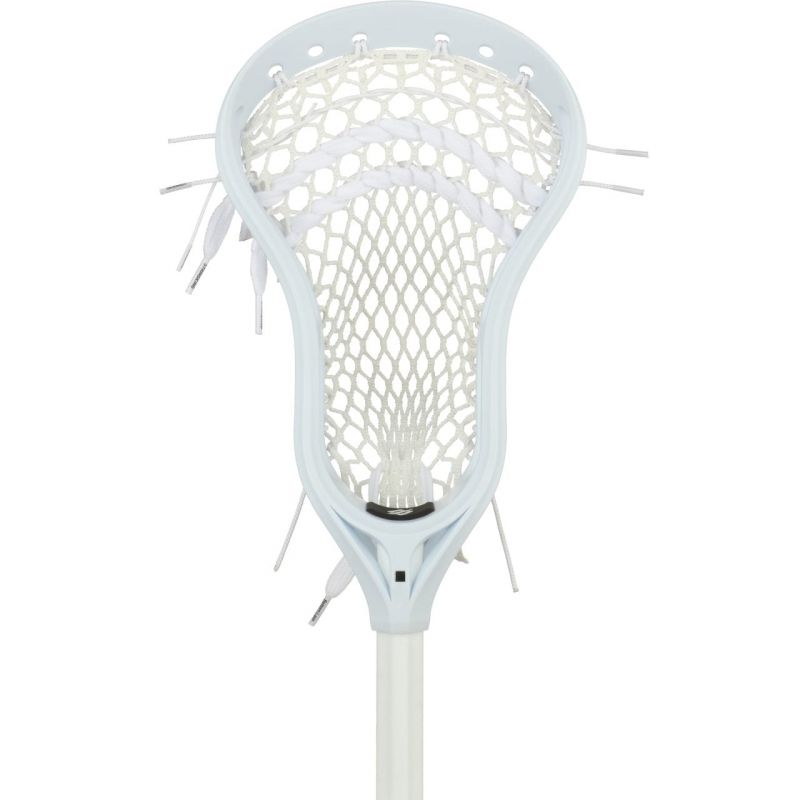
When stringing a women’s lacrosse stick, one of the most critical factors is setting the ideal pocket depth for your playing style and position. Pocket depth hugely impacts ball control, release, and handling.
For most offensive players, a medium to deep pocket depth is preferable. Deeper pockets allow superior ball retention for cradling and carrying in traffic. A deeper pocket bags out with a nice channel, providing enhanced whip on passes and shots too.
In contrast, shallower low pocket depths give you an exceptionally quick release, which is great for defenders and transition players. The ball springs out quickly from a tight top string and flat mesh. Goalies also need a lower pocket to make saves and start the clear.
To set pocket depth, adjust the top string tightness, mesh, and sidewall length. Tightening the top string pulls the diamonds of the mesh together, lowering pocket depth. Some meshes, like soft leathers, bag out more naturally than stiff nylons too. Shorter sidewalls raise up the pocket placement.
Make sure to test the pocket depth with a ball inserted. When cradling, a medium depth should keep the ball about halfway up the head above the midline. If the ball sinks too deep or sits high, readjust the depth.
Finding your ideal pocket depth takes experimentation. Don’t be afraid to continually modify your strings and sidewalls as you dial in what works best. With the right pocket built for your style, you’ll notice major improvements in handling, control and confidence on the field.
Considering How Tight to String the Channel
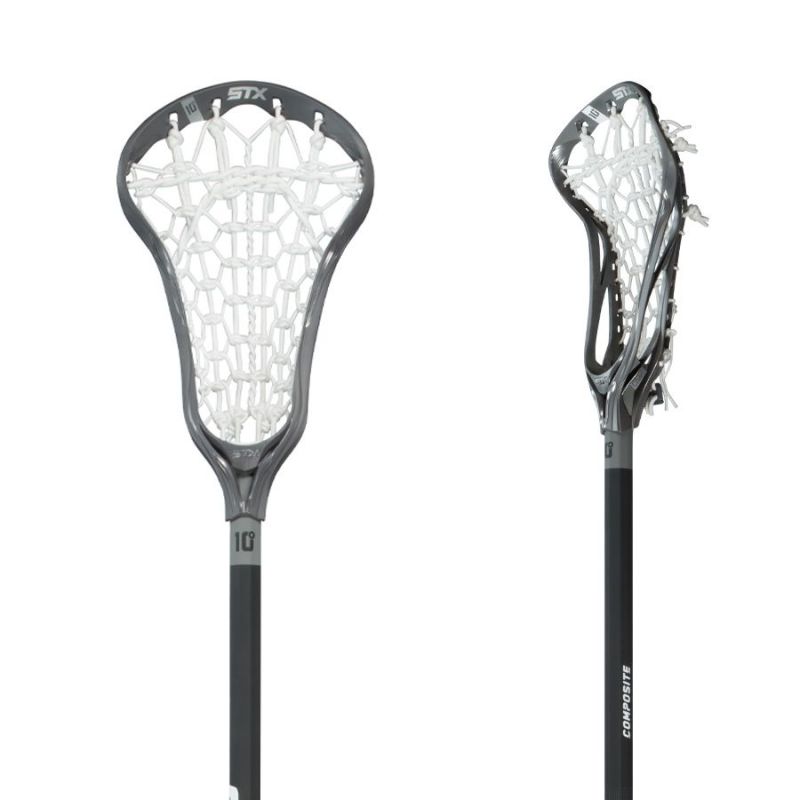
When stringing a women’s lacrosse stick, one key factor is determining the ideal tightness for the channel. The channel is the woven area running down the center of the pocket formed by the shooting and cross strings.
In general, you want the channel to be well-defined but not too pinched. Some channel space allows the ball to settle deep into the pocket for superior control while cradling, catching passes, and protecting the stick on checks.
However, too tight of a channel can restrict ball movement, preventing smooth rolls on catches or impairing passes and shots. The ball should be able to move freely within the channel without getting lodged in the strings.
To set channel tightness, consider the number and pattern of shooting strings used. Shooting strings run horizontally across the head. More strings typically tighten the channel, while fewer create more open space.
The interlocking of the shooting strings with the cross lace also impacts tightness. Interlocks like a triangle top or 1×1 box pull the diamonds together more. Some players also use a U-shooter string down the center for extra hold.
Test the channel by throwing different pass types to get a feel for hold and release. Quick sticks and feeds should roll out smoothly without hesitation. Use shooting string adjustments to optimize the channel for your style of play and position.
Finding your ideal mid-point between a defined channel and open pocket takes trial and error. Don’t settle on the first stringing—continue making small tweaks as you dial in what works. With the right amount of channel tension, your handling will be effortless.
Choosing Sidewall Stringing for Extra Hold if Needed
When stringing a women’s lacrosse stick, additional sidewall stringing is an option for players wanting extra hold and stiffness in their pocket. Sidewall strings help define the shape of the pocket and stabilize the channel.
Typically, a single nylon or leather runner along each sidewall from top to bottom is standard. This single sidewall creates a nice natural pocket shape. However, some players, especially on defense, like to add double runners down each side.
Double sidewalls reinforce the pocket, adding structure and preventing gravity from pulling the pocket out of shape. The extra string helps keep the channel and diamonds tight for players who want superior ball retention and minimal whip.
Another sidewall stringing method is using a locking string. A locking string interlocks the sidewall to each horizontal shooting string, almost stitching them together. This makes the entire pocket very rigid with practically no break-in needed.
When installing double sidewalls or locking strings, you may need to balance out the extra stiffness by using softer shooting strings or more of an open sidewall interlock pattern. Test different setups to prevent an overly stiff channel.
In the end, choose single or double sidewalls based on your desired pocket structure and hold needs. Let your playing style and position guide you. With tuned sidewalls and shooting strings, you’ll achieve great pocket performance.
Picking Shooting Strings for Power and Accuracy
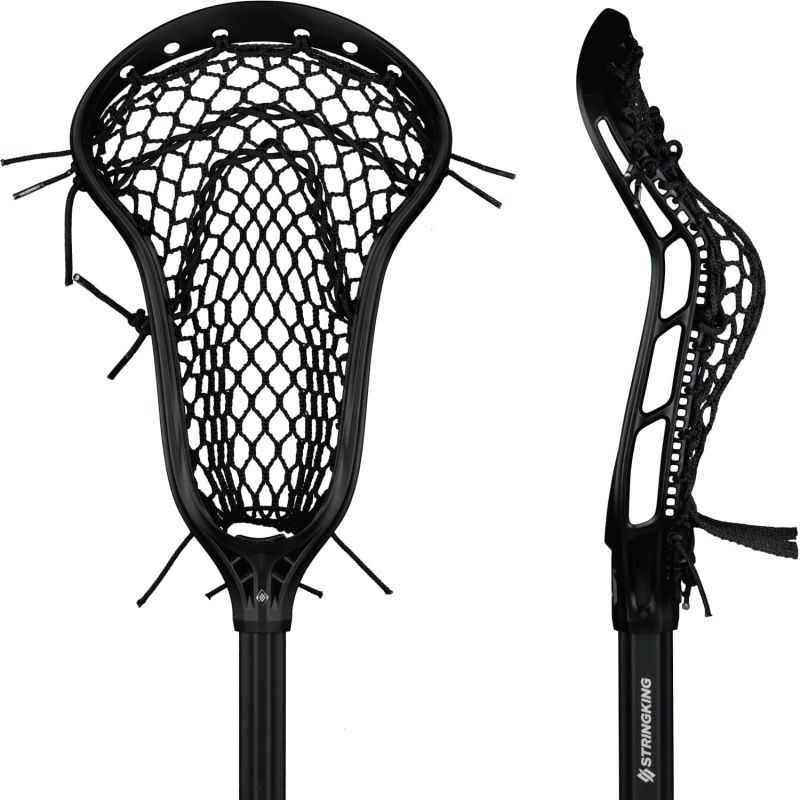
When stringing a women’s lacrosse stick, one of the most important decisions is selecting your shooting strings to optimize power and accuracy. Shooting strings are the horizontal laces that run along the width of the head.
In most set ups, nylon shooting strings are used to create a crisp channel and defined pocket shape. Nylon provides stretch and rebound to add velocity to shots. A double set of nylons interlocked tightly generates substantial whip and control.
For even more responsiveness, some players use shooting strings made of materials like parachute cord or wax-coated strings. These specialized shooters maximize energy transfer for truly maximized shot speed and power. The stiffness gives you instantaneous rebound as you follow through.
You can also use shooting strings in different configurations to improve accuracy. Placing a u-shaped shooter along the center of the pocket tightens the channel for more consistent throwing. Some players weave multiple angled lace triangles across the top for precision.
Test out different shooting string types and patterns during your stringing process. Evaluate your passing and shooting consistency to determine what works best. It may take some tuning to find your ideal setup for power vs. precision.
With the right combination of shooting strings dialed in, you’ll notice dramatic improvements in both your shot speed and location consistency. Take the time to optimize these details for next-level performance.
Using a Straight or X Interlock for Consistency
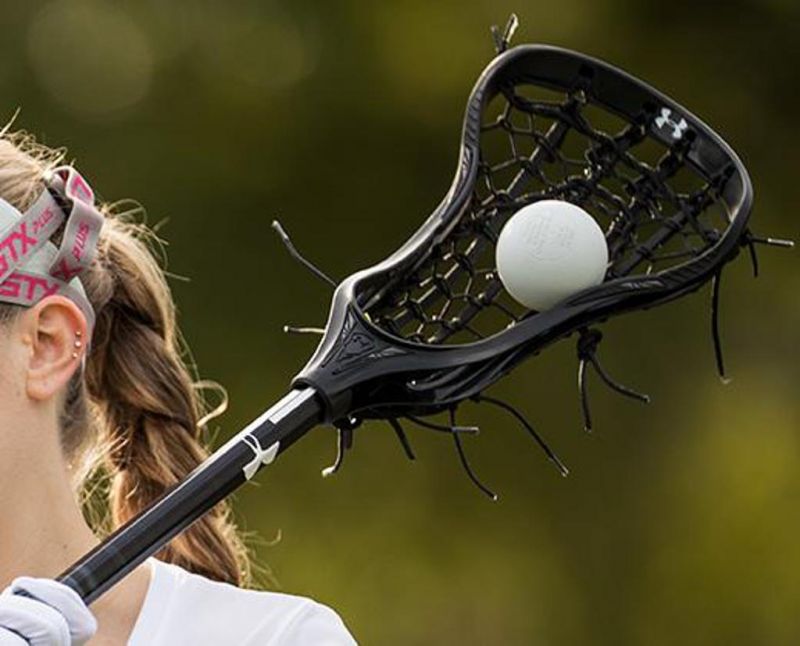
When stringing a women’s lacrosse stick, the interlock is the crucial crossover point where the shooting strings are woven together with the cross-lacing at the top of the pocket. The interlock greatly impacts overall pocket structure and performance.
Two common interlock patterns are the straight (or 1×1) and the X. In a straight interlock, each shooting string simply crosses over once with the adjacent cross lace. This creates defined diamonds and a consistent channel shape optimal for beginners.
An X interlock has each shooting string crossover twice in an X pattern with the cross lacing. This pulls the diamonds tighter for extra hold and ball retention. The X forces the pocket into more of a pronounced sweet spot.
Generally, the 1×1 straight interlock will give you the most natural throwing motion out of your stick. It allows the ball to easily roll out on feeds or shots. The X can grip the ball too much, slowing release for some players.
Test throwing different pass types like quick sticks, feeds and clears to determine what interlock gives you the most smooth consistent release. Grab a teammate and try catching passes in motion to evaluate differences.
In the end, maximize your accuracy by selecting a straightforward interlock like the 1×1 or basic X. Intricate woven interlocks may look cool but can impair throwing mechanics. Keep the interlock simple, and let your hands do the work.
Adding a U or V Shooter for Finesse Shots
When stringing a women’s lacrosse stick, adding a U or V-shaped shooting string is a great way to enhance finesse and touch on shots. These specialty shooting strings run horizontally across the center of the pocket.
A U-shooter utilizes a doubled-up lace threaded through the middle diamonds in a U shape to tightly close the center channel. This focuses the pocket’s hold right in the sweet spot for superior control. It allows you to place shots with precision.
The V-shooter uses a single-looped string woven in a V-pattern down the center. It has a similar channel-tightening effect but with slightly more flex and rebound than the U. The V is optimal for picking corners on shots.
Both the U and V work by providing extra tension and rigidity right where you want it—the heart of the pocket. This allows you to add finesse, go high to low, or change plane on your shot with ease.
Consider adding a U or V if you take the tough angle shots or find yourself shooting on the run often. They are also great for quick stick situations in tight space when you need supreme accuracy.
A U or V paired with a soft mesh pocket gives you the ideal mix of control and responsiveness. Take your shooting prowess to the next level with this custom stringing tweak for precision shooting.
Getting the Top String Right for Pocket Shape
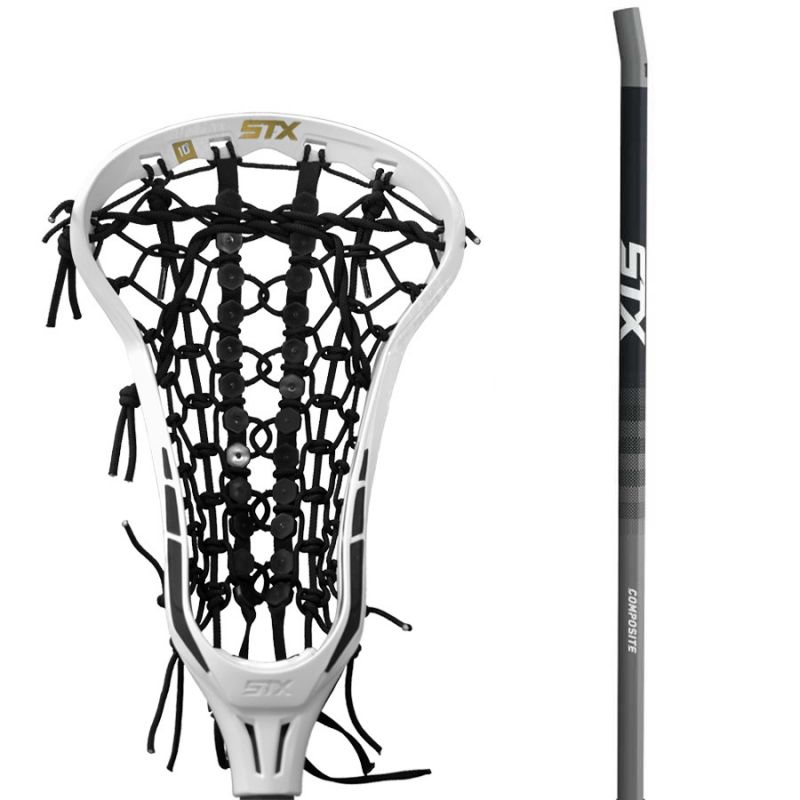
When stringing a women’s lacrosse stick, properly installing the top string is crucial for dictating overall pocket shape and ball control. The top string runs horizontally along the very top of the head.
In general, the top string should be strung tightly from sidewall to sidewall in order to pull the diamonds and sidewalls together. This closes the top edges of the mesh to create a defined pocket shape.
Tightening the top string also allows you to control pocket depth and placement. Tighter top strings produce shallower pockets, while looser top strings result in deeper pocket bags.
Ideally, the stringing should create a slight channel shape in the mesh, with the lowest point running through the center diamonds. This helps direct shots and passes straight out of the stick.
Be sure to interlock the top string correctly with the shooting strings as well using an X, 1×1, or another standard pattern. This further defines the pocket structure.
You can experiment with special top string methods too like rolling, which folds the mesh over the top string. Rolled top strings reduce rebound for extra ball control.
Take your time to get the top string installation perfect. This one piece sets the foundation for the entire pocket shape and performance. With a tuned top string, you’ll have excellent ball control.
Not Neglecting the Bottom String for Ball Retention
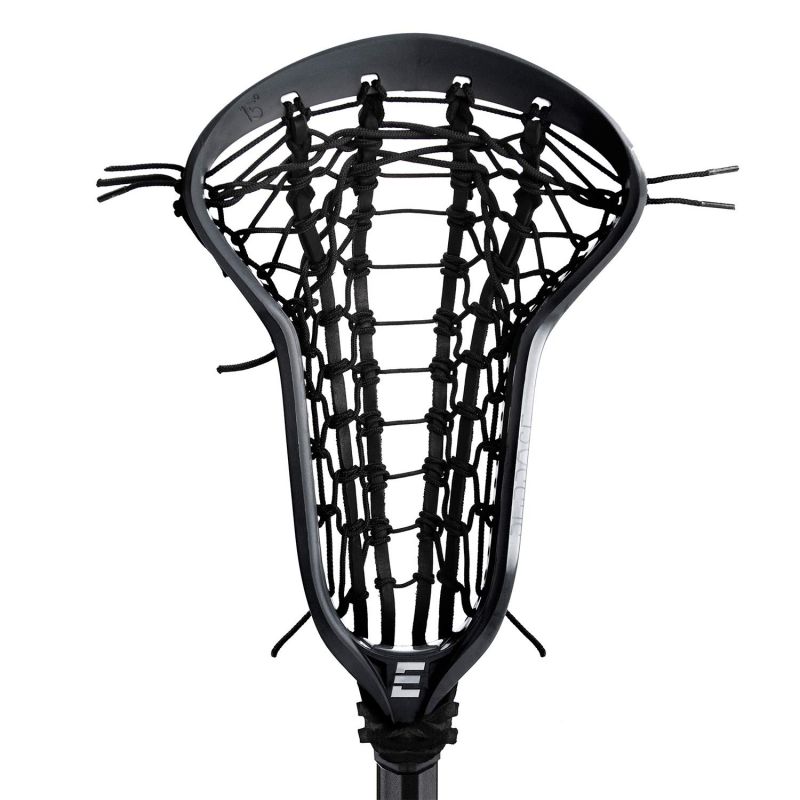
When stringing a women’s lacrosse stick, the bottom string is an important piece that helps retain the ball in the pocket while cradling or maneuvering around defenders. The bottom string runs horizontally along the bottom of the head.
Typically, nylon cord or leather material is used to tie off the bottom edges of the mesh to keep the ball from falling out. Some players will use fishing line or hockey lace for minimal weight.
The bottom string should be pulled tight enough so the ball sits snugly along the base of the pocket, but not so tight that the pocket becomes too stiff. You want some gentle give when cradling.
Less experienced players benefit from a tighter bottom string for added security as they learn to cradle. As you improve, you may loosen up the bottom string slightly for more freedom of movement.
Be sure to test the tightness by cradling and doing stick tricks like the can opener. If the ball falls out, tighten up the bottom string. If cradling feels too restrictive, loosen it.
Proper installation of the bottom string ensures the ball stays in the pocket when you need it most. Don’t forget this important finishing piece. With it tuned right, you’ll have confident control.
Adjusting Sidewall Length to Fine-Tune Pocket Depth
When stringing a women’s lacrosse stick, the length of the sidewalls is an important adjustment for controlling overall pocket depth and ball hold. Sidewalls are the vertical leather or nylon pieces running from the top to bottom of the head.
In general, shorter sidewalls will produce a shallower pocket, while longer sidewalls allow a deeper pocket to form. Sidewall length impacts how far the mesh can bag out.
For most midfielders and attackers, longer 10-12 diamond sidewalls are used. This extra length helps generate a nice deep pocket for superior cradling and ball control. Defenders usually opt for shorter 7-9 diamond sidewalls for quick ball release.
Make sure to string the sidewalls with even tension. Gathering more slack on one side can lead to an off-center tilted pocket. Use a double honesty stick or pliers to pull them uniformly taut.
Test sidewall length by cradling and retaining the ball during poke checks. If the ball sinks too deep or rattles around, shorten the sidewalls. If the ball feels too exposed, go longer.
Dialing in the right sidewall length for ideal pocket depth does take trial and error. Don’t settle on your first stringing. Making length adjustments is an easy way to customize pocket performance.
Using Double Sidewalls for Extra Stiffness if Desired
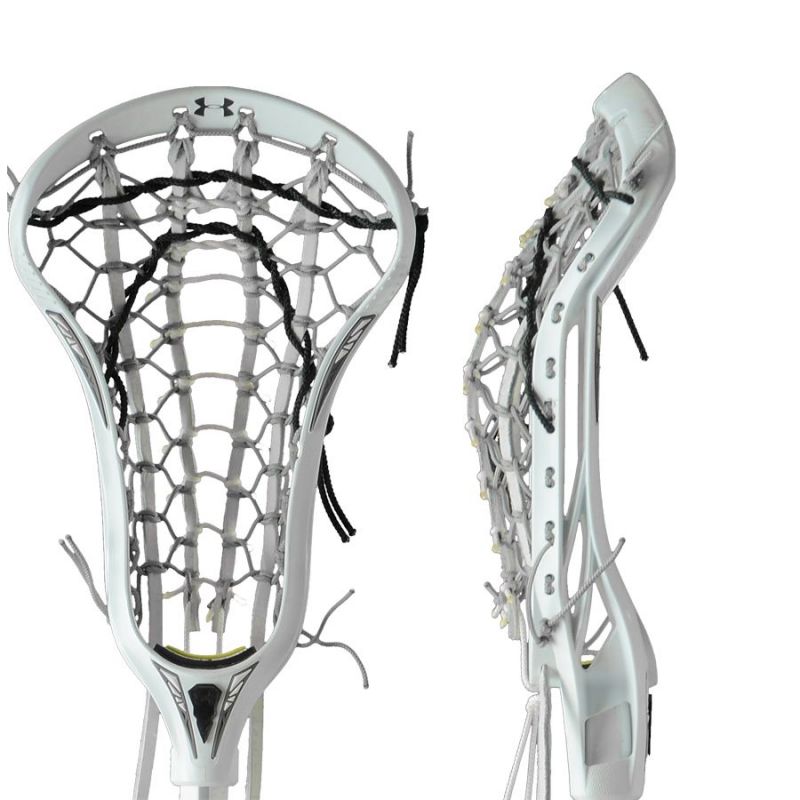
When stringing a women’s lacrosse stick, some players like to use double sidewalls for added pocket stiffness and structure control. Sidewalls are the leather or nylon strings running vertically from the top to bottom of the head.