Page not found – Wanderful World of Travel
We didn’t find the posts for that URL.
Latest Posts
Fontana Dam is the highest dam east of the Rocky Mountains and is an impressive architectural and engineering marvel that you definitely want to see in North Carolina! Part of …
Read More about How to Visit Fontana Dam (+ 30 Fun Facts!)
The Historic Tapoco Lodge in Robbinsville, North Carolina is a elegant rustic retreat that feels like a National Park lodge. Located on the Cheoah River, the 120-acre resort offers lodging, …
Read More about Tapoco Lodge Review (Rustic Elegance in Robbinsville, NC)
Robbinsville, North Carolina is an uncrowded mountain community located in the heart of one of the most popular outdoor adventure areas in the entire state. Scenic drives, waterfalls and plentiful …
Read More about Ultimate Guide to Robbinsville, North Carolina (Graham County)
Apple picking in Hendersonville, NC is one of the most anticipated events in the area from late summer to late fall. Henderson County grows around 80% of North Carolina’s apples, …
Read More about Ultimate Guide to Apple Orchards in Hendersonville, NC + Map (2023)
Wondering what to take to Universal Studios for the best day ever? Before you leave for the parks, you want to make sure you have all of the vacation essentials …
Read More about What to Pack for Universal Studios: Free Printable Packing List for Universal Orlando
There is a lot of great food to be found at Universal Orlando! Our Universal Studios Orlando Dining Guide will help you narrow down the choices in both theme parks …
Read More about Best Universal Studios Orlando Dining for 2023
The Wizarding World of Harry Potter is definitely the most popular place in all of Universal Orlando Resort in Florida. Harry Potter land at Universal Studios is an immersive experience …
Read More about Ultimate Guide to Wizarding World of Harry Potter at Universal Studios Orlando: 2023
While on vacation, you might want to indulge in some cool and refreshing alcoholic drinks to beat the heat in the theme parks. Does Universal Studios sell alcohol for drinking …
Read More about Ultimate Guide to Universal Studios Alcohol Rules
Dole Whip has been a fan favorite at Walt Disney World for decades. There are multiple places across the WDW Resort where you can find the pineapple soft serve ice …
Read More about Where to Get a Dole Whip at Universal Studios in 2023
Is Carowinds cashless? As many theme parks stop accepting paper money, you may be wondering does Carowinds take cash? In this guide, we will tell you all of the options …
Read More about Does Carowinds Take Cash? Payment Options for 2023
Page not found – Wanderful World of Travel
We didn’t find the posts for that URL.
Latest Posts
Fontana Dam is the highest dam east of the Rocky Mountains and is an impressive architectural and engineering marvel that you definitely want to see in North Carolina! Part of …
Read More about How to Visit Fontana Dam (+ 30 Fun Facts!)
The Historic Tapoco Lodge in Robbinsville, North Carolina is a elegant rustic retreat that feels like a National Park lodge. Located on the Cheoah River, the 120-acre resort offers lodging, …
Read More about Tapoco Lodge Review (Rustic Elegance in Robbinsville, NC)
Robbinsville, North Carolina is an uncrowded mountain community located in the heart of one of the most popular outdoor adventure areas in the entire state. Scenic drives, waterfalls and plentiful …
Read More about Ultimate Guide to Robbinsville, North Carolina (Graham County)
Apple picking in Hendersonville, NC is one of the most anticipated events in the area from late summer to late fall. Henderson County grows around 80% of North Carolina’s apples, …
Read More about Ultimate Guide to Apple Orchards in Hendersonville, NC + Map (2023)
Wondering what to take to Universal Studios for the best day ever? Before you leave for the parks, you want to make sure you have all of the vacation essentials …
Read More about What to Pack for Universal Studios: Free Printable Packing List for Universal Orlando
There is a lot of great food to be found at Universal Orlando! Our Universal Studios Orlando Dining Guide will help you narrow down the choices in both theme parks …
Read More about Best Universal Studios Orlando Dining for 2023
The Wizarding World of Harry Potter is definitely the most popular place in all of Universal Orlando Resort in Florida. Harry Potter land at Universal Studios is an immersive experience …
Read More about Ultimate Guide to Wizarding World of Harry Potter at Universal Studios Orlando: 2023
While on vacation, you might want to indulge in some cool and refreshing alcoholic drinks to beat the heat in the theme parks. Does Universal Studios sell alcohol for drinking …
Read More about Ultimate Guide to Universal Studios Alcohol Rules
Dole Whip has been a fan favorite at Walt Disney World for decades. There are multiple places across the WDW Resort where you can find the pineapple soft serve ice …
Read More about Where to Get a Dole Whip at Universal Studios in 2023
Is Carowinds cashless? As many theme parks stop accepting paper money, you may be wondering does Carowinds take cash? In this guide, we will tell you all of the options …
Read More about Does Carowinds Take Cash? Payment Options for 2023
Free Thanksgiving Card Maker
-
Select a template and customize it
-
Download, share or order a print of
-
Printed products will be delivered to your home
Express gratitude in style
We have prepared thousands of professional templates, objects and images for you to make your designs bright and beautiful.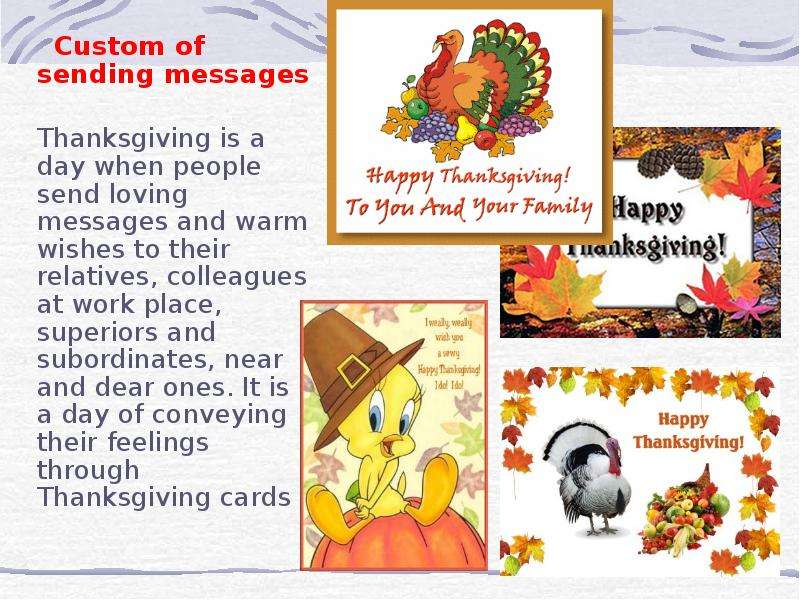 Insert a family photo or a funny caption, and the invitation or greeting card will become even more original.
Create your postcard
All necessary design elements
Thanks to the user-friendly VistaCreate graphical platform, you can create cute custom postcards online. Share the e-cards on social media immediately, or download them to print or email.
Templates
Objects
Personalize
Download
Custom templates
A great reason to say thank you: with our professional templates, making cards for any occasion is a real pleasure. All templates and design objects are editable, so you can easily create completely original designs.
Select a template
Animated Design Objects
Drag and drop the elements you like onto the canvas and edit according to your chosen theme and style. Design Thanksgiving cards with thousands of fonts, stickers, and more.
View Design Items
Editable Design Elements
The possibilities are endless! With our versatile design tools, you can tailor any template or design object to fit any theme and size of your postcard.
Personalize designs
Upload your own designs
The template is just a starting point. You can upload your own designs and snapshots to the designer to make custom photo postcards, or alternatively open a blank canvas and create a design from scratch.
Create Design
Print Option
Whether you’re creating your design from a pre-made template or from scratch, sending your design to print is just a few clicks away. Once you’ve finished your design, click the “Print Online” button to place your order. Printed products will be delivered directly to your door.
Create print design
Get the power of design with
Start Trial
-
Get access to thousands of premium templates for your projects
-
Use a library of over 150 million photos, videos and vectors to design your designs
-
Remove backgrounds from images with one click
-
Use multiple branding, unlimited storage and version history
-
Collaborate with up to 10 members in a team account
-
Create your own stickers, quickly resize designs and more
How to make holiday cards
-
Step 1
Select format
Sign in to your VistaCreate account, choose a postcard format, and type “Thanksgiving” in the search bar.
 And if you need a format with dimensions that we do not have in the editor, create a design from scratch.
 -
Step 2
Select template
Browse hundreds of free customizable postcard templates and find the one that suits you best. Get inspired by various layouts, images and fonts in our postcard maker.
-
Step 3
Personalize your cards
After selecting the desired template, add graphics and fonts from our library to it according to your theme or message.
-
Step 4
Download and Share
Once you’re done, download the design, email it, or share the postcard in any other way.
If you plan to print it, do not forget to change the download settings accordingly.
 And if you need a format with dimensions that we do not have in the editor, create a design from scratch.
  If you plan to print it, do not forget to change the download settings accordingly.
 Start creating
FAQ
-
How to personalize postcards?
VistaCreate’s easy-to-navigate interface makes it easy to perfect your design. We provide entire libraries of images, fonts and various elements that will help you realize your plans. And if things get stuck, check out one of our video tutorials or look for ideas in our sample designs.
-
How to make postcards for printing?
We have a sea of templates already prepared for you by designers. Just choose a design, edit it and download it as a PDF.
-
Can several people work on a project at once?
Yes! Browse VistaCreate plans and find the best option for business or personal needs.
Open a team account, team up with colleagues or family members and collaborate on an unlimited number of projects.
 Open a team account, team up with colleagues or family members and collaborate on an unlimited number of projects.
 Design ideas at your fingertips
Get inspired by our library of professional templates and bring your creative ideas to life.
Create blank
Card
View templates
What our users say about VistaCreate
Using VistaCreate has helped me improve my marketing and content creation skills. My audience has noticed how my social media content has changed and I get a lot of nice comments.
Read Charlotte’s Story
If you’re a small business owner with a lot of work on your shoulders, you can’t do it without a time-saving tool like VistaCreate. Thanks to it, you also don’t have to spend large sums to create beautiful designs for your company.
Read Jennifer’s story
My visual content now looks much better than anything I’ve ever thought of. With VistaCreate, creating graphic designs is much faster and easier, so I have more time to run my business. This is such a power multiplier!
Read Kirsty’s story
VistaCreate has a lot of features and is surprisingly easy to use. Thanks to this, I can bring my ideas to life. And it has helped me increase sales of my products and services to existing and potential customers tenfold.
Read Lisa’s story
VistaCreate lets you create graphics so fast you won’t believe your eyes! And because everything is fully customizable, I can create designs that fit my brand in no time!
Read Rick’s story
Write about us
More design formats
Culture wars on the eve of Thanksgiving
Alexander Genis: Thanksgiving, which America is preparing for this week, despite all the misfortunes, is a universal holiday. Even the New Year, which, say, Jews and Persians celebrate according to their own calendar, cannot be compared with it. Everything about it is unusual, and from the very beginning. The peoples of the Old World lost their roots in hoary and legendary antiquity. Their origin is outside the document, outside written history. Americans, on the other hand, know their ancestors by name, by day and hour they can list the debut events of their past. A nation that remembers its birth is as unusual as a person who remembers the circumstances of his birth.
Of all the American holidays, Thanksgiving has definitely become mine. Of course, I love Christmas, but my family and I celebrated it back in the Soviet Union. This was a kind of fronde, bringing it closer to the West. Moreover, in Riga, where I grew up, Christmas traditions lived on in Soviet times. I learned to celebrate pagan Halloween already in New York, but there is nothing specifically American in it: devils everywhere. But July 4 remained for me an addition to the weekend – the holiday of someone else’s revolution, the day of not our independence. But the last Thursday of November is certainly a red day in the calendar of any emigrant. This intimate holiday seems to be specially adapted for clarifying personal relations with the New World.
Which is exactly what I have been doing for the last forty years, since that gloomy autumn day when complete strangers invited me to share a traditional turkey with them. That’s how I learned that, according to a centuries-old tradition, the Thanksgiving dinner menu includes a new one.
Norman Rockwell. Freedom from want
The table was set in an unusual way: the turkey turned out to be dry, the potatoes – sweet, the pie – with pumpkin, vodka was not served at all. The hosts were courteous but unobtrusive. They didn’t know where my Riga was, confused Brezhnev with Khrushchev, and even listened to an anecdote about the Chukchi, though not completely. For them, I was like that very turkey – an indispensable part of the celebration. The presence of a guest who had just descended from the ladder (even if it was an airplane, not a ship) symbolically linked eras, animated history and reminded us that we are all newcomers in the New World.
That’s why Thanksgiving, even during the period of strict quarantine, is a holiday that unites everyone. There is no “neither Greek nor Jew” for him, neither a Republican, nor a Democrat, nor a passionate Trumpist, nor his gambling opponent. Or is there anyway?
Today, culture expert Solomon Volkov and I will discuss the culture wars that have unfolded in America, which are unlikely to stop even at the festive table.
David Brooks, our favorite columnist for the New York Times, Solomon, has come to an optimistic conclusion in advance of these squabbles. America is not as divided as it may seem. Three-quarters of Americans hold conservative or moderate views. In general, the majority shares confidence in a market economy, fears socialism, is concerned about the environment, and hopes for the development of infrastructure with the help of the state.
If Brooks is right, then why argue at the festive table? Only ideological strife remains, which are called “cultural wars”.
Solomon, what do you mean by this concept?
Solomon Volkov: I believe that culture wars exist as long as culture itself exists. There will always be different interpretations of contemporary cultural phenomena, sometimes, even more often, diametrically opposed. These fights affect the political climate in the country. We just did not know this term when we lived in the Soviet Union, although the same culture wars took place there, maybe only they were much more hidden. But in the West we have seen that fights can be open and very violent.
Alexander Genis: The culture wars were also fierce in the Soviet Union. They were, on the one hand, underground, on the other hand, obvious. Let’s remember the 1960s, which we know well, remember what culture wars were then: on the one hand, the camp of the “New World”, on the other – the camp of the magazine “October”. It is characteristic that in Russia the culture wars were led by thick magazines. But these were irreconcilable camps. It was necessary to be Akhmatova, who said: “What do I care about your strife?” She stood too high above party differences. Nevertheless, the wars were very serious. Despite the fact that total censorship reigned, despite the fact that the totalitarian system reigned, there were cultural wars even then.0019
Solomon Volkov: Yes, of course. But the essential difference was that you cited this wonderful statement by Akhmatova, which I very often, by the way, recall, but it was expressed privately, and not on the pages of some large organ, not into a microphone or into a megaphone. Here, in the free world, all this spills out immediately into the public arena. With the advent of all these tools of influence – Facebook, Twitter, all other Internet miracles – this debate is becoming more and more fierce, people do not even listen to each other anymore, and this, of course, is a big problem.
Alexander Genis: The current culture war reminds me of another – the same 1960s, but in America. Let’s say 1969 was just as turbulent. Today the country is divided into two camps. Biden won the election, but the 71 million voters who voted for Trump have not gone anywhere. To understand who they are, you need to look into their camp. In this regard, I want to quote from a column of the editor of the conservative National Review magazine. His name is Rich Lowry, he has been in charge of this central conservative magazine for 25 years. You and I, Solomon, often refer to the New York Times, let’s Let’s hear what they write from the other side of the culture war front.A few days before the election, Lowry wrote a poignant essay.0019
“Trump,” he argues, “is a symbol of resistance to the tide of the Cultural Revolution and its ferocious censorship that has taken over the media, Hollywood, the Academy, and the corporate world. Simply put, Trump is a symbolic raised middle finger, with which many are trying to besiege the elite, who call all dissenters racists and constantly lecture them from the rostrum of moral perfection.
Do you agree with this diagnosis?
Solomon Volkov: Yes, I totally agree that Trump has become a symbol. He has become a symbol on the part of that significant part of the population of the United States, which believes that the intellectual elite has seized the leading role in these culture wars and is pushing traditional values to the sidelines. As one of those who also disagreed with such a mainstream media remarked, “our whole life has become a campus.” That is, we all feel as if we are living on a campus, where young students simply do not let those professors or invited guests open their mouths who can express some positions alien to student views, try to prevent that tide of not just liberal, but extremely leftist views.
Alexander Genis: The fact is that this same campus in question imposes its own point of view, which does not correspond to reality. You can’t call 71 million voters racists. Of course, there is some racist element among Trump’s voters, but remember that many of them are the same people who elected Obama, the first African-American president. He won by 9 million votes. If it were not for those 9 million votes of Obama’s fans, and then Trump’s supporters, then Obama would not have become president. This must be understood and remembered. And the constant accusations of racism that we hear from the Democratic left camp are insulting because in America it is terribly shameful to be and be known as a racist. I wouldn’t even say that it’s bad, dangerous, wrong, no, just ashamed. Well, let’s say, how to be an anti-Semite in Russia. There are, of course, anti-Semites in Russia, but most often they are embarrassed about this, this is something that is indecent to admit. It’s the same in America with racism. And in this regard, the pressure from the left is palpable and insulting.
And then the question arises: how do you feel about a kind of percentage that should equalize the lack of presence of minorities on the American cultural scene?
Solomon Volkov: The percentage rate is just an extremely indicative phenomenon. It also has its historical roots. Remember where this phrase “percentage rate” came from – this is the tool that even in pre-revolutionary Russia, in tsarist Russia, was used by the state, the bureaucracy in order to limit the access of Jews to higher education and through this education to some kind of command positions in the cultural , intellectual life of the country.
And you say that it is shameful to be an anti-Semite in modern Russia. Yes, and it is a colossal evolution, I must say, and extremely positive. Because at that time to resist this, as some people then considered, incomparable with the percentage of the country’s population, the position of Jews in the press, in journalism, in the newspaper business, people like Blok or Andrei Bely, whom we used to respect, to whom we treated as creative personalities with great sympathy, they protested against the fact that command posts in newspapers and magazines are occupied, in their opinion, by Jews. That’s where it all came from.
Alexander Genis: I remembered a quote from Dovlatov’s Notebooks, when he said in a conversation with Vera Panova that key posts in the Russian state should be occupied by Russian people, she replied: “This is anti-Semitism. Posts should occupy worthy people.” This is a completely fair remark. But the percentage rate was in Soviet times. Khrushchev once said: “If the Jews are not interfered with, they will fill all the universities.” Therefore, as you and I know very well, it was very difficult for Jews to get into good, prestigious universities. But this is not the point, at the moment I am talking about something completely different , I’m talking about the percentage that reigns in, say, the American press, especially after this summer’s racial riots.0019
(Music)
Alexander Genis: Solomon, have you noticed how the New York Times, our favorite newspaper, has changed?
Solomon Volkov: Oh yes! Unfortunately, I must state that she has changed a lot. When we arrived here, my foreign language was German, I learned English from the New York Times. I bought it every day and understood only the words “Brezhnev” and “Afghanistan”, gradually, reading this newspaper stubbornly, I mastered the basics. At the moment, I know the meaning of some words in English, but I will find it difficult to translate them into Russian, it is easier for me to use anglicisms in this case. It was the most authoritative newspaper and the most sensible in my eyes, not to mention a very important quality – the quality of reporting, the quality of newspaper research. I believe that the New York Times is still the unsurpassed media organ in this sense both in the United States and throughout the world. It is The Times journalists who seek out, dig up extremely important news, document it, and the rest of the press picks up. But the New York Times today seems to me to have lost its position as an unbiased arbiter in the controversy that has gripped America. Don’t you think so?
Alexander Genis: Undoubtedly. It all started after a scandalous and indecent story, when, during the race riots this summer, the New York Times published the opinion of a US senator who is elected to the Senate by millions of votes.
Solomon Volkov: Arkansas Senator Tom Cotton.
Alexander Genis: He said that federal troops should be brought in in order to stop these riots, to stop pogroms and so on. It was a controversial point of view that many did not share, including the Pentagon. But what happened after that? They kicked out the NYT editor who published this column, that is, published the opinion of the American senator. After this incident, many of my friends canceled their subscription to The New York Times. My own hand was raised, but still I cannot live without The New York Times, as without tea, it is something without which morning does not exist. This bias is still noticeable, but it was especially noticeable this summer. If you open the cultural section of The New York Times, as you and I do every day, it is almost entirely dedicated to the achievements of various minorities. It could be African Americans, it could be Latinos, it could be women who somehow became a minority. But the main thing is that this constant pressure irritates many Americans who do not want to be forced into political correctness in such an annoying way.
Do you think there is censorship in American media now?
Solomon Volkov: Returning to the question of racism and its role in the culture wars, you quite rightly noted that when the American people elected Obama twice as president, he demonstrated his maturity regarding some possible prejudices. What better argument could there be than that the country overwhelmingly elects an African American twice?
But when this year the New York Times Magazine proclaimed Angela Davis the heroine of the year, then I remember that for Americans Angela Davis may be a new name, they may not have heard much about her, but we have Angela Davis was everywhere – she personified anti-Americanism, she was the face of official Soviet state anti-Americanism. And this person is now according to the New York Times is the heroine of the year.
Alexander Genis: I remember how Angela Davis came to the Soviet Union, how she talked about America being hopeless and so on. I was reading her speech just now, she is a professor for a long time, more moderate, but left enough for my taste.
When we talk about censorship, we need to understand what it is like. The philosopher Michel Foucault wrote very curiously about censorship, he was not talking about negative censorship, which in the Soviet Union forbade the publication of Solzhenitsyn or Brodsky. He was interested in positive censorship, that is, what is imposed on society and distorts reality. He cited Lysenko as an example, when his crazy theory was pushed into science in every possible way. Such positive censorship changed the way of thinking and the structure of the state in the Soviet Union. Something similar is now partly happening in the left camp. I do not want to say that this is a total phenomenon, but the elite is trying to impose on everyone else their radical interpretation of political correctness.
David Brooks wrote another column the other day where he talks about three factors preventing Americans from connecting. Why did 71 million people vote for Trump? Because they don’t like three words: “socialism,” “political correctness,” and the word “racism,” which everyone is accused of. “Something agree with each other. Because there is no sort of gigantic division along the whole front, there is that same culture war that prevents us from talking to each other. And this complex includes a lot of things – this is the me too movement, and identity politics, and peremptory exaggeration of minorities, and censorship of dissenting statements.Now, for example, every book in major publishing houses has to go through a special reading, a special sensitivity test, to see if there is anything that could offend minorities.Have you heard about this?0019
Solomon Volkov: Yes, of course. Do you know what figure comes to my mind, well known to you, you were friends with this person, when I think about how authors who can express controversial views are pushed out, expelled? Andrei Sinyavsky. He was a man who always went against, who always expressed oppositional views. In the Soviet Union, these were the views of a man who did not agree with the Soviet state, but under Yeltsin, as you remember, he opposed many aspects of Yeltsin’s policies. And he always found himself in an uncomfortable situation, in a situation of loneliness. And that made him, I think, the most sympathetic and the most central figure in cultural discourse. How do you assess Sinyavsky in this context?
Alexander Genis: Sinyavsky was a knight of the opposition. In his manifesto, Dissidence as a Personal Experience, he wrote of his status as a “metaphysical enemy”: “It’s not that I was someone’s friend first and then became an enemy. I am not a friend at all, but only an enemy. ”
”
Sometimes this position seemed unfair to me. Andrey Donatovich once came to New York, gave three lectures at Columbia University, stayed with me and every morning we argued over tea, because he condemned the defeat of the rebellion 1993 years, which turned into a revenge of the Putin regime. Of course, I was on Yeltsin’s side, and he was on the other side, we argued about it. But Sinyavsky has always been in opposition, and in general this is a normal point of view for an intellectual. I’m talking about something else.
By the way, you noticed that we always refer to the Soviet experience. It seems to me that he, as it were, is catching up with us, and after 40 years in exile, we are again returning to topics that have already been in our history. One of them is the problem of identity, images in modern literature. You remember how Marxism was imposed on us, because of which all literary characters represent classes: the petty bourgeoisie, the big bourgeoisie, the peasantry, and so on. Something similar is happening in America now, where the characters in novels are considered to represent racial or sexual minorities. And they must be depicted in an appropriate way, that is, positively, like any minority. In this regard, I would like to quote one writer, a fairly well-known author of 16 novels, his name is Rolland Merullo. He wrote an angry letter to the New York Times, where he states: “Literary heroes never represent class, gender or race. These are unique personalities that fiction is about. Otherwise it is not fiction, but propaganda.”
Do you like this point of view?
Solomon Volkov: Yes, of course. In this regard, I want to say that it is precisely this pressure to express absolutely uniform views that reminds me more and more of Lenin’s well-known article “Party Organization and Party Literature”, where he expressed this slogan that the newspaper and the media in general should be an organizer and propagandist. It seems to me that the New York Times, beloved by both of us, is increasingly replacing its functions of information and forum for discussion with the idea of organization and propaganda. That is, a certain political position is taken, and all cultural norms are adjusted to it. Is not it?
Alexander Genis: I think that this is an exaggeration, this is a hassle, it will pass. This is all connected with Trump, who caused a strong reaction in most of the media and in general in the entire intellectual life of America. It seems to me that this is a reaction to the Trump presidency, and after his departure from power, the situation will gradually level off. Immediately after the election, in the same NYT, a lot of columns appeared, criticizing the radical wing of the Democratic Party and calling for a turn to the center. These are signs of an ideological rollback.
Actually, this has already happened in our memory, me too, for example, a movement that started out as quite reasonable. Well, who likes it if a man achieves sex with the help of his position? Nobody. On the other hand, everything stopped when me too turned into a witch hunt, when, as I was told in Russia, this movement was reminiscent of McCarthyism, when the wonderful masters of culture were forced to defend themselves against unfounded accusations and some of them proved their innocence, as it was with Levine, the celebrated conductor of the Metropolitan Opera.
Solomon Volkov: This happened to Woody Allen, he was acquitted. But his latest film was recently released in the United States in deafening silence, as they say on such occasions, no one wants to touch it.
Alexander Genis: Not really. When Alec Boludin, who incidentally plays the role of Trump in a satirical TV show, was pushed against the wall on Public Radio, he refused to condemn Woody Allen and chose to quit radio instead of doing so. This topic has become so dangerous, so radioactive has become this very topic. And this is also included in the very complex that causes sharp rejection among the opponents of the liberal media.
Now let’s talk about what can be done about it. I, for one, believe in racial color blindness in culture. Obama said it well: “I am not a black president, but I am a president who turned out to be black.”
Solomon Volkov: some of Obama’s thoughts are quoted more and more often, they have already become memes, as they say. And here is one of these memes that I really like, which I already repeat in my everyday life – “do not do stupid things”, translated into decent Russian This slogan, it seems to me, should become the defining one both in modern American politics and in modern culture wars.0019
Alexander Genis: Obama’s new book is coming out these days, of course, we will tell our listeners about it. But for now, it’s time to end our show on an optimistic note. Where is the exit? It seems to me that a truce is still possible. As I recently learned, as many as 10 percent of Americans are in mixed-party marriages. How, one wonders, do they get along? The young, statistics say, in no way, but the experienced are able to take politics out of the brackets of love, patience and habit.
Solomon, how to lower the temperature at the festive table?
Johnny Cash
Solomon Volkov: My recipe is to talk less about politics and more about recently read books and recently heard music. As such a recipe for spiritual food at the Thanksgiving holiday table, I want to offer a song by Johnny Cash, a wonderful singer, guitarist and composer who was born in 1932 and died in 2003, he was 71 years old. He is perhaps the main representative of the country style, what is called rural music, the music of the early settlers from Europe with Anglo-Celtic traditions. Cash grew up in a southern state, from childhood he worked on a farm, from the age of five, by the way, on the Roosevelt agricultural program – this is a very interesting fact. He himself is from the Scots. He became a national hero in the country music genre, selling more than 50 million of his albums. I love Johnny Cash very much, for me he is a hybrid of Vysotsky and Okudzhava.
Alexander Genis: This is the best combination.
Solomon Volkov: Yes. That is, the prison theme is quite strong for him, he sings a lot of songs related to prison motives.