High School and Youth Girls’ Rules Changes Announced for 2023 Season
Modifications to the stick check process and an adjustment to the restraining line rule during the administration of the draw were among the changes supported by both the high school girls’ and youth girls’ lacrosse rules committees for the 2023 season. Additionally, sportsmanship, knowledge of the rules, and dangerous use of stick were identified as three points of emphasis at both levels of play for 2023.
The high school rule changes have been approved by the board of directors for the National Federation of State High School Associations (NFHS) and for the youth level by USA Lacrosse.
“The rules committees made small but important tweaks this year to simplify penalty administration in some instances, which helps lead to more consistent officiating,” said Caitlin Kelley, senior director for sports administration at USA Lacrosse and liaison to the NFHS and USAL Girls’ Lacrosse Rules Committees. “The changes this year continue the focus on providing more consistency across the national landscape by eliminating some potential subjective standards in the game as well as allowing officials to focus on the game’s critical components without unnecessary distractions. Additionally, there were some minor girls’ youth rule adjustments in order to provide more consistency with the high school game and to enhance the player experience without sacrificing safety.”
Regarding Rule 2-4-4a, the committee eliminated the requirement to apply pressure to the ball in the pocket during crosse inspection. This adjustment will ensure that the method of checking pocket depth is done in a consistent manner.
Rule 5-2-5d now states that players may not step on or over the restraining lines after the official’s hand is in contact with the sticks at the draw until the restraining line is released regardless of number of players between the restraining lines. This change will help officials focus on the play around the draw and maintain game safety without needing to monitor the restraining lines away from the play.
To improve the pace of play, Rule 5-4-1 now allows a player that is fouled outside the critical scoring area to take the free position and self-start within 4-meters of the spot of the foul rather than within playing distance. Also, Rule 5-4-5c now allows the defensive player awarded a free position to self-start when there is a foul by an attack player within the critical scoring area, unless the game clock is stopped.
Rule 5-5-1f now eliminates alternate possession for offsetting fouls when one of the fouls requires the issuance of a card. This is intended to create a more appropriate penalty assessment by awarding possession to the team that was not issued a card.
Rule 7-1-2c was modified to allow the goalkeeper to carry the ball into the goal circle after it has been cleared and played. The rationale for the change was to provide another option for the goalkeeper to return to the goal circle with the ball.
Rule 10-1y PENALTIES was changed to move administration of a free position for a three-second violation from the spot of the ball to the 12-meter fan when the ball is outside the critical scoring area and above the goal line extended. This is intended create a more appropriate penalty assessment for the infraction.
Specific to the girls’ youth rules, Rule 5.7 (Goal Circle Violations) was adjusted by deleting “a player may not follow through into the goal circle on a shot” and its associated penalty.” Observations have shown this is not a safety risk and the rule is often misunderstood and difficult to observe by youth game officials. The change aligns with high school rules and provides consistency at both levels of play.
Also, on Rule 6.3, the minimum pass rule requirement for 8U was eliminated, with allowance for leagues to establish minimum passing rules if so desired.
“The NFHS and USAL rules committees did an outstanding job this year balancing some important but small changes with the desire to maintain consistency in the playing rules and supporting the accessibility and growth of the game for players, coaches, and officials,” Kelley said.
USA Lacrosse training materials for the 2023 season will be updated shortly and can be accessed online at www.usalacrosse.com/girls-and-womens-rules.
A complete listing of the girls’ high school lacrosse rules changes are available on the NFHS website.
US Lacrosse Rule Changes
Boys Rule Changes
Lacrosse Balls
All levels of play should only use certified lacrosse balls for games and practices. Certified lacrosse balls meet the NOCSAE performance standard, ND049. Verification of certification for lacrosse balls can be checked online at the listing maintained by the independent Safety Equipment Institute (SEI).
Goalie Chest Protectors
Effective January 1, 2021, all goalie chest protectors must be designed for lacrosse and meet the NOCSAE performance standard, ND200. This requirement is mandatory in the US Lacrosse boys’ and girls’ youth rules, the NFHS boys’ and girls’ high school rules, and the NCAA men’s and women’s rules. All products that meet the NOCSAE standard, ND200, must be certified by the Safety Equipment Institute and include the NOCSAE Lacrosse label shown below.
Shoulder Pads
Beginning in 2022, all field players in the boys’/men’s game must have shoulder pads or protectors that also meet the NOCSAE performance standard, ND200.
Girls Rule Changes
Lacrosse Balls
All levels of play should only use certified lacrosse balls for games and practices. Certified lacrosse balls meet the NOCSAE performance standard, ND049. Verification of certification for lacrosse balls can be checked online at the listing maintained by the independent Safety Equipment Institute (SEI).
Women’s Eyewear
All girls’ and women’s eyewear must meet the current ASTM performance standard, F3077, and be certified to be legal for play. Look for the SEI mark on your product and check the SEI online listing for product certification.
Women’s Headgear
The use of headgear remains OPTIONAL in girls’ and women’s lacrosse, however, any headgear that is used must meet the ASTM performance standard, F3137. Additionally, all women’s headgear products that include integrated eyewear must meet the current ASTM eyewear standard, F3077, in addition to the ASTM headgear standard, F3137. Questions regarding the compliance of specific headgear models that include integrated eyewear should be directed to the manufacturers. The primary manufacturers of integrated headgear are Cascade (1-800-537-1702) and Hummingbird (1-888-501-1590). Certified headgear products are listed on the SEI website.
“Through the work of both our Sports Science and Safety Committee and our Rules Committee, US Lacrosse is committed to developing rules and strategies to minimize the injury risk for athletes,” said Caitlin Kelley, women’s game director at US Lacrosse. “We want to make the most informed decisions we can and utilize data specific to the men’s and women’s games as we shape existing rules and equipment.”
US Lacrosse works cooperatively with both the National Federation of State High School Associations (NFHS) and the NCAA to write the rules for lacrosse, and the organizations often work together on rule development and player safety issues. The rules of lacrosse govern games and the equipment used.
To assist all lacrosse consumers, US Lacrosse publishes an online Equipment Guide with suggested recommendations in purchasing equipment. The Guide is designed to help both the boys’ and girls’ youth player and explains how lacrosse equipment should feel when properly worn. Photographs and descriptions for the men’s field game, women’s field game, and box/indoor lacrosse are included.
“Equipment rules are an important part of both men’s and women’s lacrosse because they help to keep players safe,” said Rick Lake, men’s lacrosse director. “As part of our mission at US Lacrosse, we want to ensure that players, coaches, parents and officials are up-to-date on the equipment rules and certifications required.”
Rules and Guidelines for the WVSLA updated 2019
90,000 82 thousand in the Los Angeles derby – a new MLS record. And Messi has not arrived yet – About the spirit of the times – Blogs
You can collect 110 thousand.
The 20th Los Angeles Derby lived up to its name, El Trafico. A continuous flow of people was both at the stadium and at the entrances to the city.
82 110 fans watched how Barça’s graduate Riki Puig made the result: first he gave a goal, and then scored the winner. LA Galaxy beat Los Angeles 2-1, and Puig seemed to have returned home (the average attendance at Camp Nou last season was just over 83,000).
Galaxy fans have a rare reason to rejoice this season: only the fourth victory in 20 games, the team is in the penultimate 13th place in the Western Conference.
Defending champions Los Angeles, by contrast, are battling for second place with Seattle and trying to catch up with St. Louis, unexpectedly leading MLS rookie in the West.
Played at the stadium that hosted the 1994 World Cup Final
The Los Angeles Derby was supposed to open the season in February, but due to bad weather the game was rescheduled for the summer. The date was chosen as a landmark – the Independence Day of the United States.
Galaxy’s native stadium can accommodate 27,000 spectators, but such a modest figure did not correspond to the scale of the match. Record attendance was made possible by the fact that the derby was moved to the Rose Bowl, which is located in the Los Angeles suburb of Pasadena.
Usually the University of California American football team plays here, but the arena is known to the general public for another reason: it hosted the 1994 World Cup, including the semi-finals, the match for third place and the final. The tragic miss of Roberto Baggio in the post-match penalty shootout happened here.
The Rose Bowl is an iconic stadium: just over 100 years old, it hosted the 1932 and 1984 Olympics, the 1999 Women’s World Cup (including the final), 5 Super Bowls, college football finals, and an important traditional Rose Bowl match.
The 1973 Rose Bowl gathered 106,869 American football fans here. Most likely, this is the eternal record of the arena. The current configuration of the stadium accommodates 92,542 spectators – the 16th largest stadium in the world, and only the 11th in the United States and the 10th in the NCAA (National Collegiate Athletic Association – traditionally gathers the most spectators in the States).
“Exciting atmosphere,” Galaxy head coach Greg Vanni shared his impressions. “It’s incredible to be back in a packed Rose Bowl and take a moment to reflect on how far the MLS has come since we launched it in 1996.”
Los Angeles Colleague Steve Cerandolo is also delighted: “It was like a playoff game and a game that is important not only for the 22 players on the field, but for the 82,000 people here and around Los Angeles. Fantastic atmosphere.”
Messi’s arrival could break a new attendance record. But for this, you also need to transfer the match to another stadium.
The previous MLS attendance record lasted only a little over a year: Galaxy then played on the road in Charlotte. These two games have pushed forward the achievements of Atlanta, which traditionally leads in average attendance in the league.
Interestingly, only one playoff game made it to the top 5: the 2018 final, in which Atlanta won the title for the first and so far the last time. That team was coached by Gerardo Martino, the new coach of Messi and Busquets at Inter Miami.
Even before the arrival of Leo, MLS was attracting more and more fans. The Daily Mirror writes that over the past year, the average attendance of Inter Miami increased by 32.3%, the growth of San Jose – 29.2%, New York City – 24.1%, Orlando City 14.7%, Cincinnati 12.5%, Dallas 11.7%, New England Revolution 10.1%.
In the league’s top 3 in terms of average attendance this season, the usual leaders are Atlanta (45,000), Charlotte (33,000) and Seattle (about 32,000).
Messi will definitely become the catalyst for a new explosive growth. Inter Miami last season collected the least on average – 12 thousand. This season, even without Leo, about 17 thousand go to the team (the stadium can accommodate 18). Inter has already raised prices by almost 20 times, but tickets are still sold out at lightning speed.
Right now, Atlanta has the most spacious MLS stadium – about 45,000 for football, but on special occasions it expands to 72,000. Charlotte typically uses 38,000 seats, with expansion around 75,000.
So far, this is the league maximum, so for a new record, the game will have to be transferred again to one of the NCAA stadiums. In the US, there are 10 arenas larger than the 90,000-seat Rose Bowl, 8 of them can gather more than 100,000 spectators.
The largest is Michigan Stadium, which hosts University of Michigan American football matches and seats about 110,000 spectators. In 2014, it broke the U.S. soccer attendance record with 109,318 attendances for Real Madrid and Manchester United.
Sounds like a new challenge for Leo Messi. True, in this state there is no MLS team.
Messi’s new coach is Tata Martino. With Leo, he failed at Barca and lost two finals of the America’s Cup
Photo: Gettyimages.ru/Mike Ehrmann / Staff, Mike Powell / Staff; Javier Rojas/Keystone Press Agency/Global Look Press
Russia and Canada can play at the 2021 Junior Worlds only in the final
Match Center Match Center
yesterday 0 today 0 tomorrow 0 now 0
There are no matches according to the selected parameters
09:46
section
The youth
|
The national teams of Russia and Canada can only meet at the Junior World Championship 2021 in the final.
Although the Canadians won group A, and the Russian team finished second in their group, in the semi-finals the teams will be seeded depending on the results of the group stage. Canada will get the first seed, Russia the second, Finland will be the third. Next will be located Sweden, USA, Belarus, Czech Republic and Switzerland. Thus, in case of victory over Belarus, the Russian team in the semi-final will play with the winner of the Finland-Switzerland pair. Subscribe to the AllHockey.Ru channel in Telegra |

Source AllHockey.Ru
Report an error or misprint
Interesting stuff
July 5, 2023
July 13, 2023
July 10, 2023
July 9, 2023
You may be interested in
Match Center
Match Center
No match found for the selected parameters
Plyushchev: why can’t academies give at least one star a year?
Russia and Canada can play at the Junior World Cup 2021 only in the final
Michkov became the best sniper and scorer of the group stage of the Junior World Cup
All pairs of the 1/4 finals of the Junior World Cup became known
Belarus, losing to the Canadians, reached the 1/4 finals of the 2021 Youth World Cup from 3rd place in the group
The Russian national team defeated the Czech Republic in their last match of the group stage of the JWC
YuChM-2021.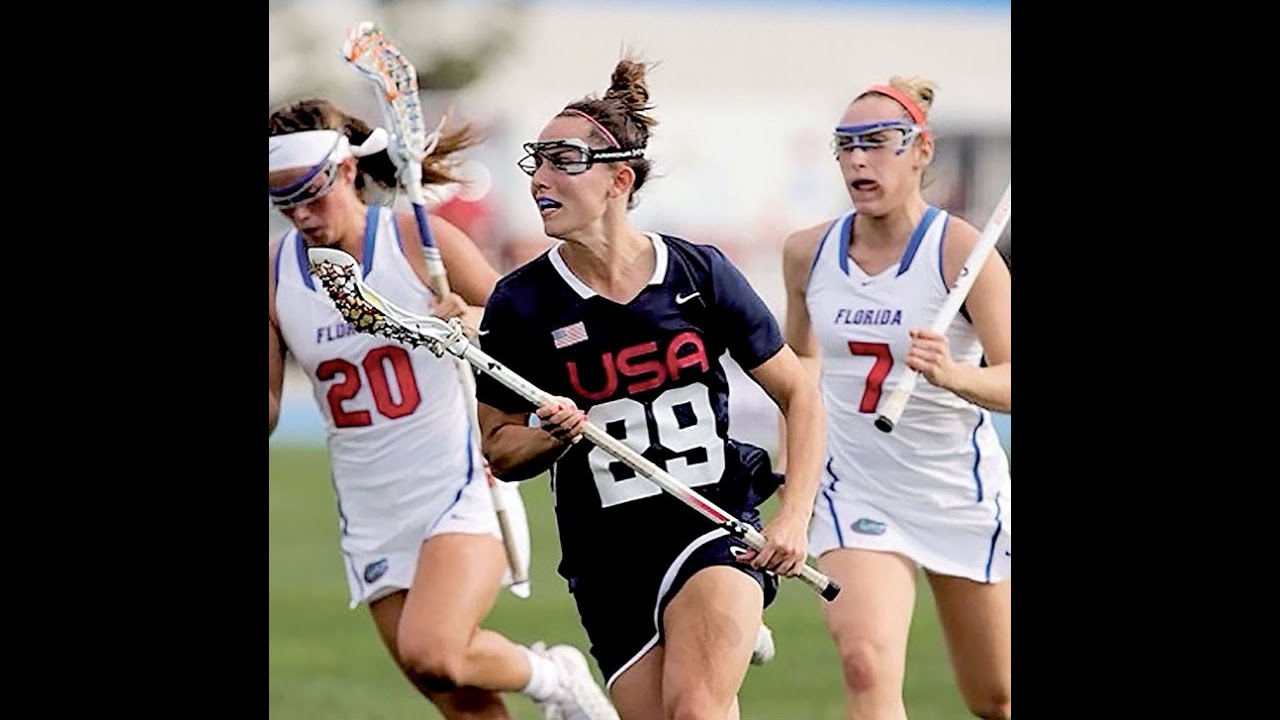 Russia – Czech Republic. Live Stream
The composition of the Russian national team for the match YUCHM-2021 with the Czech Republic
Michkov became the youngest poker author among Russians at the JWCH
Sweden beat Switzerland at YJWCH 2021
The Russian team defeated Germany at the JWCHM-2021, Michkov designed poker
Michkov scored a lacrosse goal against Germany at the YJWCH 2021
This service works only for registered users.