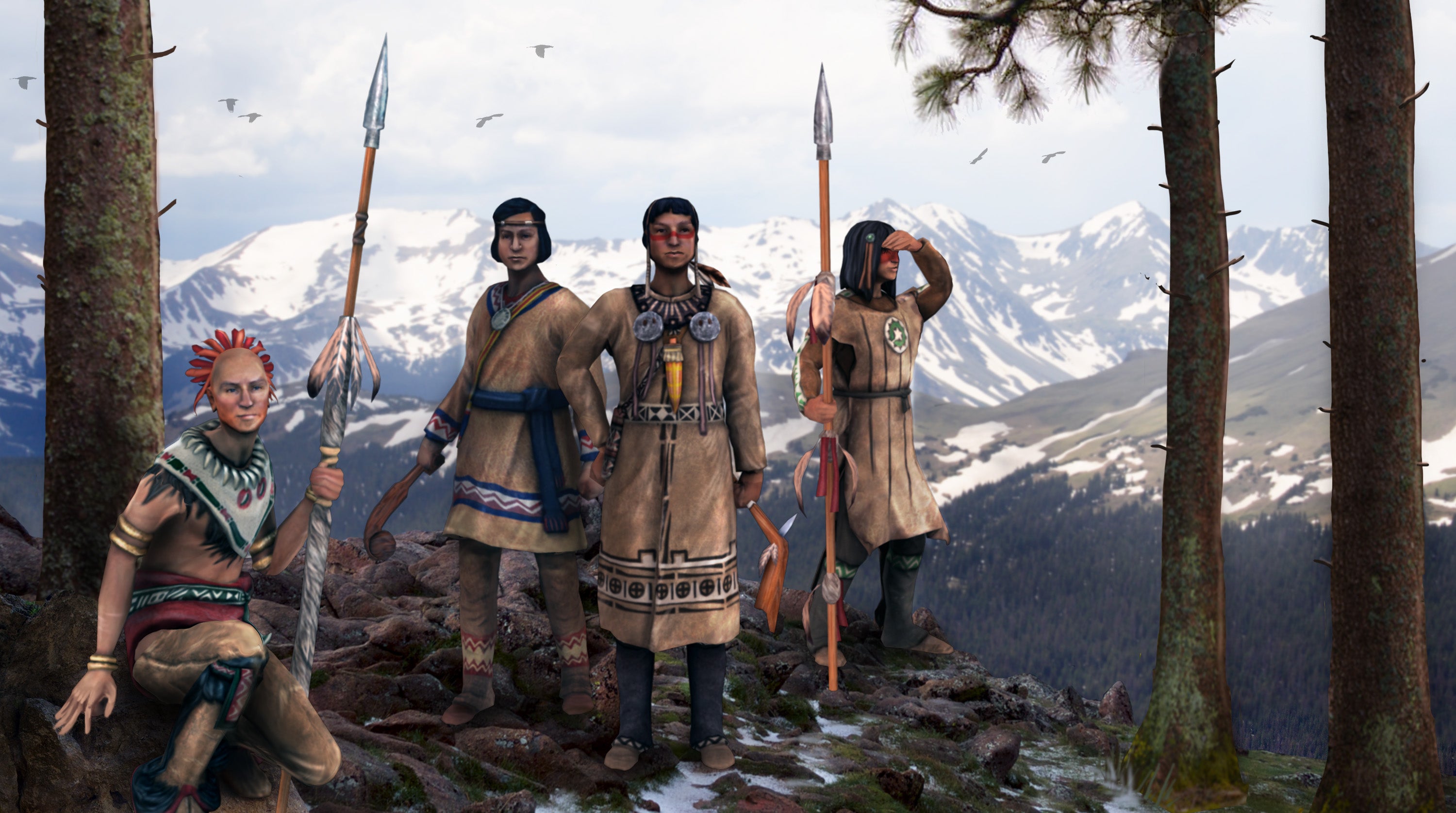
Native American Games And Sports
Native American ball games often involved hundreds of players
Native American Games
Native Americans played games as part of tribal ceremonies and also to teach skills to children through these games. Games were played ceremoniously to bring luck like rain, good harvests, drive away evil spirits, or just bring people together for a common purpose. Boys and girls played separately. Native Americans appreciated the skill, talent, and discipline. Girls learned about childcare while games for boys and were aimed at helping them learn about warfare and hunting. The games were either a game of chance or games of skill. Chance involved luck while skill games involved physical and mental abilities. At the end of the day, enjoyment was crucial so was learning. Winners were rewarded, and admired.
Lacrosse
Lacrosse was and still is a famous game in America. Highly popular among the Native American games, lacrosse involved passing a ball using sticks with nets attached at the end. The game was popular that it could last from dusk to dawn. Apart from entertainment, the game was at times used to toughen young warriors and also settle disputes among tribes. The brutality of play could cause injury to the players.
The Bowl Game
This game was a favorite among the Iroquois, especially during the Midwinter Festival. The game involved six white balls on one side and black on the other white along with a wooden bowl. With the nuts inside the bowl, the player would hit the bowl against the ground. If at least 5 of the balls ended up the same color, that particular earned a point. It was a game of chance. Played to teach the players that it is good to work and struggle to achieve your dream.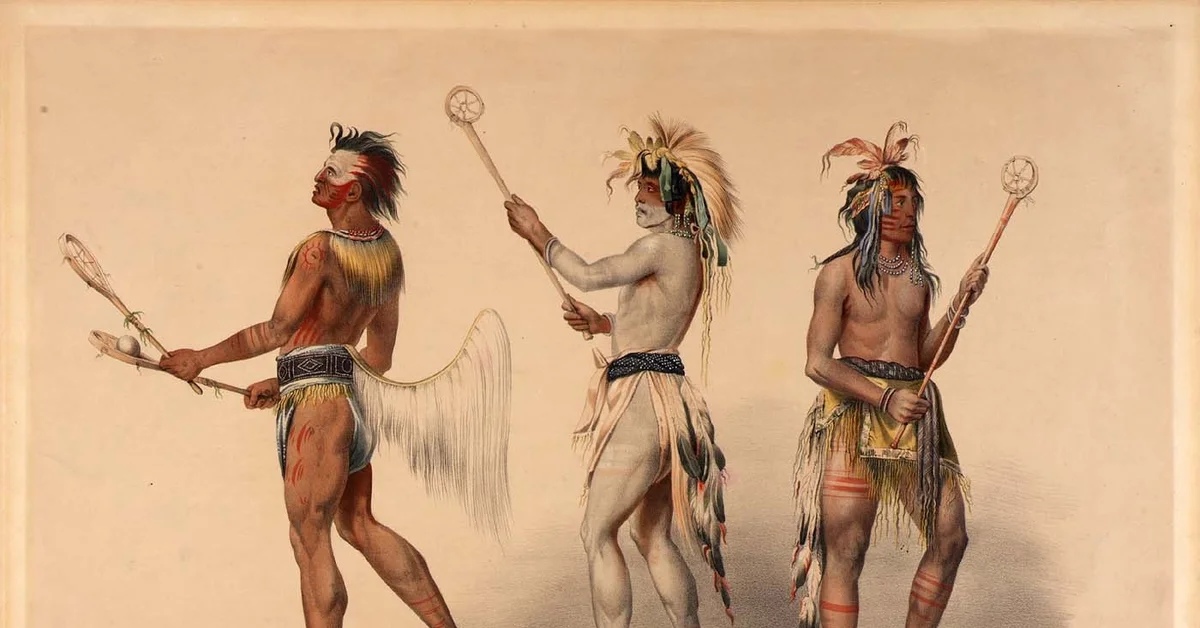
Ring The Stick Game
The ring the stick game is one of the most popular Native American games played by children. Children tied a string at the end of the stick, and a ring on the end of the string. The player would toss the ring in the air and try catching it with the sharp side of the stick. The game was important in teaching children about the importance of having a goal, or a dream, and the importance of hand-eye coordination.
The Butterfly Hide And Seek
The game was a very quite game played by little girls. A girl would close her eyes and sing “Butterfly, butterfly, show me where to go.” The rest would hide quickly but quietly. The singer then had to seek the others girls without another word. It was a game of skill, and the skilled girl could identify the hiding place by following the marks left by those in concealment.
The Moccasin Game
The game was a very noisy game played only with permission from elders. Two teams played the game finders and keepers. All was needed were four moccasins, a pebble, and a stick. The singer sang to jeer the other team; the keeper hid one pebble in one of the moccasins, and the finder was to find the stone. This game was used to teach children on the team playing.
Sep Game
Sep was the “fall asleep game.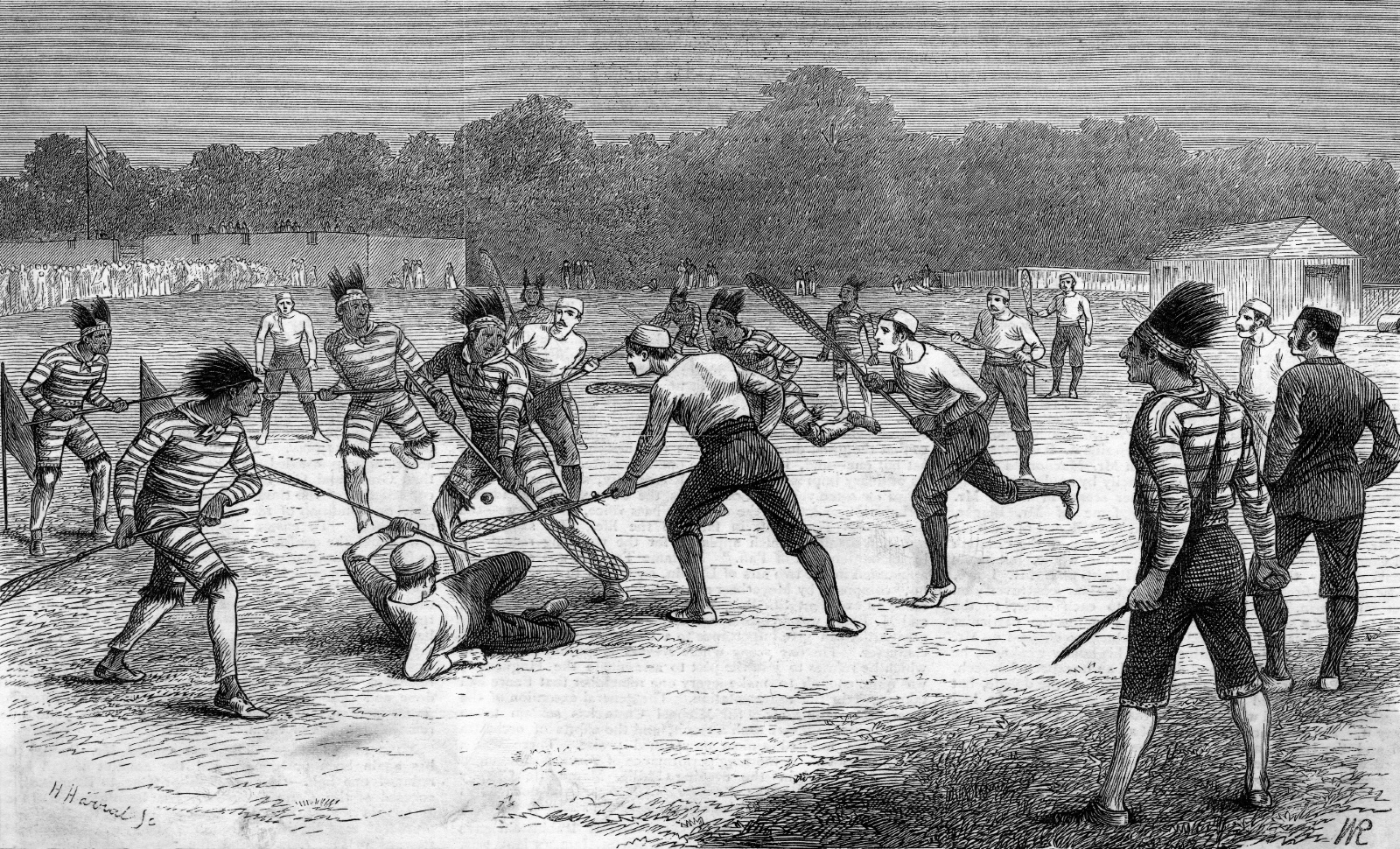 ” It was used to make children sleep after a busy day. Someone would sing a song with funny phrases and without warning stop singing and say “sep” everyone had to be silent until someone picked up the song. The kids that kept quiet and slept would be rewarded the next day. It was a disciplined game.
The Snow Snakes Game
Played in the winter when village men returned from the annual hunt, the snow snakes game . Village played against each other. It was a skill game and a team sport. Each player had a snake like curved wood. The playing teams would then pull a log through the snow to form a trough. The objective of the game was to throw your snake as fast and far as possible to win points for your team. The best score was the winner.
The Hand Game
Two teams played the game.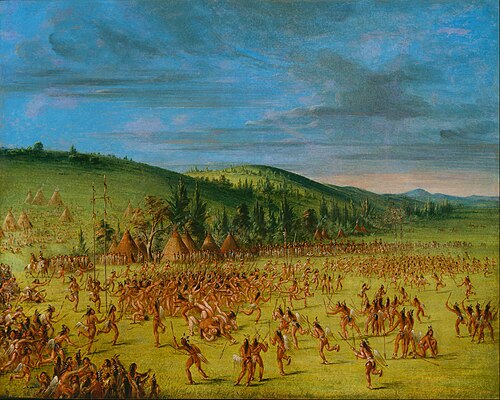 One team passed around a small ball or bone quickly. The opposing team would try to guess who on the other team had the item. A correct guess was rewarded by earning a point. Then the game switched to the other team. It was a game of skill.
The Double Ball Game
It involved 2 or 3 opposing teams and the goals almost a mile apart. These games provided women with a chance to prove their strength and agility. From stick to stick the double ball was passed up to the goal post. Women and girls played the game. The strongest woman was admired and achieved high status.
Chunkey
The game involved throwing disk-shaped stones across the ground. A spear was thrown at the stones to attempt targeting the spear to land as near to the stopped stone as possible. The game involved many people in a huge arena. It was specifically designed to bring people together.
Benjamin Elisha Sawe in Society
Tribes – Native Voices
Native games are more than just games. They build body and spirit through exercise and are played by all age groups—children, youth, and adults. Many games have roots in ancestral tests of strength and sport that reinforced group cooperation and sharpened survival skills in often hostile environments. For warriors, the games helped maintain their readiness and combat skills between times of war.
Today, games are as important as ever. The gradual shift to a more sedentary lifestyle has highlighted the need to reawaken interest in physical activity, especially among Native youth.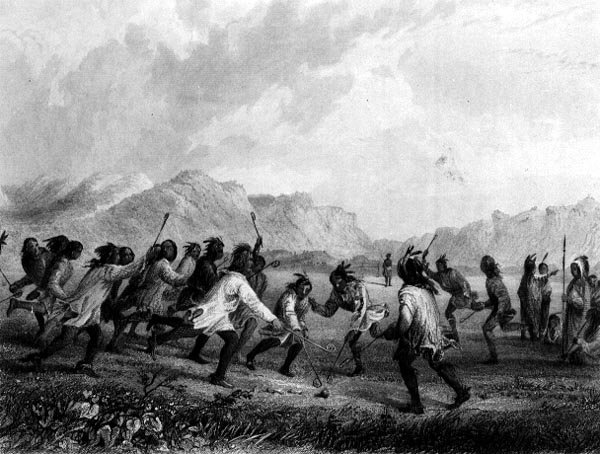 Promoting games and sports is an important part of improving the health and well-being of Native populations.
Stickball
Stickball, a Native game that is the forerunner of lacrosse, can be played by a large number of players, sometimes involving entire tribal communities. It is especially popular among Southeastern Indians, including the Mississippi Band of Choctaw Indians. In stickball, both teams must move the ball down the field using only their sticks—no touching or throwing of the ball is allowed. Points are scored by hitting the opposing team’s goal posts with the ball. The Choctaw hold an annual World Stickball Championship as part of the Choctaw Indian Fair.
Iditarod and Alaska Native Games
For Alaska Natives, the tradition of ancestral games is as strong as ever. Most famous is the Iditarod dog sled race, a highly competitive endurance sport that promotes survival skills in a challenging Arctic environment. Alaska Native John Baker of Kotzebue won the 2011 Iditarod in record-breaking time.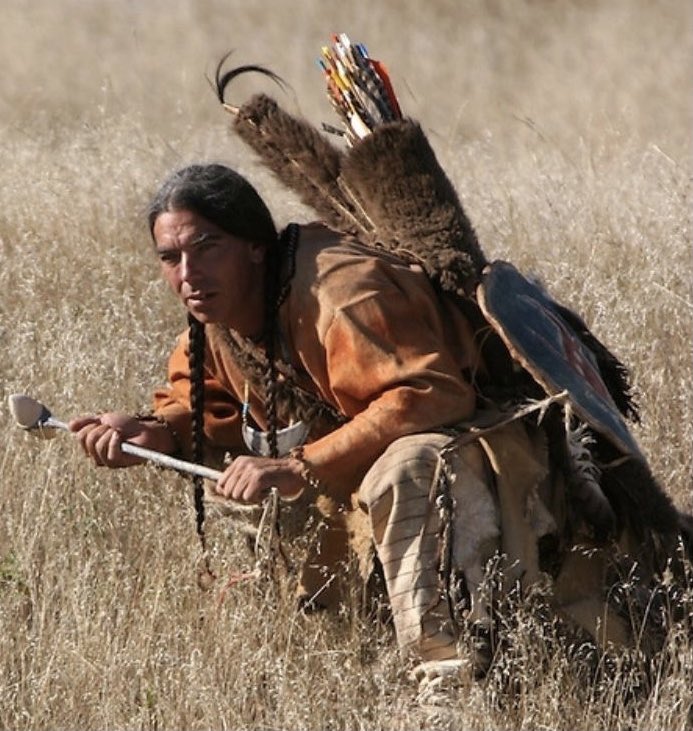
At annual events such as Alaska Native Youth Games and the World Eskimo-Indian Olympics, children and adults test their strength, endurance, and agility in traditional contests such as the high kick, in which competitors kick balls suspended at head level or higher. As of 2011, the world record was 7’ 10” for men, and 6’ 1” for women. Other more conventional sports, such as basketball and cribbage, are also important to Native communities, young and old, especially during the long winters.
Native Hawaiian Sports: At Sea and on Land
Hawai‘i is justly famous for its water sports of canoeing, surfboarding, and swimming. Canoe and paddling clubs attract large numbers of members of all ages. Events range from outrigger canoe races on weekends to sea-going voyages in traditional double-hulled canoes such as the Hōkūle‘a. The iconic Hawaiian sport of surfboarding was a tradition that was nearly lost by the turn of the 20th century. It was revived by the Native Hawaiian sportsman Duke Kahanamoku, who in three successive Olympics also won medals in swimming. Kahanamoku is revered in Hawai‘i, with his statue prominently located on Waik?k? Beach, Honolulu.
Holua sleds
A land-based counterpart to the surfboard is the Papa Holua sled, which riders use to slide down hilly slopes. Early Hawaiian warriors honed their physical skills and endurance on these narrow sleds. Like surfboarding, sledding was suppressed by missionaries, but today it is a popular “extreme sport” in Hawai‘i.
Olympic Gold for Native Athletes
Many Native Americans have competed in the Olympic Games, and several have taken home the gold. In 1912, Native Hawaiian Duke Kahanamoku won a gold medal in swimming, and Jim Thorpe, Sac and Fox, won gold in the pentathlon and decathlon. More recent medalists are Billy Mills, Lakota, gold in distance running and Billy Kidd, Abenaki, silver and bronze in downhill skiing. Joe Tompkins, Tlingit, and U.S. Paralympian, gold medaled in downhill skiing in the 2005 and 2010 Paralympic World Cup.
NEXT: Native Heritage: Traditions Preserved and Renewed
Sports | Indians of North America.
 Life, religion, culture | John Manchip White
As we have already noted, the Indian warfare contained what we can call a certain “game moment”. The Creeks, for example, called sports the “little brother of war” and considered them very useful for young Indians in terms of training them into real warriors. The Indians of North America attached as much importance to sports as to war, and before we look at what happened after the end of the military campaign, we will digress a little and get acquainted with the main types of sports that were common among the North American Indians.
Indian children got used to games from childhood – in this sense they did not differ from white children. They made wicker whips, played spinning tops, twirled hoops, played ball, threw throwing rings. There were also many home games that contributed to the development of mental abilities and observation, in particular checkers and dice (they were made either from wood or bone). Women were also sometimes fond of dice, which alarmed men, because, being carried away by the game, women forgot about housework and in the field.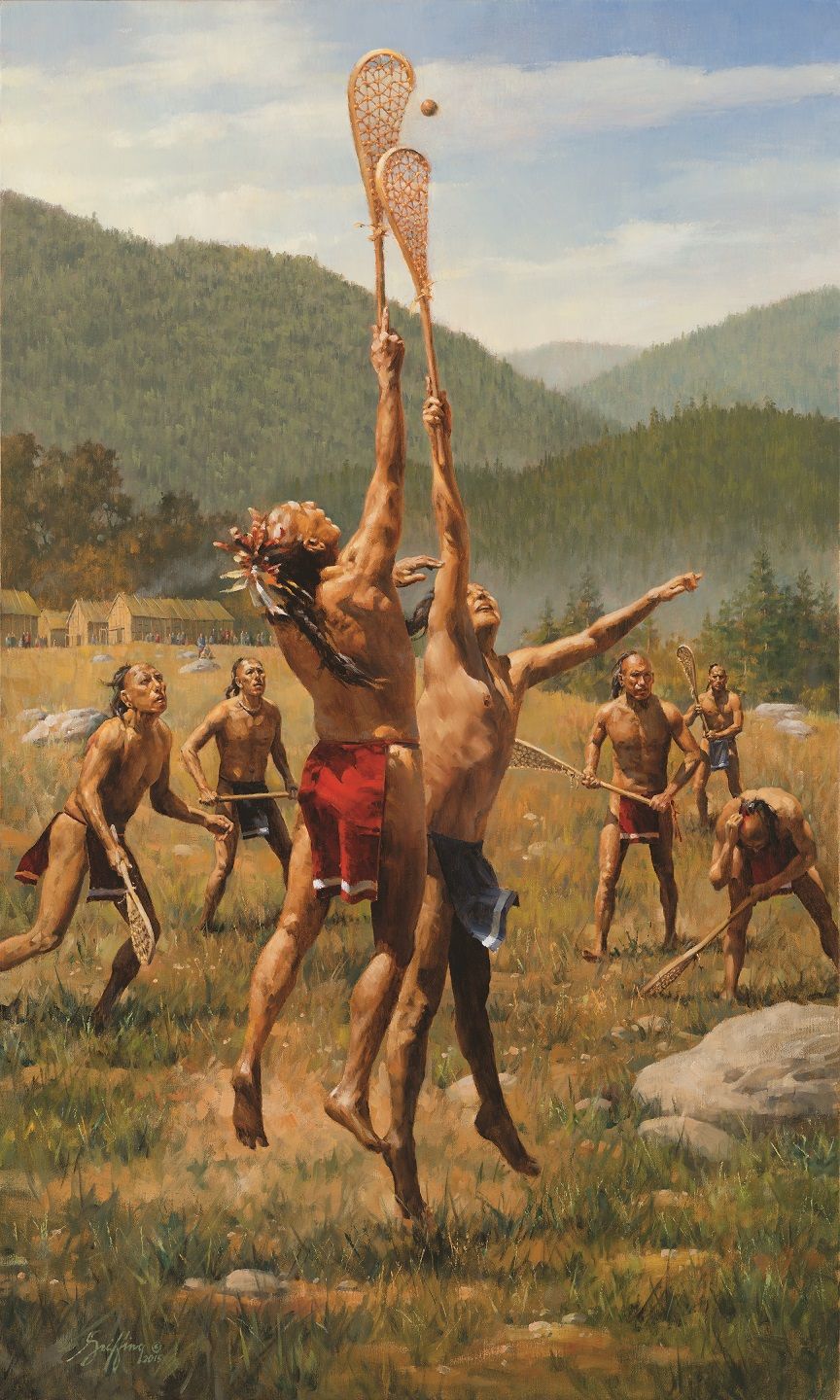
Some sports were quite traditional. These are running competitions, horse racing, canoeing competitions, as well as swimming. By the way, it was the Indians, who daily swam in the waters of the great American rivers, who invented such a swimming style as the crawl (when two American Indians won medals at the Olympic freestyle swimming competitions at the end of the 19th century, using the crawl, their rivals openly expressed their indignation, believing that the Indian swimmers won “unfairly”). The Indians were also very fond of archery competitions.
Some of the toughest sports could really be called the “little brothers of war”. These included football, which was played with the same ferocious enthusiasm as in medieval England; shinny, or hockey, where a curved stick and a small ball were used, as well as a game that is an Indian invention – lacrosse [1].
At the ends of the field, high and wide gates were set up, into which it was necessary to score a ball made of buckskin using rackets with tension from ropes or tendons.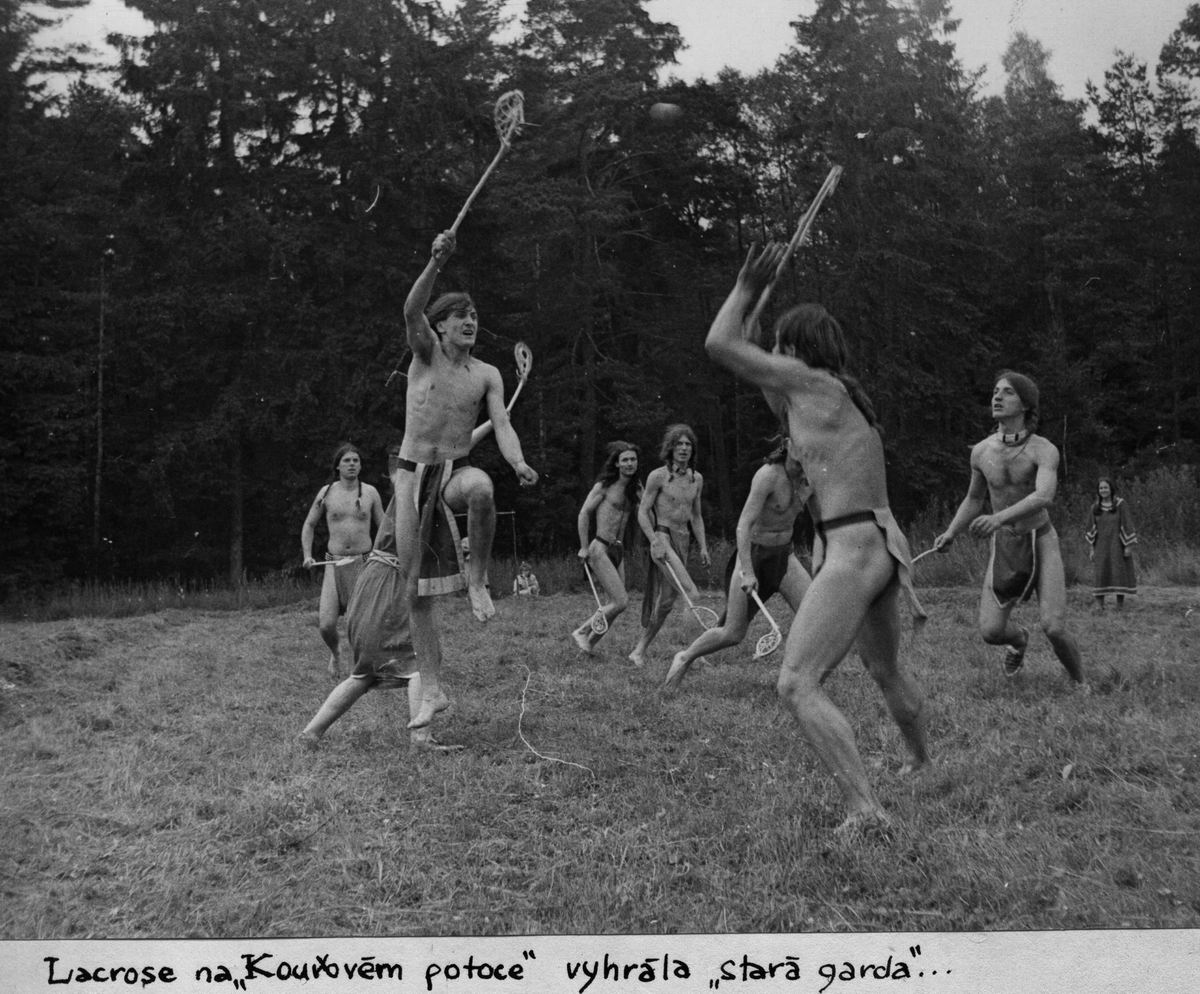 Each of the two teams often had several hundred people from various tribes, Moyeti or clans. One team was painted dark, the other was painted light. The game was accompanied by loud screams, numerous brawls, sometimes turning into a real “meat grinder”, as a result of which many found themselves with broken skulls.
In the eastern regions, a hunting competition was popular – “chunks”, known since the time of ancient hunters. A round stone was thrown down from the slope, and each participant had to throw a spear at the place where, in his opinion, the stone should stop. The winner was the one whose spear was closer to the stopped stone. The Iroquois made a small change to the game: instead of a stone, a hollow wooden ball was launched down, which had to be hit with a spear while it was in motion. Pretty simple idea, but at the same time very good accuracy training for warriors and hunters.
The most difficult and unusual of all the sports played by the Indians was played in the southwest, and was hardly played when the Spaniards first arrived.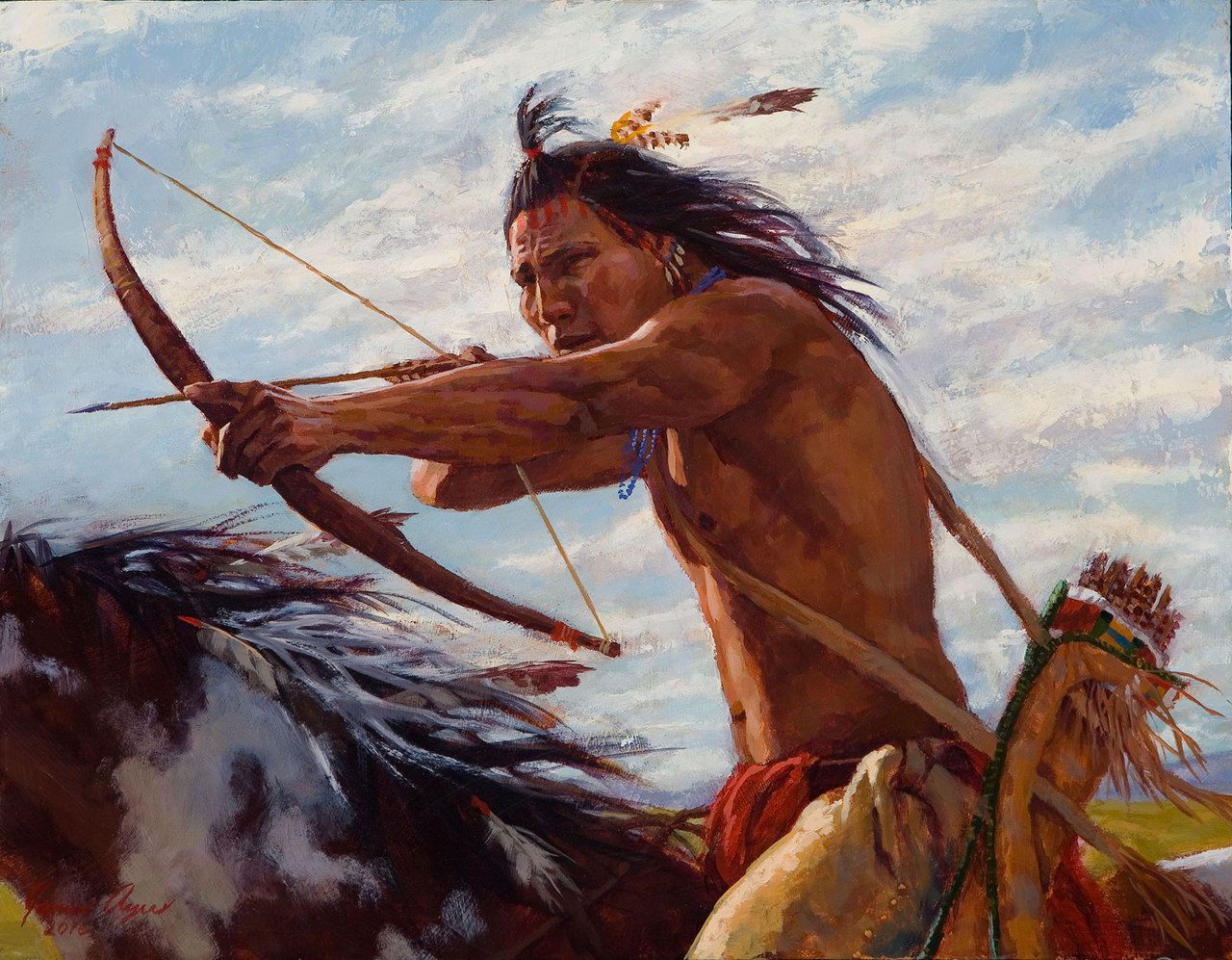 In places like Casa Grande, the capital of the people of the Hohokam and Salado, cultures, and Wupatki[2], which was the center of their sister culture Sinagua, , spacious ball courts were built by the ancient tribes of the southwest. They invented their own version of the game, which was common among kindred peoples of the more southern regions during the time of the great civilizations that existed there, and which there had a deep religious meaning. The clay courts in Arizona cannot, of course, compare with the Mayan and Toltec structures at Chichen Itza, or the Zapotecs at Monte Alban, whose dimensions resemble today’s stadiums. On the other hand, it seems unlikely that the peace-loving inhabitants of the southwest played by the same rules as in ancient Mexico, where the game was fatal. The game there was as follows. High on the wall was fixed a stone ring, into which it was necessary to send a rubber ball, and with the help of only knees and hips. The players were protected by pads, like in American football.
 When the game was over, the executions began. Some believed that it was necessary to execute the losers, others – on the contrary, since the execution of the winners would be a sacrifice that was pleasing and pleasing to the gods. Fortunately for the athletes of the southwest, they belonged to the tribes that were among the most meek and peaceful in the territory of North America, and it did not come to the death penalty.
[1] Lacrosse is a hybrid of rugby and tennis; as for football, it is, of course, a game that only resembled modern football.
[2] Now a natural monument in the state of Arizona.
First International Indian Sports Games held
October 30, 2015 Friday
23:02
The Brazilian city of Palmas hosted the first international games for the native Indians of the Americas
 1.0.0.2″ data-text=”The moon is seen over the flame of the first World Games for Indigenous Peoples in Palmas” dir=”auto” title=”The moon is seen over the flame of the first World Games for Indigenous Peoples in Palmas”> The Aboriginal World Games official website states that the idea came about after the successful hosting of the 2014 FIFA World Cup. Indians from different tribes arrived in the resort town of Palmas. Competitions included tug of war, various types of wrestling, bullfighting, archery, canoeing. The Indians also held various events to get acquainted with their culture. The official website states that the delegations arrived not only from the two Americas, but also from Russia, the Philippines and Australia.
90 003
photo: REUTERS
Articles
Brazil
Ukraine
See also:
- Kyiv
- Lviv
- Vinnitsa
- Dnieper
- Donetsk
- Zhitomir
- Zaporozhye
- Ivano-Frankivsk
- Kropyvnytskyi
- Lugansk
- Lutsk
- Nikolaev
- Odessa
- Poltava
- Smooth
- Sumy
- Simferopol
- Ternopil
- Uzhgorod
- Kharkiv
- Kherson
- Khmelnitsky
- Cherkasy
- Chernivtsi
- Chernihiv
-
USD
36. 69
69
Purchase
36.69Sale
37.39 -
EUR
Purchase
40.63Sale
41.54
 69
69
- Actual
- Important
2023,
Thursday
July 13
In Ukraine, the ideologist of the “Russian world” Dugin, who called for genocide, will be tried
Volunteer Yarovaya sold the flag from the anniversary of Zaluzhny for a record quarter of a million hryvnias: money will be spent on shells
Russians shelled the Sumy region with mortars: a man died
Denied the existence of Ukraine: the SBU reported a new suspicion to the Metropolitan of the UOC-MP Pavel Lebed 9000 3
Personal motives and lack of ties with Ukraine: the suspect in the murder of the ex-commander of the Krasnodar submarine pleaded guilty
Russia and Belarus will not receive an invitation to the 2024 Olympics
At least 13 senior officers were detained in Russia after Prigozhin’s mutiny, together with Surovikin, – WSJ
18:05 18:05
Announcement
The first all-Ukrainian forum for the volunteer community Social Camp Odesa will be held in Odessa
18:04
OPINION
About the double standards of the clergy of the UOC-MP 900 03
NABU puts on the wanted list a deputy of the Kyiv City Council Trubitsin, suspected of corruption
“Unhealthy sarcasm”: Ukraine’s ambassador to the UK criticized Zelensky’s statement about Wallace’s “daily gratitude”
USA will help clear mines from areas where cluster shells were used – Austin
17:23
Exclusive
“This is not about patients”: Razumkov on the medical cannabis bill identified 14 city facilities
Svitolina lost to Vondroushova in the Wimbledon semi-final
Gepard anti-aircraft guns and fire control stations for IRIS-T: Germany announced a new aid package for Ukraine
The European Parliament approved plans to increase the production of ammunition for Ukraine
16:20
Exclusive
US may send hundreds of ATACMS missiles to Ukraine, Defense Express expert Ryabykh
16:03
Updated
Russians shelled Orekhov in Zaporozhye: a man was killed Tarnavsky: Ukraine has already received cluster munitions from the US
Spain will hand over a mobile hospital and medical cars for Ukrainian border guards
Cartoon “Mavka.