Women’s Goalie Guide to 8 Meter Shots
By Coach Damon
Among the differences that female lacrosse goalies encounter is the special play called the 8-meter shot.
If a female ball carrier is fouled inside the 8 meter arc, she gets a free position shot at the closest hash on the arc. All defenders located inside the arc at the time of the foul are also positioned on the closest spot on the arc but always at least 4 yards away from the shooter.
For the Lax Goalie Rat podcast I recently spoke with Team USA goalie Liz Hogan (episode coming soon!!) who broke down her approach on how to best make saves on 8-meter shots.
What’s the strategy? What are some techniques you can do to increase your save percentage?
Read the Situation
Your first step is to read the entire situation. This will help dictate how we setup.
So what pieces of information are you looking for?
- On which hash is the shooter setup?
- Where are your defenders located?
- Where are the offensive teammates located?
- Who has the ball?
The more towards the center hash a ball carrier is located the more of a threat to shoot they are.
If the ball carrier is surrounded by defenders you know she likely cannot maneuver left or right and you can a take a little more aggressive approach with a higher arc.
On the contrary, if no defenders are close to the ball carrier during the restart the shooter can maneuver left or right before firing a shot and thus we don’t want to be as aggressive in our arc for fear of being caught out of position as the ball carrier might be able to advance all the way to the crease.
If there is only a single defender on one side, you know the ball carrier will not dodge in that direction and can be better prepared.
If you know the offense’s top scorer has the ball you can fully expect a shot. If a role player starts with the ball while an open offensive player is close to the goal you can expect a pass.
Reading the situation can dictate how you set up on the arc and how aggressive you can play.
Understanding all these elements will help you be prepared once that whistle blows.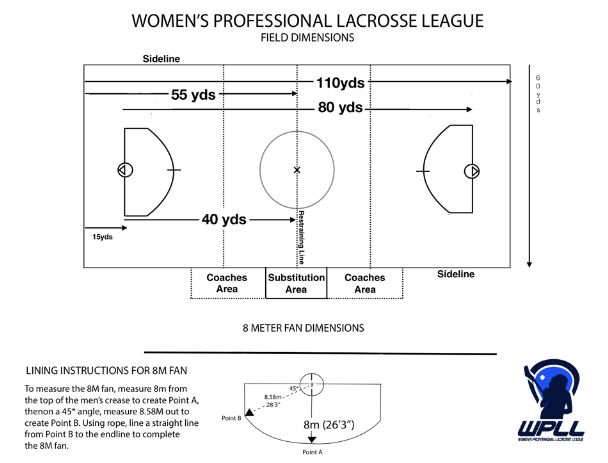 Increasing your chance of saving the 8-meter shot.
Each free position shot is a little different in terms who has the ball, where they’re starting from, and where your defenders are located. So be sure to take it all in prior to the whistle to best know how to defend the play.
Pre-Save Routine
The 8-meter shot for a goalie is similar to a free throw for a basketball player.
Going through the same routine prior to shooting a free throw was scientifically proven to increase your chances of making the shot!
While the same study hasn’t been done in the women’s lacrosse world, I can pretty much guarantee you the results would also be true. Pre-shot (or pre-save) routines work!
Lady goalies who go through the same physical routine prior to a shot will make more saves.
Each pre-save routine is unique to the goalie. Your pre-save routine could be any combination of the following:
- Deep breaths
- Turn and face the goal
- Checking the pipes
- Squatting down and jumping up
- Hitting your facemask with your shaft
- Yelling a positive affirmation
The list goes on and on.
The pre-save routine will also help block those distracting thoughts that interfere with your performance. Things like crowd noise, fans waving their arms, worrying about giving up a goal, thoughts of past misses, the score, teammates, spectators or parents.
By focusing on your pre-save routine, you normalize the free position shot. You lessen the sense of pressure you feel and take your mind off of that fear of missing the save and giving up a goal.
In this way the pre-save routine will help you mentally as much as it does physically.
So develop your own pre-save routine and put it into action before every 8-meter shot. This will increase your chances of making the save.
Direct the Defense
As a goalie, remember you are the leader of the defense.
So you need to ensure that all defenders know their roles during the restart play.
Who is going to cover the ball? Who is going to cover an open attack player? Who is going to chase an errant shot?
All this type of communication can and should occur prior to the shot and as a goalie its imperative that you, and every single defender, are on the same page once that whistle blows.
Practice 8-Meters When Tired
Growing up I had a basketball coach that said – anyone can hit a free throw when they’re fresh. I want players who can sink the shot with 0:01 on the clock after running up and down the court for 45 minutes.
The point here is making a save is easier when you’re fresh and 100% mentally alert.
But when your body gets tired and you start to lose it a little mentally, the saves become tougher and tougher.
So be sure to practice taking a few 8-meter situations at the end of practice when your body is tired.
Or run a few sprints right before the whistle blows to start the restart the 8-meter to simulate being the end of game scenario.
If you struggle with the physical element of your game, try a lacrosse goalie workout.
This will help train your body and mind to make the save in the 4th quarter with 0:01 on the clock.
Scout Players if You Can
I find that many female lacrosse players make the same moves over and over again on 8-meter restarts.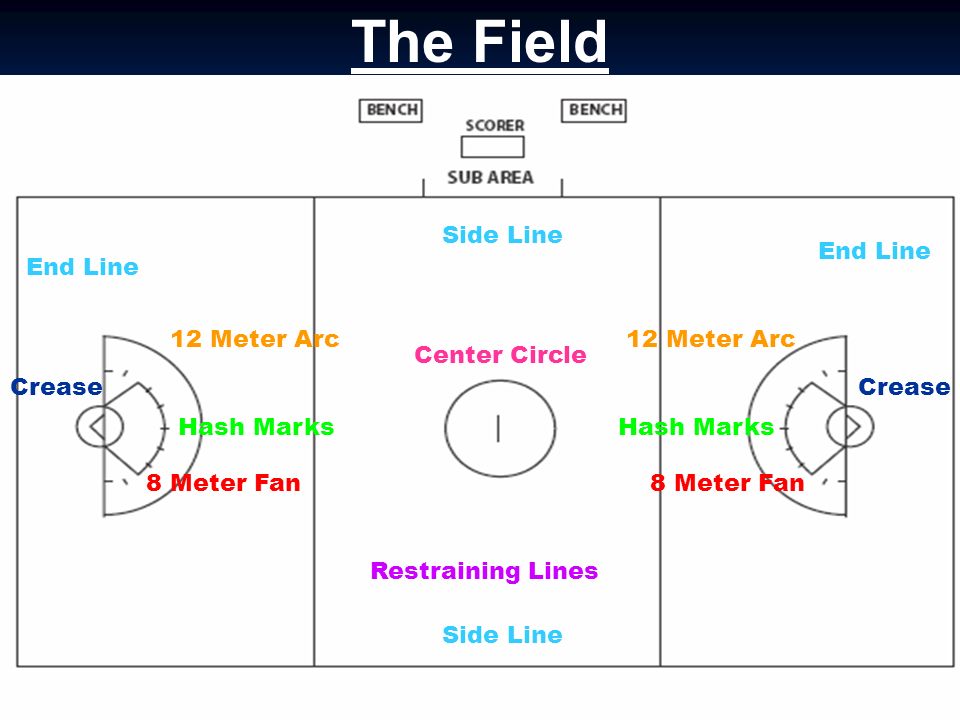
Even just knowing whether they fire on the whistle, take 1-2 step and then fire, or prefer to dodge as close to goal as possible before shooting can aid us in being better prepared to make the save.
If you don’t have video or a scouting report on the team your playing, it’s not the end of the world. But any piece of information we can use to better increase our chances of saving an 8-meter should be used.
8-Meter Shot Saves
Check out this compilation of saves I made by female goalies off of 8-meter plays.
Based on the position of ballcarrier and the defenders try to guess what the attacker is going to do prior to the whistle.
P.S. You can find more videos like this on the Lax Goalie Rat YouTube channel.
Videos on 8 Meter Shooting
To better make saves on 8-meter shots it helps to understand what the offense is trying to do.
Here are a couple videos with tips for the offense, that all goalies should watch too.
Conclusion
The free position shot is a common play in ladies lacrosse that happens anytime a ball carrier is fouled within the 8-meter arc.
Since a female lacrosse goalie is likely to face several of them per game it helps to have a strategy to increase your saves on 8-meter shots.
Reading the situation, going through a pre-save routine, and understanding what the shooter is likely to do once the whistle blows are all vital elements to consistently saving 8-meter shots.
As a leader of the D, you’ll also want to ensure everyone knows their role on the restart.
Good luck saving those 8-meter shots!
Until next time! Coach Damon
Any other points you think I missed when it comes to saving 8-meter shots? Would love to hear about it. Leave me a comment down below. What’s your approach?
How Athletes Unlimited is innovating Lacrosse
The answer? Innovation. Athletes Unlimited is taking the best of what makes all disciplines of lacrosse so compelling to watch and creating a new format that allows these athletes to truly shine. Let’s touch on some of the biggest features.
The Roster
Bringing only 56 of the world’s best athletes onto the roster was no accident. While lacrosse is gaining popularity around the world, requiring large teams and formats raises the barrier to entry for those who are unable to recruit those kinds of numbers. Keeping things small and simple makes lacrosse accessible to new players (and increases the likelihood of lacrosse showing up in the 2028 Olympics).
📣 International Olympic Committee Executive Board
Recommends Granting Full Recognition to World Lacrosse…https://t.co/FAaFT1eOpd
— World Lacrosse (@worldlaxsport) June 10, 2021
 co/FAaFT1eOpd
Not only that, smaller rosters also attract “complete athletes”: players who are capable of playing on both ends of the field and developing skills outside of their positional expertise. Those athletes are going to spend more overall time on the field, and they’re going to play for longer periods uninterrupted: all great ways of making the sport fan-friendly.
The Field
One way in which Athletes Unlimited is working to increase the pace of the game is adjusting the size of the field. By shortening the field and making it skinnier (95 yards by 60 yards, compared to the NCAA’s whopping 120 yards by 75 yards), the action becomes more fast-paced, and midfielders in particular won’t be stuck running laps for most of the game. This means they’ll have the ability to show off specialized skills in attack and defense, which captains can use to their strategic advantage. This also reduces the space behind the cage, which will demand increased accuracy and maneuvering by these elite players to make the shot.
This means that most of the restraining lines, with the exception of the draw, have to be modified for the new field size. We can take this as an opportunity to redraw the lines to make play more exciting. One example is the 8-meter scoring opportunity, sometimes known as a “free shot” used for major fouls. Instead of an arc, the 8-meter is redrawn as a fan, upping the ante and servicing the beloved 2-point shot.
At the end of the day, lacrosse deserves to be played on a field that is specially designed for the sport, not simply placed on top of a field designed for another sport, like soccer. That way, the athletes can focus on the skills that make the game truly great to play and watch.
The Shot Clock
When we craft the game for the best athletes in the business, the rules need to reflect their capabilities. Bringing the shot clock down to 60 seconds (from the NCAA’s 90 seconds) acknowledges that these athletes are capable of making difficult shots under pressure and keeps the pace of the game fast. Returning the ball to the closest player of a missed shot also keeps the action going, rather than taking a break to conduct a turnover.
One big change to the Athletes Unlimited format is that defenders are not penalized for stepping in between the attacker and the goalie within the shooting space. In the NCAA, attackers have split second opportunities to make a shot between a swarm of defenders. With fewer defenders on the field (and, frankly, more skilled and experienced attackers), we want to place the onus of responsibility on the attacker, rather than the defender, to make a safe shot.
How We Got Here
Athletes Unlimited strives to innovate in the interest of the athletes above all else. All of the decisions that have been made to create the format we’ve described here have been in close collaboration with the athletes competing within it. Professional women’s lacrosse is different from the sport’s other iterations primarily because of the level of talent that these women bring to the field. It is only logical that we rely on their expertise and their abilities to inform the kind of lacrosse they want to play. And when athletes get to play their sport the way they want to play it, it makes for a better fan experience overall.
All in all, Athletes Unlimited’s innovative model for the inaugural season of lacrosse is working to make this the most explosive and highest level of play we have seen of professional women’s lacrosse. With allowing players to showcase their skill sets individually while working for a common goal as a team, it will be unlike anything we have seen before.
lacrosse. President of the Lacrosse Federation 6×6
Similar presentations:
2018 FIFA World Cup
Nutrition for athletes
Football (Grade 11)
Rules of the game volleyball
Athletic facilities. Stadiums
Artistic gymnastics
Professional Applied Physical Training
Basketball Tactics
Business plan for the fitness club “BRASCO”
Skiing
LAcrosse
ap
Dmitry Khamin
President of the 6×6 Lacrosse Federation
Player of the Russian national team at the World Cup 2014, 2018 and
European Championship 2016
Certified coach (US Lacrosse,
World Lacrosse)
Evgeniy Tsukanov
Head of the Moscow Region
departments
Player of the Russian national team at the 2018 World Cup and
European Championship 2016
Alexander Zarubin
Head of the Moscow branch
Player of the Russian national team at the 2014 World Cup and
assistant coach at the 2016 European Championship,
2018 World Cup
International Referee
HISTORY
SUMMARY
Lacrosse is a
contact sport between two teams using a
small rubber ball and a
special stick. The goal of the game
is to throw the ball into the opponent’s goal
with a stick
.
TIME AND PLACE OF ORIGIN
The game was invented by the American Indians, who used it
to train warriors and peacefully resolve conflicts
between tribes. According to archaeological data
studies, the prototype of lacrosse was known in
territory of modern Canada already at the beginning of the 15th century.
Teams at that time often consisted of several hundred
people, and the length of the field for the game ranged from
several hundred meters to several kilometers.
European settlers got acquainted with this game in the
17th century, and by the beginning of the 19th century it began to gain popularity among the
French population of Canada.
The first official lacrosse match took place in Canada at
1867.
Lacrosse was twice included in the program of the
Summer Olympic Games – in 1904 and 1908, and also
was a demonstration sport at the 1928,
1932 and 1948 Olympics./cdn.vox-cdn.com/uploads/chorus_image/image/60794897/LXM18_PENN_037_.0.jpg)
VARIETY
GAMES
LACROSSE
BOX LACROSSE
6×6 LACROSSE
LACROSSE
WORLDWIDE
Members of the International
Lacrosse Federation (WL)
are 73 countries,
European federation
lacrosse (ELF) – 33 countries
World Championships
and Europe are held lacrosse
World and European Championships
Box Lacrosse
Youth Championships
World and European Championships
Russia’s membership in the WL since
2011, in the EFL since 2015
One of the fastest growing sports
in the world
Lacrosse 90 025 V WORLDWIDE
LACROSSE
AT OI
8 SUBJECTS OF THE RUSSIAN FEDERATION
DEVELOPMENT LEAGUE
LACROSSE
BALTIC
LEAGUE
TEAM
RUSSIA
The Russian team took part in
World Championships
2014 and 2018, European Championship
2016
Teams from Russia
regularly take
prizes at club tournaments
in Europe
The Russian team will
participate in qualifying games for the World Championship
2023
CHILDREN
LACROSS
3 sections in Moscow and
Odintsovo 9 0025 2 sections in Yaroslavl
15 competitions in the ETUC
Moscow
Participation in
international tournaments
Annual sports lacrosse camp
More than 40 master classes in schools,
colleges, universities and
sports clubs
Participation in more than 10
sports festivals
and exhibitions
20 teams took part
in the final of the league
“ROSPROFZHEL” in
lacrosse
OUR GOALS
Organization of a series of
master classes in
your university
Organization
intercollegiate tournament
for lacrosse 6×6
Organization of
sports section for
lacrosse in your university
Inclusion of lacrosse in the
MSSI program
WE PROVIDE:
All necessary
sports equipment for
lacrosse games ( Sticks,
helmets, protection, goals)
Teaching methods
lacrosse game and work
coaches
FOR WHOM:
Anthropometric
parameters are not important
Lacrosse is suitable for everyone
Lacrosse is the easiest
given to athletes
game types: hockey,
basketball, football
English
Russian
Rules
Israeli athletes brought 25 Special Olympics medals from Berlin
35 Israeli athletes who competed in judo, swimming, athletics, tennis, table tennis, cycling, bowling and football won nine gold medals, eight silver and eight bronze medals. This is reported by The Times of Israel.
As a result of the highly successful games for Israel this year, which ended on June 25, the Israeli delegation returns from the Special Olympics in Berlin with 25 medals, compared to the 19 won by the Israelis in the penultimate games of 2019.
“As promised, we are returning to Israel with many medals,” Sharon Levy-Blanga, CEO of Special Olympics Israel, said on Sunday. “.
Levy-Blanga urged Israelis to welcome home and honor Special Olympics athletes in the same way as other Israeli medalists: “Only in this way can we truly embrace the spirit of inclusion and acknowledge the great potential of each individual.”
The achievements of the Israelis this year are as follows. Ron Beck, 16, won the gold medal in the men’s 3000 meters. In addition, he won a silver medal in the 5000m and, along with Adi Madmon, Saar Buchbinder and Pele Aboudi, brought Israel bronze in the 4x400m medley relay.
Buchbinder, 30, also won two gold medals in the 5K and 10K, while Madmon took bronze in the women’s 100m./cdn.vox-cdn.com/uploads/chorus_image/image/60234985/DSC_0088.0.jpeg)
The Israeli women’s soccer team, which made its debut in Berlin, won the silver medal after losing 2-0 to Bangladesh in the gold medal match in the F3 division, after beating Saudi Arabia 8-0 the day before.
Judoists Ido Rabinivic and Levav Barkan won gold medals at the first and third levels of the sport, respectively. (Note that Special Olympics athletes are divided into different divisions based on their ability, both pre- and early-game.)
In table tennis, Israeli David Kersenti won the gold medal in the men’s under-17 singles. His Iranian opponent withdrew from the match with him at the request of the Iranian national team coaching staff.
Also at the Special Games, Israel won three medals in swimming: Sapir Bar Yoel’s gold in the men’s 50m freestyle, Meir Sehgal’s gold in the men’s 100m freestyle, and Aran Bar-Peled’s silver in the Women’s 800m freestyle.
Tennis player Sonya Janushuk, 19, won two medals at the games – a gold in the individual event at level 5 and a silver in the combined doubles, where she paired with 16-year-old Lior Revac. Around the same time, Nadav Sarfati won a silver medal for Israel in tennis, competing in the men’s singles at the fourth level.
“Unified” sports in Special Olympics consist of people with and without intellectual disabilities who compete together.
In bowling, the United women’s team won the bronze medal, while the United’s pair of 38-year-old Rivi Cohen, who was treated for dialysis during the games, and 66-year-old Hana Duanis won the silver medal. 31-year-old Gilad Kalishov won bronze in the men’s singles.
And in cycling, Noga Korn won a silver medal in the women’s 5K road race, as well as a bronze medal in the 5K time trial at level 5; Tal Golani won bronze in the women’s 5K level 6; Kobi Hamama won silver in the Level 8 men’s 2K time trial; and Avi Elbaz won bronze in the men’s level 6 10 km time trial.
This year’s Special Olympics is very important for Israel, not only by the number of sports trophies won. The publication notes that this year for the first time Israeli athletes competed with the official recognition and support of the State of Israel.