7 Ways to Get A Concussion
When people think of concussions in sports, they visualize a football player flying headlong into a tackle and the crack of helmet-on-helmet contact. And while a direct hit to the head is certainly a possible cause of concussions, it is by no means the only culprit.
Let’s start by laying out what is going on in your head during a concussion. The brain is soft and surrounded by clear cerebrospinal fluid. This fluid, amongst other things, serves as a buffer between your brain and your skull. Normally, it absorbs the shock of a blow to the head and keeps the brain from being buffeted against the skull. During a concussion, however, your head receives a shock, such that your brain hits the hard skull bone and begins to swell from the impact.
1. Direct Head Trauma
This one seems obvious: it’s what most people think of when they hear the word concussion. A direct hit to the head, especially one that snaps your head backwards is very likely to cause a concussion.
2. Whiplash
There is a direct link between neck strain injuries like whiplash and concussions. Whether this is from a car accident or a huge hit in football, many cases of whiplash or a similar neck injury coincide with a concussion.
3. Falling
Anytime you take a jarring fall, you are put at risk of a concussion. Similar to whiplash, it may not be a direct hit to your head, but an overall jolt to your body that can cause a concussion. Falling is one of the most prevalent causes of concussions that are not sports-related.
4. Explosions
Common mainly in people serving in the military, concussions caused by explosions are actually quite unique. Rather than a physical trauma causing the brain to hit against the skull, these concussions are caused by the nearly instantaneous changes in air pressure that occur during an explosion. And according to a recent study published in the Journal of Neurotrauma, concussions caused by explosions could contribute to PTSD.
5. Spinning Your Head
Rotational force can actually be more damaging to your brain that direct force. So whipping your head around too quickly, especially when stopped suddenly, is a good way to give yourself a concussion. If you feel suddenly foggy and lightheaded after such a spin, it may be the early signs of a concussion.
6. Lesser Injuries
Sustaining several mild brain injuries that don’t qualify as a concussion can, over time, build up into the equivalent of a concussion. In fact, in some cases these sub-concussive level injuries result in more damage because they are never diagnosed and treated.
7. Previous Concussions
Your chances of concussion increase exponentially after every concussion. So after one concussion, you are 2-4 times more likely to get your second. After the second concussion, you are 4-6 times as likely to get a third. From there, you are 6-9 times more likely to get a fourth. And so on. That is partly due to the fact that people who suffer multiple concussions are usually involved in activities in which concussions are more prevalent. But it also has to do with the chemistry in your brain. The chemistry is changed during a concussion, and that change can leave you vulnerable to having a second concussion.
Can You Get a Concussion without Hitting Your Head? –
Published on
in Articles
In a word: yes. It is possible to get a concussion without hitting your head.
All concussions are considered traumatic brain injuries, or TBIs. They are, in fact, the most common form of traumatic brain injury, with up to nearly 4 million occurring per year, half of which go unreported.
If you are wondering what causes a concussion, most come from a direct blow to the head, but research shows that concussions can also occur secondarily to physical trauma elsewhere in the body that don’t get immediate chiropractic therapy.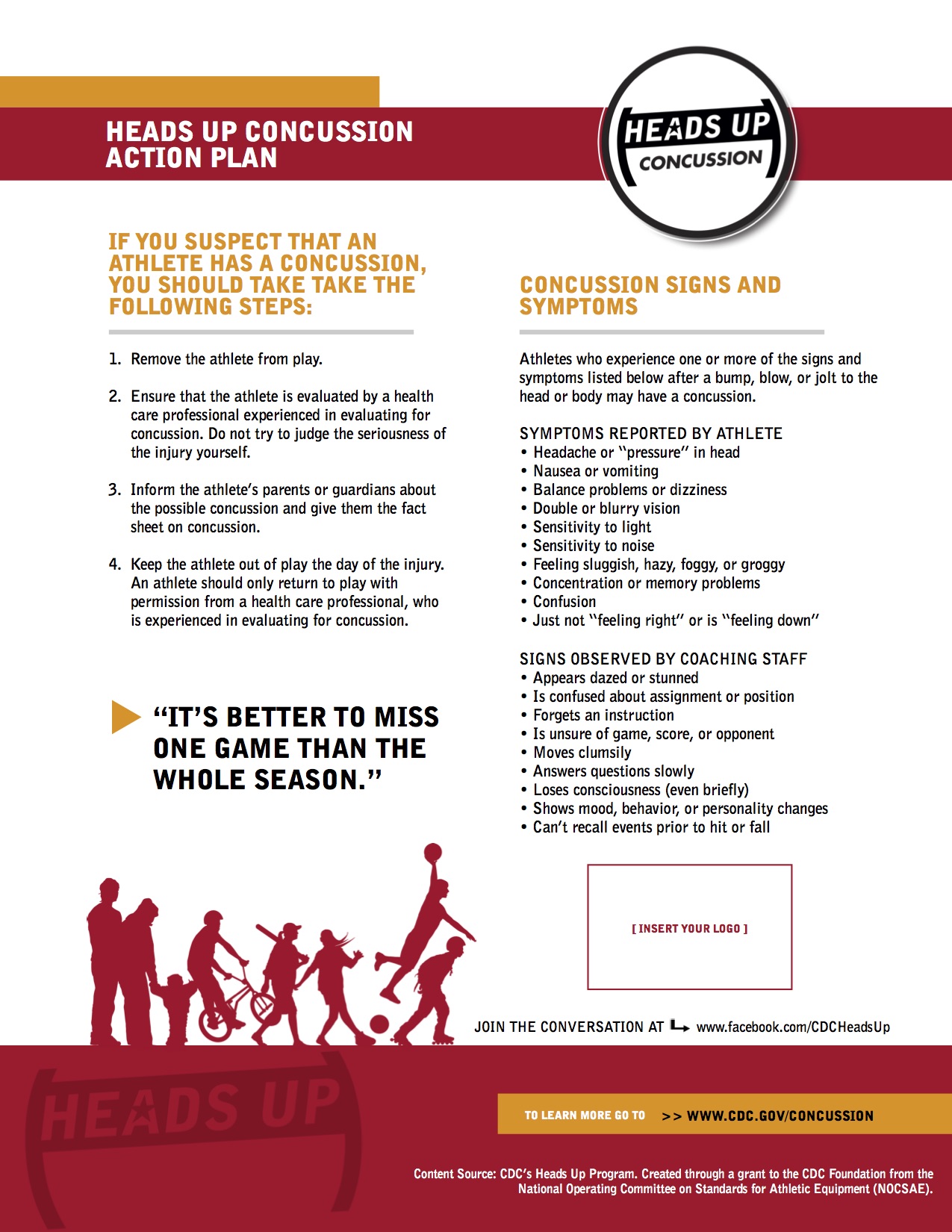 If the trauma causes the brain to move very quickly within the skull – referred to as acceleration or deceleration of the brain – the brain may briefly change shape within the skull, resulting in a concussion. This kind of movement can happen in the case of things like tackles to the chest, which can cause the brain to accelerate from the impact.
Signs & Symptoms of Concussions
Most concussions begin causing symptoms right away. There are four categories of symptoms that you should pay attention to.
- Cognition: You may have issues with thinking or with memory. Some people report that they can’t remember what happened before the injury, or they may report a sense of mental “fogginess.”
- Physical: Many patients with concussions complain of light and sound sensitivity. You will also most likely experience a severe headache.
- Mood: Due to its effect on the brain, concussions have the ability to affect your emotions.
 You may find yourself experiencing increased sadness, irritability, or anxiety.
 - Sleep: After sustaining a concussion, you will most likely notice differences in your sleep, including both insomnia (difficulty sleeping at night) and hypersomnia (increased daytime sleepiness).
 You may find yourself experiencing increased sadness, irritability, or anxiety.
Other symptoms include difficulty walking (lack of balance), nausea or vomiting, dizziness, blurry vision, difficulty with concentration, mood swings, and extreme fatigue. A concussion can also feel like a constant headache.
People experience the symptoms differently, depending on their pre-existing level of health, the environment and circumstances in which the concussion occurred, and the severity of the concussion. Also, while this is rare, not all concussions are immediately apparent, especially more mild concussions. If you have recently experienced any kind of blow to the head or intense impact to another place in the body, you should monitor yourself for traumatic brain injury symptoms for up to three days after the incident.
Causes of Concussions
Concussions happen most frequently as a result of sports injuries. 2 out of 10 high school athletes involved in contact sports end up sustaining concussions as a result of their participation. This can include but is not limited to sports like American football, lacrosse, or rugby.
Another common cause is falls, especially for older people. As we age, all functions of our body begin to decline, and that can include the mechanisms required for movement – our sense of equilibrium or the strength of our musculoskeletal system. For that reason, people aged 65 or older are at increased risk for falls: 1 in 4 of this population report experiencing a fall in the past year, and those odds increase for adults in environments like nursing homes, where they are more likely to be frail. Between 2002 and 2006, this population had the highest rates of hospitalization for traumatic brain injuries such as concussions.
Car crashes and other incidents that cause you to hit your head on another object are other big contributors to concussions. Have you ever stood up and banged your head on something above you, like on a shelf or open cabinet door? That alone can cause a concussion.
Risk Factors for Concussions
Some people are more vulnerable to potential concussions than others. The following may increase the likelihood of getting a concussion:
- People aged 65 or older
- Participation in contact sports, especially competitively
- Risk is higher for participation without appropriate sportswear or supervision
- Falls, especially for older adults and very young children
- Frequent urban bike-riding
- Participation in combat as a soldier
- Being a victim of physical abuse
- Having had a previous concussion
If any of these apply to you, you should be especially careful and monitor yourself for potential concussion symptoms.
Concussion Complications
Many people who suffer concussions also develop a secondary condition known as post-concussion syndrome.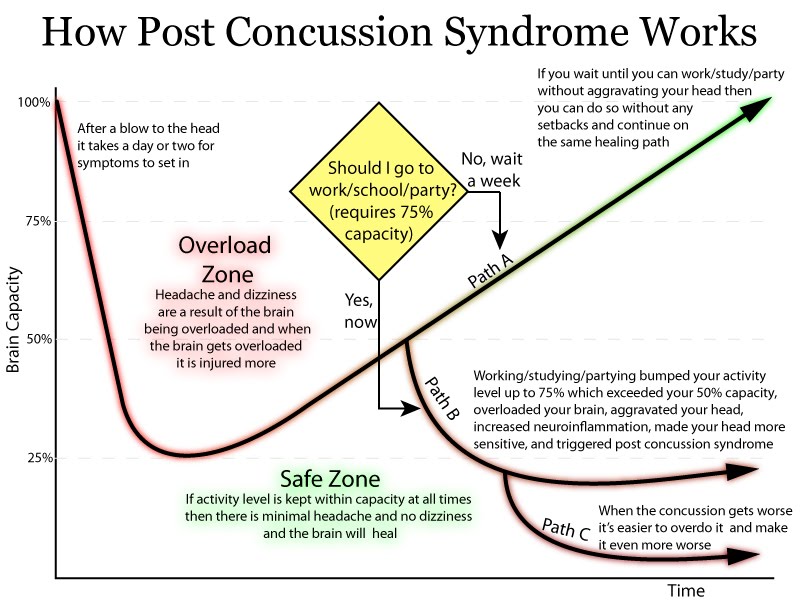 Most concussions resolve fully within two weeks, but post-concussion syndrome will cause prolonged symptoms that can last months. It can also develop into persistent post-concussive syndrome when symptoms last longer than three months.
Some people recover almost fully but still complain for months of post-traumatic headaches as the brain heals itself. Some people also experience a prolonged tendency towards vertigo after their concussion. Multiple concussions can result in permanent brain damage and lead to significant disability if not treated properly.
People who have gotten a concussion are at risk for a complication known as Second Impact Syndrome. This dangerous and fatal condition happens when a person who already has a concussion experiences a second instance of their brain swelling or moving. The second impact may be weak and still cause devastating consequences. In many cases, death and lifelong disability can occur.
Treating Concussions
It is important to seek treatment for concussions because the complications of an untreated concussion can have lifelong consequences. A doctor can help you develop a head injury treatment plan unique to you and your circumstances, but there are a few common lifestyle changes that can help accelerate the recovery process.
- Take over-the-counter medications such as NSAIDs like ibuprofen or aspirin. Take these according to the directions on the bottle, unless otherwise instructed by a doctor.
- Hydrate your body by drinking a lot of water. Research suggests that the bodies of people who are more hydrated are more equipped to heal damaged tissue.
- Get lots of rest! For at least the first three days after injury, try to do as little as possible.
- Avoid alcohol and other substances. These can prevent your body from healing itself as quickly as it should.
- Minimize light, including that coming from devices like TVs, phones, and other electronics. The stimulation of the brain from the use of these devices can cause symptoms to worsen.
- Chiropractic therapy can also be a useful tool for managing the symptoms of a concussion.

More Articles
Welcome Austin Chiropractor, Dr. Bryan Woods!
We’re excited to welcome a new provider to the Pro-Care family! Dr. Bryan Woods, DC, joins our Central Austin clinic. He’s been practicing chiropractic in Austin for several years. Get…
Continue Reading
Avoid These Activities If You Have Cervical Spinal Stenosis
Cervical spinal stenosis is a condition characterized by the narrowing of the spinal canal in the neck, which can lead to compression of the spinal cord and nerves. To effectively…
Continue Reading
Headache After Chiropractic Adjustment: Is It Normal?
A chiropractic adjustment, also known as spinal manipulation, is a non-invasive technique that involves applying controlled force to a joint to restore its function and alleviate pain. During a chiropractic…
Continue Reading
How Often Should You Do Spinal Decompression Therapy?
Spinal decompression therapy is a non-invasive treatment that can help alleviate your back pain and treat a wide variety of spinal conditions. Medication and surgery are not always necessary or…
Continue Reading
Concussion – (Clinic Di Center)
Traumatic brain injury: danger, consequences, treatment
Concussion ranks first among all brain injuries. And it is more common in women. Although, maybe they seek professional help more often than men.
It would seem that our brain is little threatened, because it is protected like no other organ. It is washed by a special liquid, which not only provides the brain with additional nutrition, but also serves as a kind of shock absorber. The brain is covered with several membranes. After all, it is securely “hidden” in the skull. However, head injuries very often result in serious problems with the brain for a person.
All traumatic brain injuries are divided into open and closed .
open
called injuries in which the soft tissues of the head (skin, subcutaneous tissue, fascia) and the bones of the skull are damaged. Closed
injuries are somewhat less dangerous, but still unpleasant. They, in turn, are divided into concussion , his bruise and compression . Among all brain injuries, concussion ranks first in frequency. Moreover, according to the observation of traumatologists, it occurs more often in women. Although, maybe they just seek professional help more often than men.
Causes
A concussion can occur as a result of blows, bruises and sudden movements: acceleration or deceleration, for example, when falling. Concussions are usually caused by traffic accidents, domestic, sports and work injuries, as well as injuries resulting from street fights.
What’s going on?
What exactly happens as a result of a concussion with our brain, doctors still find it difficult to unambiguously answer. After all, if you examine the injured brain with the help of computed tomography, then practically no organic disorders can be detected. Most likely, as a result of a concussion, certain problems arise with the functioning of nerve cells in the brain. At the same time, their nutrition may deteriorate, a slight displacement of the layers of the brain tissue may appear, and the connection between some brain centers may go wrong.
From a severe concussion, blood vessels can burst, certain parts of the brain can be seriously injured. The main danger in traumatic brain injuries is intracranial bleeding, since the leaked blood can compress and impregnate the brain structures, disrupting their performance and viability. In addition, trauma can lead to another formidable complication – cerebral edema. Especially severe are brain injuries complicated by shock, and injuries affecting the brain stem, where breathing and blood pressure are regulated.
How to recognize?
After an injury, a person often loses consciousness. This can last from a few seconds to several minutes. The time spent in this state can be one of the indicators of concussion severity. The extreme degree of loss of consciousness is coma.
With a concussion, a person often does not understand where he is, what happened, and hardly recognizes the people around him. Another important sign by which one can judge the severity of brain damage is memory loss: whether a person remembers the moment of injury, and if not, how much time before the injury fell out of his memory. The greater the memory lapse, the more severe the injury.
When the victim comes to himself, he may feel sick and vomit. Often he turns pale, his head is spinning and hurts, his ears are buzzing, it is difficult for him to focus his eyes, his breathing becomes frequent, and his pulse jumps. In the first hours after a concussion, the victim’s pupils are dilated or constricted – a traumatic brain injury of any severity leads to disruption of the nerve pathways responsible for the work of the eyes. Surely in the cinema you have seen more than once how, when examining an unconscious person, a doctor directs a flashlight beam into the eyes of the victim. This is done to determine the reaction of the pupils. With a mild concussion, the pupils react to light, but sluggishly, and with a severe concussion, there is no reaction at all. At the same time, the expansion of only one of the pupils and the lack of reaction in the second is a formidable symptom and may indicate severe damage to one of the hemispheres of the brain.
What to do?
If a concussion is suspected, first aid must be provided to the victim. First you need to provide a person with complete peace, put him on a bed in a quiet darkened room. It is better to raise your head slightly. It is very useful to apply cold compresses to the head. It is not recommended to drink a lot with a concussion. If the victim is thirsty, prepare sweet tea for him. Alcohol is strictly contraindicated for him!
And, of course, be sure to call a doctor, because it is possible that brain damage is more severe than it seems at first glance. If the patient is in shock, carefully monitor his breathing and pressure until the ambulance arrives. In emergency cases, start artificial respiration and chest compressions.
Diagnosis
With a concussion, you need to contact a traumatologist. He will examine and interview the patient, check reflexes, prescribe an x-ray of the skull, and if a more complex brain injury is suspected, he will refer him for a consultation with a neurologist. There, the patient is waiting for a full-scale check: electroencephalography (EEG), echoencephalography, computed or magnetic resonance imaging of the brain, dopplerography of cerebral vessels, spinal puncture. Magnetic resonance imaging of the spine may be required to rule out spinal problems.
Treatment
Patients with a concussion should stay in bed for at least a few days. At the same time, you can not read, listen to loud music and watch TV. It is necessary to follow all the instructions of the doctor, carefully take the medicines prescribed by him. With a concussion, the general condition of the victims usually normalizes during the first, less often the second week after the injury.
It must be remembered that a person who has suffered even a mild concussion may develop post-traumatic neurosis or other more serious complications, such as epilepsy. Therefore, some time after recovery, you should definitely visit a neurologist and undergo electroencephalography. Treatment for more serious head injuries depends on their severity. In some complicated cases, the help of neurosurgeons may be required.
First aid, treatment and consequences of concussion in children
After a fall, blow to the head and other injuries, after some time or immediately, the child develops characteristic symptoms of concussion or other TBI .
In such cases, the first thing to do is to call an ambulance, and before it arrives, parents should know the basic first aid techniques for a child with a concussion.
First of all, the baby needs to be provided with a comfortable and calm environment. If there are superficial wounds, they must be treated. The child should be in a supine position, preferably on a firm vertical surface. It is safest if the child lies on his side, because. common symptom of a concussion is vomiting . In order to prevent vomit from entering the respiratory tract, it is better to fix the head of the victim on its side. Also, before the ambulance arrives, it is important not to let the child fall asleep, talk to him and distract him as much as possible. If he loses consciousness, it is necessary to move him to a sitting position so that the tongue does not block the airways. In no case should you give the baby painkillers until the doctor arrives.
As a general rule, for any TBI, the child is hospitalized until an accurate diagnosis is made.
If your baby has a concussion, in most cases he will be treated in the hospital for at least a week. The young patient will be prescribed complete rest and bed rest with restrictions on motor activity. Medical treatment is prescribed depending on the severity of the injury. Basically, a child with a concussion is prescribed painkillers, diuretics to eliminate swelling of the brain substance, sedatives, vitamins. After inpatient treatment, a small patient is sent for outpatient rehabilitation at home. At home, parents should strictly monitor compliance with the recommendations prescribed by the doctor and continue drug treatment of the child. Naturally, for some time after the injury, physical activity and sports are contraindicated for the baby. Watching TV, playing computer games, reading is also better to limit. Subject to the correct regimen and adequate treatment, recovery occurs in about a month. After that, the child, as before, will be able to attend school, kindergarten, sports training without any restrictions.
Untimely, incorrect treatment of a concussion can lead to serious consequences. Epilepsy in a child can become one of the severe complications of the injury. Mild effects include frequent headaches, vegetative-vascular dystonia , irritability, chronic fatigue, sleep disturbance, poor concentration . If these symptoms worsen after treatment, it is necessary to consult a doctor again.
You can book your child for an examination with a pediatric traumatologist and neurologist at our center, as well as get advice from other pediatric specialists involved in the treatment of TBI and its consequences. In the network of clinics “Medicenter” trauma centers are open, ready to accept small patients of all ages with injuries of varying severity.