Aiden Chitkara – Lacrosse All Stars
As we approach the midseason mark of the 2023 college lacrosse season, it’s time to reflect on what we’ve seen from the first half. At this point in the season, ACC and Big Ten teams play on linear TV almost on a weekly basis, but they’re not the only teams with players lighting up the […]
Ah, yes. Another week of Division 1 Lacrosse overreactions. Week one’s edition saw some early return and another take that has already blown up in my face. I, along with the rest of Lax Twitter, would personally like to take credit for calling Hopkins’ collapse. But it really wasn’t cool of Georgetown to drop that […]
If there’s anything we’ve learned through the first two weekends of the college lacrosse season, it’s that we know nothing at all especially when it comes to bets. Up is down and down is up. The new-look Georgetown will squash Hopkins, right? Wrong. “Mr. 1/15 is Jordan Evan’s 2.0.” I can’t believe that was a […]
Back by popular demand! For those who are new readers, or old readers or who simply need a refresher, I’m the writer who makes outlandish Division 1 Lacrosse takes after every weekend of the college lacrosse season. ESPN’s Dan Graziano is one of my favorite columnists, and every week during the NFL season he publishes […]
A successful first week of bets prompted a second edition of college lacrosse bets. Hopkins leaned on their athleticism and physicality to take down Jacksonville, while Denver and Syracuse each won their home-openers, respectively. DraftKings has released lines for 27 games this weekend so there’s plenty to choose from. This week, I’ve decided to add […]
With the widespread legalization of sports gambling, including my home state of Massachusetts, Lacrosse All Stars is committed to creating more gambling content to serve those who choose to partake. At the moment, there’s only a handful of sportsbooks who offer college lacrosse bets (Bet MGM, Barstool Sportsbook, Caesars Sportsbook, etc) but for now I’ll […]
Last spring, we witnessed a handful of underclassmen rise to the occasion making impactful contributions to their collegiate programs. Five-star recruits such as Griffin Schutz (Virginia), Andrew McAdorey (Duke), and Bobby Van Buren (Ohio State) were known quantities, but we also saw under recruited players like AJ Pilate (Army) and Brad Sharp (Yale) make a […]
Within a twenty-four hour span, the University of Virginia landed not one, but two No. 1 players in their respective classes. Inside Lacrosse’s No.1 player in the class of 2024, Ryan Duenkel, announced his commitment to UVA on Sunday afternoon. Duenkel’s decision was not too shocking because his father played football in Charlottesville and his older […]
With only three weeks left in the regular season, we’re starting to see some separation between the truly elite players who are putting themselves in the conversation for the Jim Brown most valuable player award. Over the first three seasons, Matt Rambo, Zed Williams, and Blaze Riorden were crowned the honor as the league’s best […]
We are quickly approaching the best weekend in college lacrosse, Championship Weekend. In order to get there, we had to outlast the NCAA Quarterfinals which provided great lacrosse from start to finish. The stage is officially set for Championship Weekend. If you watched ESPN’s coverage of Quarterfinal games, you may have noticed an absence in […]
Delaware has been crowned as this year’s Cinderella team as the unseeded Blue Hens defeated No. 2 Georgetown in a Sunday night thriller. Delaware jumped out to a 3-0 lead midway through the opening quarter, but goals by USA Lacrosse First Team All-American Graham Bundy, and honorable mention All-American Dylan Watson, cut the lead to 4-3 […]
The 2022 PLL Draft proved to be another example why the PLL needs general managers. There are some coaches like Ben Rubeor and Nat St. Laurent, who can effectively handle both roles and make wise decisions in the front office, but the majority of PLL coaches were hired for their wisdom of X’s and O’s […]
Factors of Success for Fitness Programs and Autism
This blog was originally published on AutismFitness.com. It is republished with permission from the author.
An expert is going to see things non-experts don’t. That is part of being an expert; having a carefully calibrated and dialed-in lens for the little things that make a difference. These little things exist in all fields of practice from archaeology (which I just misspelled three times before doing a search) to architecture (misspelled once) and many other areas of practice that don’t begin with “ar. ” In fitness, the little things can be exercise selection and performance (which are actually big things but we’ll get to that).
I’ve concluded that, much in the way of the mainstream fitness industry, it is an idealistic goal to eradicate or prevent poor practices from happening. We see it all the time (and yes, we make fun of it). And much of it is not subjective. Regardless of how someone feels about x exercise being performed by x individual being coached by x trainer, it is doing the thing that it is supposed to do or not. It’s beneficial or harmful (or inconsequential) for the athlete or not. It’s loading or rotating the spine in a healthy pattern or its not.
No matter how many likes. No matter how many “Great jobs!,” a program is built around the needs and abilities of an athlete or it’s not. Is there a gray area here? Certainly. And it does not mean that every set and repetition needs to be perfect (they never are). Nor does it mean that an errant hurdle step is going to result in a leg flying off.
What’s there to get is that programming matters. Exercise selection matters. Coaching matters.
We have three variables in successful fitness programming. Now, these can be applied to general and athletic/sport- or activity-specific populations, but, given what I do for a living, I’m applying it directly to the autism/special needs population. Because this is Autism Fitness. Duh.
Variable one is intention. And the intention is usually good. “I want to bring fitness to the autism population!” “I want to run group fitness programs for individuals with special needs!” “I want to help teens with autism move better!” Some variation of this. And that’s intention. And intention here is laudable. Not many professionals are at this stage of intention.
Variable two is/are the exercises, or, exercise selection. What exercises are you choosing? Are there any contraindications? Are these a bunch of exercises that you know or is this based on an understanding of movement qualities in general and how they apply to a specific individual?
I recognize that this may seem prohibitive; We should all be able to choose how we want to move and exercises/activities that feel good. It’s like roping off a playground and saying you can only play on the parts of the jungle gym that you’re “good at.” So we have to separate the two; free play is free play (whatever that may be) and fitness training is fitness training with more, pun absolutely intended, gravity to it.
Variable three is execution. How are these exercises being taught/coached? Are there appropriate progressions and regressions for each individual?
That athlete you have with ASD is really pedaling hard on the stationary bike! But don’t they sit all day? Do we want them seated for 8-10 minutes out of a 50-minute session? Do we want to continue to shorten hip flexors and invite spinal flexion in an individual with limited trunk stability? If you’re new to all this, you don’t have to know it. If you’re a professional, sorry, you do. Because it’s one of those “little” things that will separate effective programming from whatever we want to call ineffective programming so nobody gets offended because, of course, that’s the worst possible case scenario.
So there’s that. Or those, rather. Those three variables; Intention, Exercises, Execution.
With the autism population comes a wondrous world of compensatory movement patterns and deficits in strength, stability, and motor planning. It is rare that I perform a PAC Profile Assessment and don’t see these issues. With respect to training protocols and programming, the pervasiveness of a deficit is less of a constraint if we know how to effectively address it. There’s no “throwing exercise” at a movement problem and the alleviation of the underlying issue simply by exposure. That’s magic. We don’t do magic.
When we discuss variable two (exercise selection) there is a balance between quantity and quality. Effective coaching is filtering. You know 254 exercises. You usually use some variation of 8-10. That’s filtering. Knowing what your athlete needs based on the presentation of physical attributes. Which, while it may seem outlandish (I was about to write sound outlandish but this is text), variety is just variety.
I’ve observed along my now nearly two-decade career that it takes exponentially more practice and repetition for our athletes with autism to independently master an exercise, meaning they don’t need additional prompting or cuing to complete a press or band row or bear walk to a level of competence. Maybe I’m a wholly ineffective coach, or maybe it’s the underlying neurological, neuro-muscular, and/or gross motor issues. Either one, but it takes longer than for neurotypical individuals.
It appears to be the case that my experience with my athletes is not unique, as evidenced by the feedback, videos, and research performed by our Autism Fitness Certified Pros with their own athletes. If this is true, there’s certainly a case against unnecessary (misspelled twice) variety in programming for the ASD populaton. It detracts from mastering the skills we deemed important. Again, someone’s face isn’t going to fall off from doing 14 different exercises during a session, but it is likely to impede mastery given there’s less practice with each movement.
Execution is the art/practice of coaching. And using the term “art” in a sentence with “coaching” reads as pretentious and I don’t care and I welcome the rebuttal (misspelled five times) to it. These skills require experience. When you know what you’re looking at, you know that you know because you’ve seen it before enough times to identify it. Like a botanist (misspelled thrice) who knows the other strains of “poison” that aren’t ivy. They’ve been there, seen that. avoided ankle contact with that.
Suffice to say there are no “bad” exercises but there are some that will be an almost automatic contraindication for certain populations. In Applied Behavior Analysis (ABA) we have the practice of anticipatory prompting, which is essentially moving in and providing additional guidance or cuing for an individual who is more-than-likely to err on a particular step of a task. We’ve developed an enhanced sense of the probable outcome. So we provide a bridge to success.
What’s important here (I’m also trying to figure out what’s not important here), but what’s important here is that the athlete needs to know practically none of this but the instructor/coach needs to know everything. That’s variables 1, 2, and 3 working in conjunction. Intention. Exercise Selection. Programming.
This is not an argument on behalf of absolute perfection (congrats, does not exist in fitness/exercise), or such exacting standards that they are unrealistic, unattainable, or prohibitive within a reasonable amount of time with an appropriate amount of education and practice (and more education and more practice).
In fact, too strict a standard does a disservice to those who are just starting to learn about and coach fitness programs for the ASD population, particularly parents and family members who do not have a background in exercise or fitness. This is exercise, not pharmacology. Our “exacting” standards can be less exact, save we take ourselves so seriously that we start wearing lab coats (though if it’s neon green I’m totally down).
A useful, practical standard serves as an invitation with a + 1; there are rules and particulars. Wear pants and don’t bring three extra friends. Teach forward hurdle steps before progressing to lateral steps. Nix a heavy carry when form starts breaking down. Don’t do that dumbbell press from the floor that seems to be all the rage in special needs fitness programs right now unless your athlete has a particular need for a reduced range of motion and additional focusing on the triceps.
Knowing why you’re doing what you’re doing is the intersection of the three variables, the middle of the Venn diagram.
A dragon crouching on the ice: How Russians teach Chinese hockey
Komsomolskaya Pravda
Search results
Sport
003
The KHL is going to be the first to conquer the billion-dollar market in this country. And China, having hired Russian coaches, managers and hockey players, is trying to figure out what kind of outlandish sport it is for the 2022 Winter Olympics at home – with skates, sticks and even fights
China is being pulled into the KHL. Photo from the official website of the club “Barys”
Russian hockey rushed to conquer China. On September 1, the Kunlun Red Star club from Beijing will play its first match in the Continental Hockey League – in fact, in the open championship of Russia.
Four Chinese and a dragon
“Everyone was smoking in the stands in the ice palace. The smoke stood like a rocker! ”, – Oleg Gorbenko, who worked as a coach in this country for several years, shared his main impression of Chinese hockey. When the cigarette smoke clears from the hastily converted Beijing arena, the locals will see that there are only four local players from the Chinese to the Kunlun Red Star in the last fourth link, well, the dragon on the emblem. Everything else in the club is Russian – coaches, most of the players, managers and, it is possible, funding in the tens of millions of dollars.
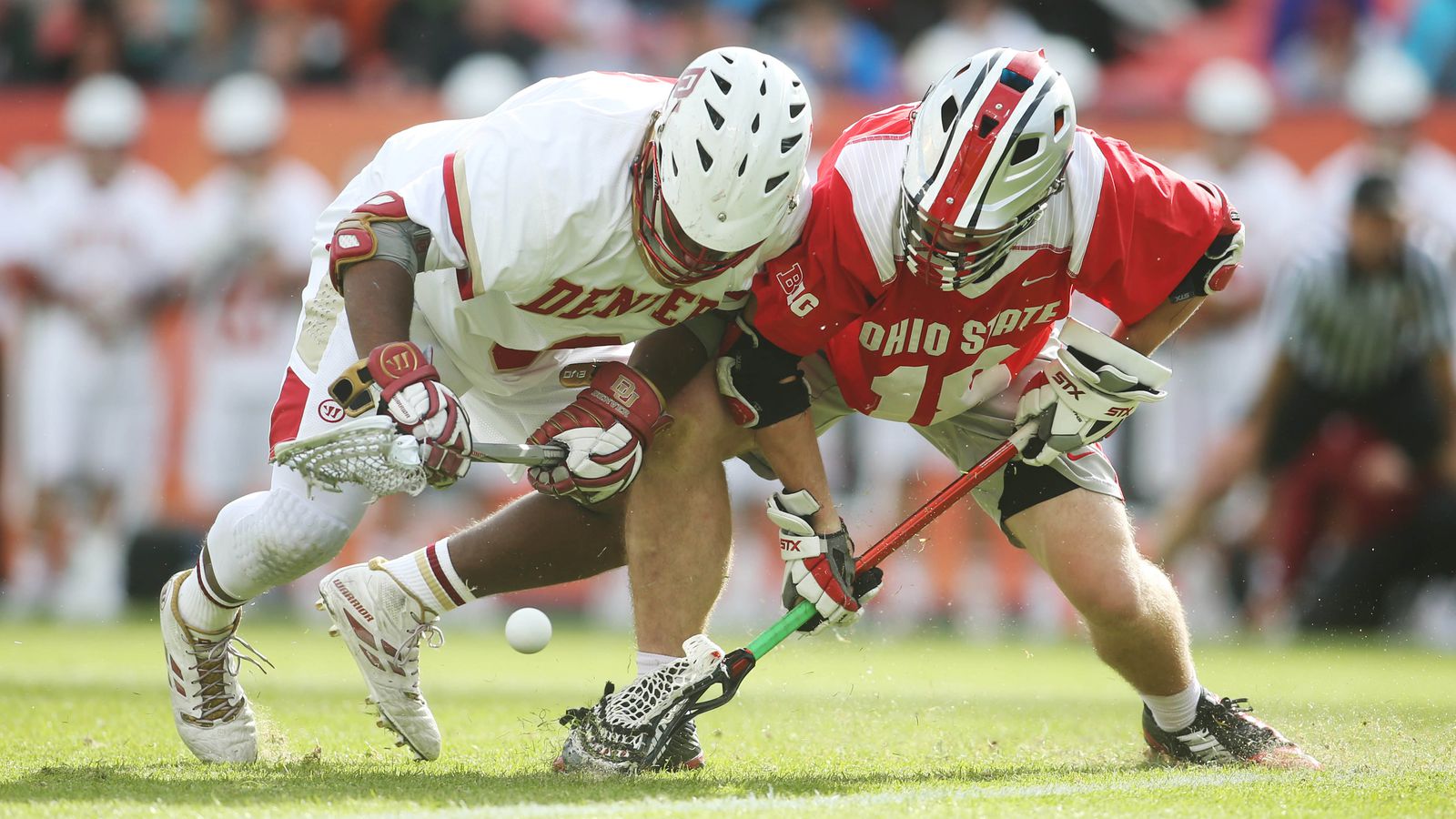
While hockey for China is something like lacrosse for Russia. There, too, there are some funny people running around with ridiculous devices in their hands, pretending that there is some sense in this. There are exactly two facts to understand how this winter sport is far from Beijing. First, there are 1,200 registered ice hockey players in China, including women, the elderly and children. If you remove them from the statistics, there will be 200 hockey players, and this is three times less than in New Zealand. Second, when the Stanley Cup final was shown on public Chinese TV, it was watched by 900 thousand spectators. Perhaps even an empty screen gathers a large audience in China.
Winter-2022 is close
Hockey didn’t care about China for decades either: well, there is such a team somewhere in the lower division, well, let it calmly smash Kuwait with a score of 35:0 and fly by with a whistle in matches with Norway – 1:25 (real facts from history). If it were not for the huge market, 1.3 billion people and the crazy money that Chinese corporations are in the habit of burning on football, hockey would continue to pretend that there is no such country in the world at all.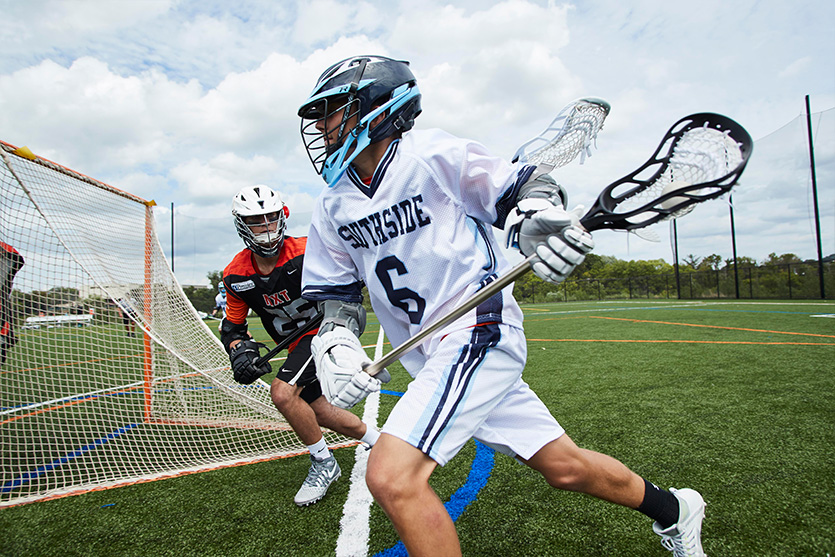 And China would reciprocate.
But all of a sudden, Beijing received the 2022 Winter Olympics, studied the sports represented at it, turned the Sochi medal table in its hands, found its country in 12th place there and thought hard about how to live with it. And then Russians appeared with a proposal to teach how to play hockey in 6 years. Or at least figure out how to hold the stick correctly.
From Chinese, Kunlun Red Star has only four local players in the last fourth line, and the dragon on the emblem. Photo from the official website of the club “Barys”
Whose money do we play for?
The KHL is also interested in this project. The league is tired of expanding towards NATO countries – it’s expensive and nervous, and the Continental Hockey League suddenly broke through to the East. Suddenly – because no one really does. Such sports expansions are prepared for a long time and calculated in detail. It is impossible to imagine that the American NHL would suddenly start a club somewhere in Mexico. According to all the laws of business, we would first hold a series of exhibition matches in this country, invite a Mexican legionnaire to some New York Rangers, and see what economic effect and interest is observed in the country to which sports expansion is carried out.
The KHL decided to take everything at once. But it is still not clear how much the Chinese project will cost Russia. Red Star managers claim that there is no Russian money in the club, but they cannot name the owner of the team either. And from the experience of past projects, everyone is used to it: all KHL clubs from far abroad are financed from Russia in one way or another. So this whole thing will either lead to an amazing breakthrough, or turn into a very funny sports anecdote about how they tried to fake an entire KHL club in China.
BTW
5 things you need to know about the Chinese club in the KHL
1. In order to establish a hockey club in the KHL, the Chinese Communist Party needed permission.
2. The head coach of Kunlun Red Star is Vladimir Yurzinov, Jr., he is also assisted by Russians Alexei Tertyshny and Oleg Gorbenko, who has been working in China for 8 years.
3. Kunlun Red Star almost signed a contract with Ilya Kovalchuk in the summer.
4. Kunlun’s most famous Chinese player is barely 18 years old. His name is Ying Rudi, his grandfather was a famous actor, and his father is a comedy director. AT 9years he went to the United States to play hockey, but the Toronto Patriots from the junior league was his ceiling so far.
5. “Red Star” has already managed to get into a grandiose massacre on the ice. During the exhibition match, Barys tough guy Damir Ryspaev broke almost all the players of the Chinese club, whom he found on the court, and then climbed onto the bench to look for new rivals. Ryspaev KHL awarded an indefinite disqualification.
Damir Ryspaev beat the players of the Chinese KHL club
 com/embed/KDtICpzp0EE” title=”https://www.youtube.com/embed/KDtICpzp0EE”>
Read also
Age category of the site 18+
Online publication (website) registered by Roskomnadzor, certificate El No. FS77-80505 dated March 15, 2021
EDITOR-IN-CHIEF – NOSOVA OLESIA VYACHESLAVOVNA.
EDITOR-IN-CHIEF OF THE SITE – KANSK VICTOR FYODOROVICH.
THE AUTHOR OF THE MODERN VERSION OF THE EDITION IS SUNGORKIN VLADIMIR NIKOLAEVICH.
Messages and comments from site readers are posted without
preliminary editing. The editors reserve
the right to remove them from the site or edit them if the specified
messages and comments are an abuse of freedom
mass media or violation of other requirements of the law.
JSC Publishing House Komsomolskaya Pravda. TIN: 7714037217 PSRN: 1027739295781
127015, Moscow, Novodmitrovskaya d. 2B, Tel. +7 (495) 777-02-82.
Exclusive rights to materials posted on the website
www. kp.ru, in accordance with the legislation of the Russian
Federation for the Protection of the Results of Intellectual Activity
belong to JSC Publishing House Komsomolskaya Pravda, and do not
be used by others in any way
form without the written permission of the copyright holder.
Acquisition of copyright and contact with the editors: [email protected]
Rabbit Museum and 12 other unusual museums from around the world
Since childhood, we have been accustomed to the fact that in the museum visitors admire only ancient works of art and ancient artifacts. But modern museums have long been full of surprises and are happy to rush to meet the age of rapid development and diversity of tastes.
Sulabh International Toilet Museum, New Delhi, India
Those who have ever been to India are well aware of the local shortage of decent latrines. Therefore, it is rather ironic that a museum dedicated to toilets and toilets was opened here. Gandhi once said that “sanitation is more important than even independence. ” But if you look at most Indian public toilets, it may seem that no one here took these words of the great philosopher and politician seriously.
Lunchbox Museum, Columbus, Georgia, USA
If it seemed to you that there is nowhere to fall below, you are mistaken. Even the metal lunchboxes from the Allen Woodall exhibition were honored to participate in the museum exposition. It’s funny that an exhibition of antique dishes is located next door.
Museum of Torture in Amsterdam, Holland
This place is suitable only for those who have a healthy stomach and strong nerves, because here the installation of the most cruel medieval tortures, from the infamous throne of the Inquisition (pictured) to a skull crusher, is offered to the inquisitive viewer.
Museum of Bad Art, 3 branches in Massachusetts, USA
Why are museums only for talented artists? This is the question the founder of this exposition once asked himself and decided to create his own museum, where people can come to look at paintings that are “so bad that they cannot be ignored. ” According to the curators of the exhibition, the museum is designed to maintain a balance between the beautiful and the terrible in the world.
Salt and Pepper Museum, Gatlinburg, Tennessee, USA
This is the only place in the world dedicated entirely to all shapes and sizes of condiment containers. The Salt and Pepper Museum features around 20,000 spice containers from around the world.
Rabbit Museum, Altadena, California, USA
In addition to being directly dedicated to cute rabbits, this exhibition also places a special emphasis on funny verbal puns. At the entrance to the museum you are offered to “jump”, and inside there are many other exhibits related to eared animals, the number of which “multiplies” day by day.
Ripley Museum of Oddities, many locations around the world
This museum has many branches all over the planet and is dedicated to all the strangest and most unusual things on Earth. The very first museum of oddities was opened in St.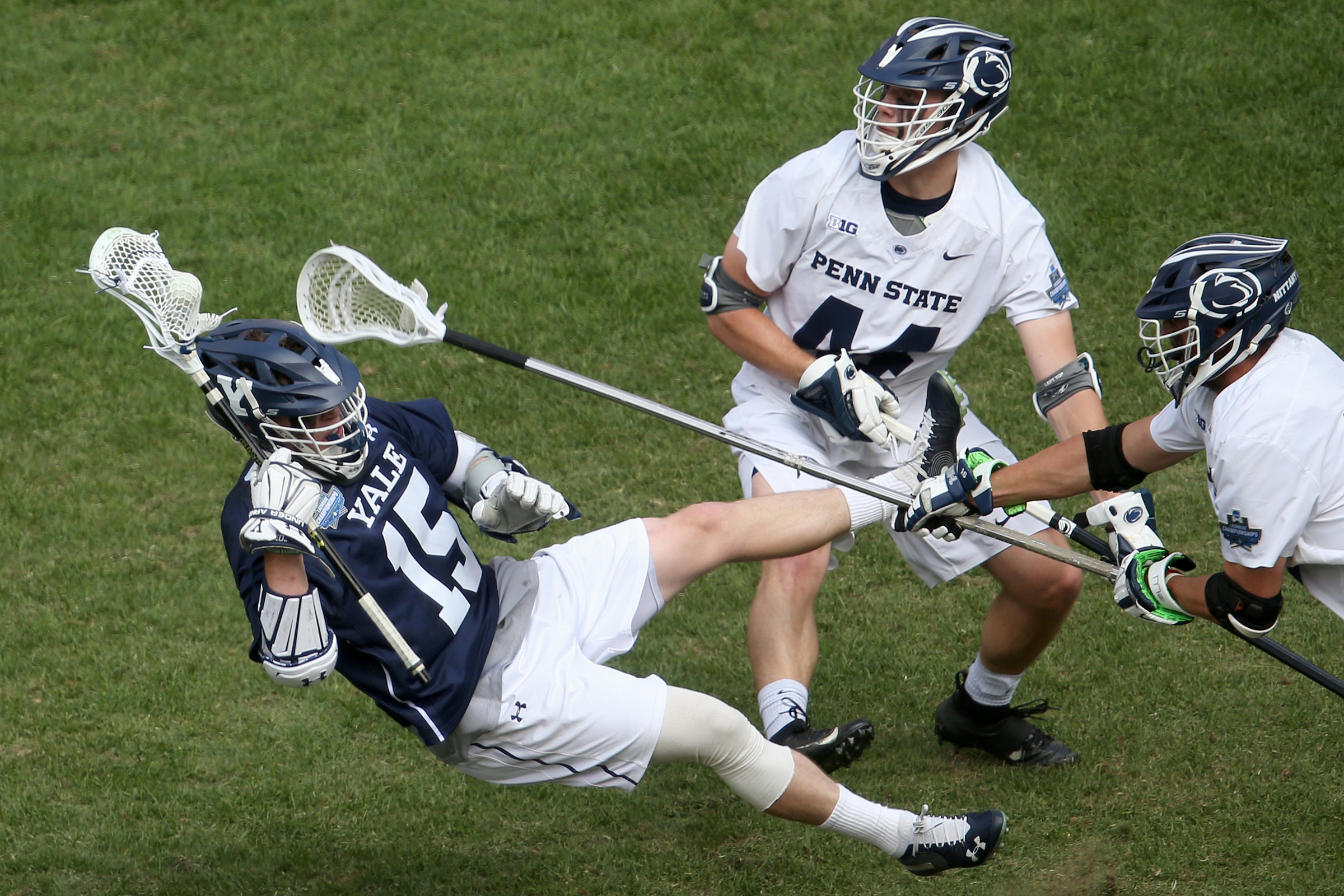 Augustine, Florida (St Augustine, Florida).
Paris Sewer Museum, France
The underworld of Paris is cut far and wide with ancient catacombs and atmospheric sewer passages, the history of which is honored here underground in the thematic museum. He, too, was once part of the general sewer system. Fortunately, this is in the past, and the old drains are no longer used for their intended purpose, so exhibition visitors do not have to worry about non-compliance with sanitary standards.
Kansas Barbed Wire Museum, Lacrosse, USA
This exhibition is one of a kind. Nowhere else in the world will you find a museum dedicated to the history of the “devil’s rope”, which has its own amazing past. For example, did you know that this wire served a lot to some of the founders of the American state?
Hair Museum, Avanos, Türkiye
Here is an exhibit from a slightly embarrassing collection of hair that once belonged to 16,000 different donors. All the curls of this museum were collected by a famous Turkish potter. Probably, such a spectacle can seriously disturb bald visitors.
Shin Yokohama Japanese Noodle Museum, Tokyo
Another very primitive exhibition, according to some guests, and it is dedicated to what is undoubtedly considered the fastest and most affordable snack on the planet – instant noodle soup.
Pharmacy Museum, Lviv. Ukraine
It is located among ancient buildings from different eras, so at first glance it is difficult to distinguish it from other exhibitions. But in the depths of the cellars of this building you can find amazing potions and apparatuses. Each visitor can look at the old book of Lviv pharmacists, containers for herbs and medicines, ampoules and barrels.
All those who want to improve their health or just stay in good shape should purchase “iron wine”. This drink has a long history and is designed to improve digestion, increase hemoglobin and stimulate metabolism.