How to Pass the Lacrosse Ball – LaxWeekly
by jakenathan
So you just picked up the lacrosse stick and now you are ready to learn how to pass! If you are new to the sport, it can be overwhelming to think of the proper passing form and how to practice it correctly.
Today I am going to make it easy and show you exactly how to pass in lacrosse. Then I will show you how to practice passing on your own and show you a few great professional lacrosse players that are great passers.
Lacrosse Passing Part 1: The Grip
In order to pass the lacrosse ball correctly, you need to have a proper grip. Start by putting the stick in your dominant hand (in my case it’s my right hand).
Your bottom hand (in this case my left hand) should go on the “butt end” or bottom of the stick. The palm of my hand should be facing down.
Your top hand (in this case my right hand) should go a little bit below the middle of the stick. Your palm should be facing up. If you are having trouble finding where to put your top hand, find the exact middle of your lacrosse stick and slide your hand 4-6 inches below the middle. Don’t overthink this step too much.
Another tip to keep in mind is to hold your stick loosely. Our tendency in the beginning is to grip our stick really tight, but we lose all of our power and accuracy if you hold the stick too tight. I like to shake out my wrists for a few seconds before I start passing just to loosen things up.
My other big tip for passing a lacrosse ball is to think about the motion similar to how you would throw a football or baseball. We all have played toss in your backyard, and throwing a lacrosse stick is really nothing more than that, except with a stick in your hand.
Lacrosse Passing Part 2: The Throwing Motion
The first thing you want to do is stand perpendicular to your target. This way you will be able to generate more power from your hips.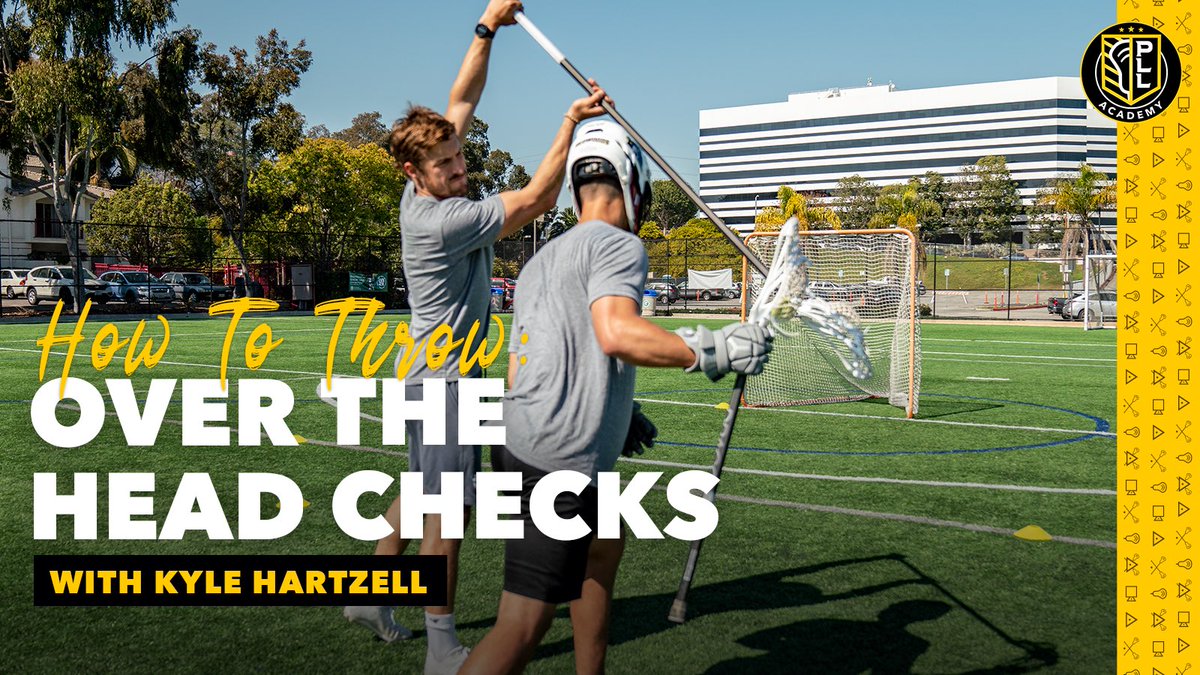 If you are right handed, this means you want your left hip to be facing your target.
Next, you want to point your foot at your target, which will help your pass be more accurate. If you are right handed, this means you want to step with your left foot.
Now just like you would throw a football, you want to turn your body and throw the ball to your target. This will feel super weird if you are doing it for the first time, and that is totally okay!
You want to follow through with your pass with your back shoulder pointing directly at your target. If you are right handed, this means you want your right shoulder to follow through and be pointing at your target.
The other big part of your passing form is called the “wrist snap.” It is the last part of the throw where you quickly whip your wrists, almost like you are cracking a whip. This is the most complicated throw and takes many repetitions to get down fully.
Lacrosse Passing Part 3: How to Practice Passing
 youtube.com/embed/fLQhNF0nHaU?feature=oembed” frameborder=”0″ allow=”accelerometer; autoplay; clipboard-write; encrypted-media; gyroscope; picture-in-picture” allowfullscreen=””>
Congratulations, you are on your way to becoming a great passer. I know it feels strange to pass, but I promise you that every great lacrosse player felt the same way when they started out. The next step is to practice over and over again.
Lucky for you, there is a super easy drill that you can do on your own called wall ball. Go find a brick or wood wall and simply pass against the wall. You can use a piece of tape to mark a spot on the wall, and try to hit that spot every time.
Wall ball is the single most important lacrosse exercise to exist, and you can get ahead of your peers the more time you spend on the wall. Throw on some tunes, relax and have fun getting better at passing.
I have a challenge for you, try to do 100 passes on the wall 5 days per week. The next week, do 200 passes. Keep going until you get to 500 passes. I guarantee that you will be a different lacrosse player after!
Several lacrosse companies have created rebounders specifically designed for wall ball if you cannot find a brick or wooden wall.
The other great way to practice passing is with a partner. You can find a teammate, coach or even a parent to pass to. If you only have one lacrosse stick, your friend can use a baseball glove to catch the ball. Remember, you are focused on passing right now, so you just need a target to throw to.
My biggest piece of advice with lacrosse passing is to be patient! It takes a long time before your brain gets the muscle memory down to pass. If you keep working at it every day, you will eventually be able to pass without thinking. How cool is that?
Lacrosse Passing Part 4: Great Lacrosse Passers
One of my favorite ways to get better at lacrosse is by watching films on great lacrosse players. In this case, if you want to become a better passer, here are a few college and pro players who pass extremely well.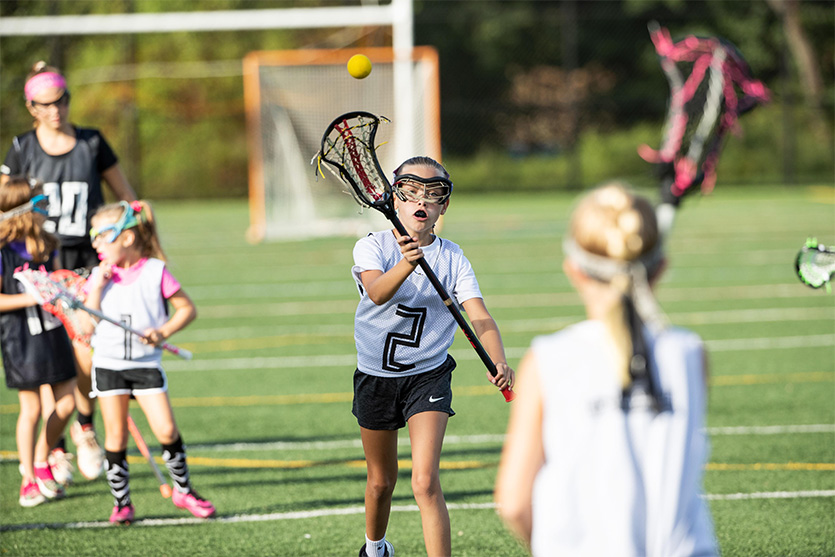 We just went over the basics of passing, but you can learn more advanced passes from these guys.
Grant Ament
Grant Ament is considered by many to be the best passing lacrosse player in the world. He can throw crazy no-look passes and fakes better than anyone I have ever seen. You can check out a complete breakdown of how to pass like Grant Ament on my YouTube channel:
Tom Schreiber
Schreiber is probably the best lacrosse player in the world right now, and a big part of his game is passing. He can pass from all sorts of crazy angles, and it really feels like you are watching a pro basketball player. Here are some of his highlights:
 youtube.com/embed/aMUX8HN6jHQ?feature=oembed” frameborder=”0″ allow=”accelerometer; autoplay; clipboard-write; encrypted-media; gyroscope; picture-in-picture” allowfullscreen=””>
Pat Spencer
Speaking of basketball, Pat Spencer is a former lacrosse player turned pro basketball player who is definitely one of the best passers lacrosse has ever seen. He looks like a point guard dishing out assists left and right.
How To Throw A Lacrosse Ball Like A Pro: 10 Tips To Know
Wondering how professional lacrosse players throw a ball? If you’re looking for tips on how to throw a ball like a pro, then you’re in the right place. Here, you’ll learn about a number of tips to help sharpen your ball-throwing skills. Even if you’re not planning on playing in any professional games, throwing a lacrosse ball is still a vital skill in lacrosse, professional or not.
How Do the Professionals Throw a Lacrosse Ball?
Ready to learn some lacrosse-throwing tips? Check out these 10 tips.
1. Proper grip is the key.
In lacrosse, the grip is everything. If you don’t know how to grip your lacrosse shaft right, then you won’t be able to shoot, let alone do anything in lacrosse except for running. So do you know how to grip your lacrosse stick?
The right grip starts with putting your non-dominant hand at the butt of the stick. The position of this hand should be as if you’re making a fist while you hold the end of the stick. Your dominant hand goes above. No, not directly, but it goes in between the lacrosse head and the butt. Ideally, it should be a few inches below the lacrosse head.
This position helps balance out the proper movements with the stick. The dominant hand drives the stick and gives it force, while the non-dominant hand guides the direction. This is why professionals tell you that the dominant hand’s placement is important. Put it near the head and your moves become limited. Put it near the butt, then you lose control of the stick and have less force when you throw.
2. Practice with your non-dominant hand.
Did you know that being ambidextrous is a skill you should have if you want to be good in lacrosse? This sounds ridiculous because being ambidextrous seems impossible especially since it’s more than just getting used to your non-dominant hand. Being ambidextrous is often a gift, but it can be done if you practice it right.
If you feel downcast because being ambidextrous is just too much work, don’t be. You don’t have to learn how to write with your non-dominant here. Instead, what you should be able to do is to throw with your non-dominant hand as if you’re doing it with your dominant hand.
When you know how to throw with both your hands, you will lessen the chances of taking time to change the grip of your hands. You will also feel confident because you’ll be able to shoot with both hands. Just think about not worrying that your other hand can’t throw properly.
3. Learn how to position your body.
For obvious reasons, you have to learn how to position your body. The right grip is very important but that isn’t all when you actually play the game of lacrosse. Positioning will help you gain more control of your throwing.
So how do you position your feet and body? Know that your feet also have a dominant and non-dominant side. The dominant foot should be the opposite side to your dominant hand. In other words, the lead foot should be the opposite side’s foot. It’s confusing, but you’ll get used to it.
When people say that your lead foot should be placed in front, that means that your non-dominant foot should be supporting your upper body movements. On the other hand, your anchor foot (the dominant foot), is placed at the back. This positioning helps you move your hips better when you throw, run, or catch.
4. Don’t forget your footwork!
By now, you already know that your positioning will help you play like a pro. But what’s the other half of your positioning? It’s your footwork. Trust the professionals – you will rarely throw by just staying where you are. You will almost always have to throw while you’re running.
This means that you have to work on your footwork. The only way to do that is to do some drills. There are many drills that will help you perfect your footwork – whether you plan on working on your speed, agility, or balance. The key here is to do a lot of drills as you can because you will learn more from them than you will ever learn by just reading tips.
5. Do some drills regularly.
Needless to say, drills are important. This point has been stressed by the tip above. However, you have to do your drills regularly. Doing a drill once doesn’t make you a pro at it. Besides, you won’t be able to get the drill right the first time you do it. So what should you do? Practice regularly.
When you do your drills, you’ll most likely hold your lacrosse stick while you move. This is a good thing. When you have your lacrosse stick with you, you’ll be more aware of your overall position when you move. If you’re practicing to be ambidextrous, this is also the perfect opportunity.
6. Practice following through.
Don’t forget to follow through. Following through is an essential part of your movement. But the sad part is that a lot of people overlook this important part in practice and especially in official games.
A follow-through is the full movement of your body towards the direction of your throw or hit. Most non-contact sports require a follow-through whenever a ball is hit or thrown (e.g. tennis, baseball). Lacrosse is included, too. This means that if you want to be good at lacrosse, you shouldn’t forget your follow-through ever.
Why is a follow-through important? Aside from getting the positioning right, it also helps in increasing the accuracy and improving the direction of your throw.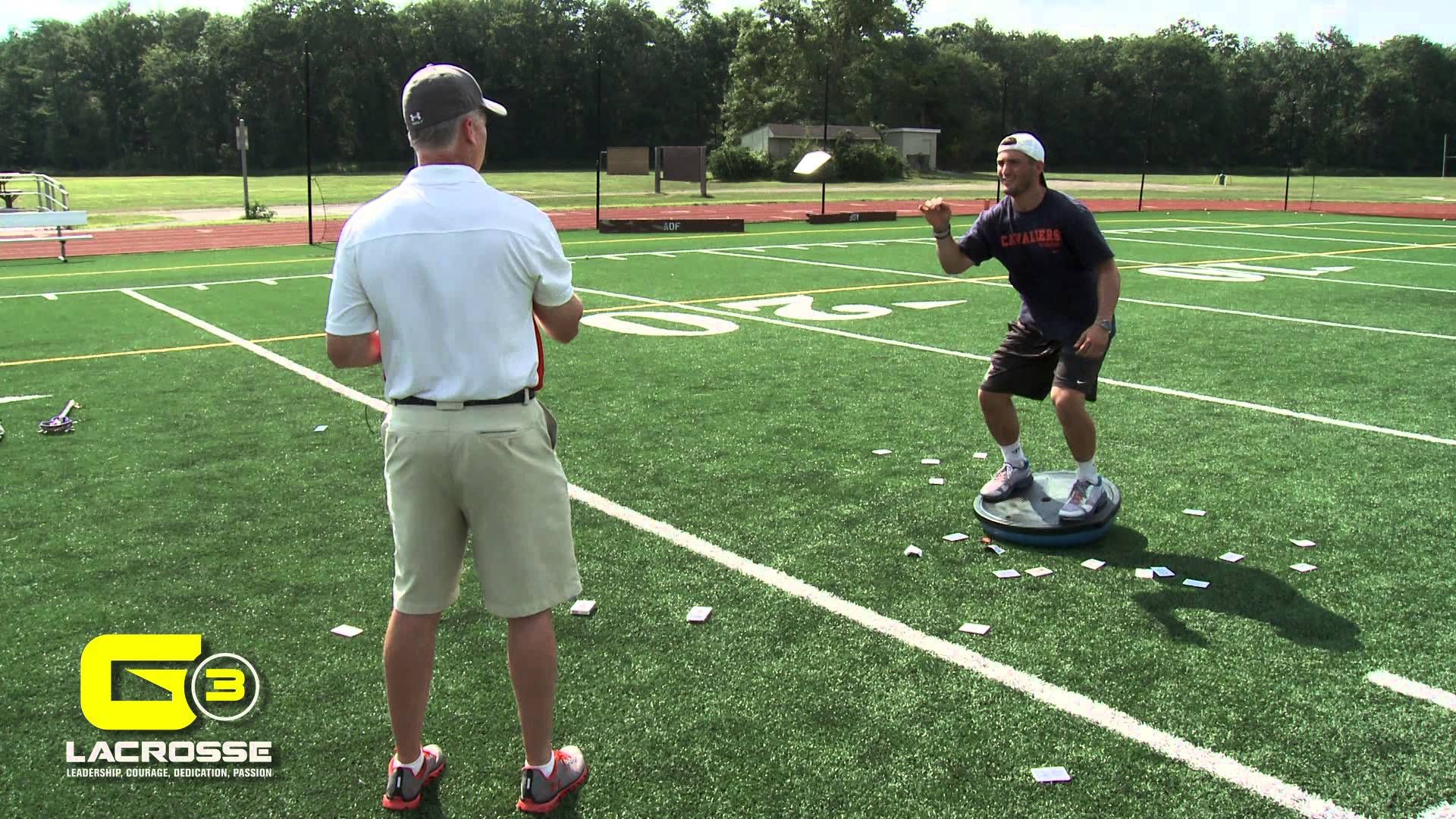 The full swing you’ll do will be more directed towards your teammate or the goal if you complete a follow-through.
7. Shoot from different angles and positions.
There are drills that focus on footwork, but there are those that focus on throwing from different angles. In the same way that it’s rare to throw on a stationary position, it’s rare for you to throw right in front of the net. There are a lot of instances when you’ll be by its side or when you’re in a different angle other than 90 degrees.
By practicing your throws from different angles, you learn the best positions to shoot the ball wherever you are in the field. This will help you learn how to aim even in non-ideal spots. Shooting from different angles will also help you learn more arm and hip movements for maximum mobility.
8. Shoot and move.
Don’t like running? Sorry to burst your bubble, but if you don’t want to run and throw, then lacrosse isn’t the sport for you. If you didn’t realize it yet, lacrosse involves a lot of running. So you have to work on moving fast while having accurate shots.
And the best way to do perfect this is none other than practicing your throws while you move around the field. For this type of practice, it helps to have a coach or a teammate act as an opponent. With this, you have a more realistic way of learning how to shoot while someone is trying to get the ball from you. This is probably one of the best drills you can repeatedly do.
9. Practice.
This is the advice that you should never forget – practice. Unfortunately, like many sports, you can’t read or watch your way to becoming a good player. You have to work hard for it. If you have to practice every day, do so. No one got better at lacrosse by just watching games and reading techniques.
What are other reasons why you need to practice? Well, you’ll learn a lot of other skills that you won’t normally learn on your own. For example, if you practice with a team, then you’ll learn communication and cooperation. You also learn anticipation. If you didn’t know yet, anticipation is important when you play lacrosse. It helps you predict your opponent’s moves.
10. Play with a friend.
And lastly, try playing with a friend. Playing with a friend or with your team is going to be very helpful when you play an actual game. Just imagine not knowing how your teammates play on the actual game. It’s going to be a disaster!
So what should you do? Gather your teammates and do drills together. Even by just doing drills, you already get an idea of how each person plays. The more you get to know their techniques, the better you become. Plus, the best takeaway here is that you get to learn how to communicate as a team.
Conclusion
If you’ll notice, most of these tips are very basic. However, even if they’re pretty basic, a lot of people still forget to do them. That’s the thing about basic lacrosse skills – they’re often overlooked. If you’re not careful, you’ll miss out on doing them, too. Hopefully, these tips are helpful reminders that will push you to learn and sharpen the basic skills to become a pro player.
Sharing is caring!
0
shares
Why Trust Us?
At HobbyKraze, we’re passionate about helping you have the best hobby experience possible. Our team of experts researches, tests, and evaluates all product gear across various categories, providing reliable, unbiased, and informative reviews to help you make informed purchasing decisions. Our reviews are based on hands-on testing, research, analysis of customer feedback and everyday expertise, where required. We continuously update our reviews based on changes in product availability or new information to ensure that you’re getting the most up-to-date recommendations
Lacrosse Rules (video)
Getty Images
This time we’re talking about lacrosse, which is considered the fastest team sport on the feet.
History of the game of lacrosse
The historical roots of the modern game of lacrosse grow out of the favorite pastime of the Indians of North America, who sometimes played tribe against tribe, playing cattle, pastures or watering holes.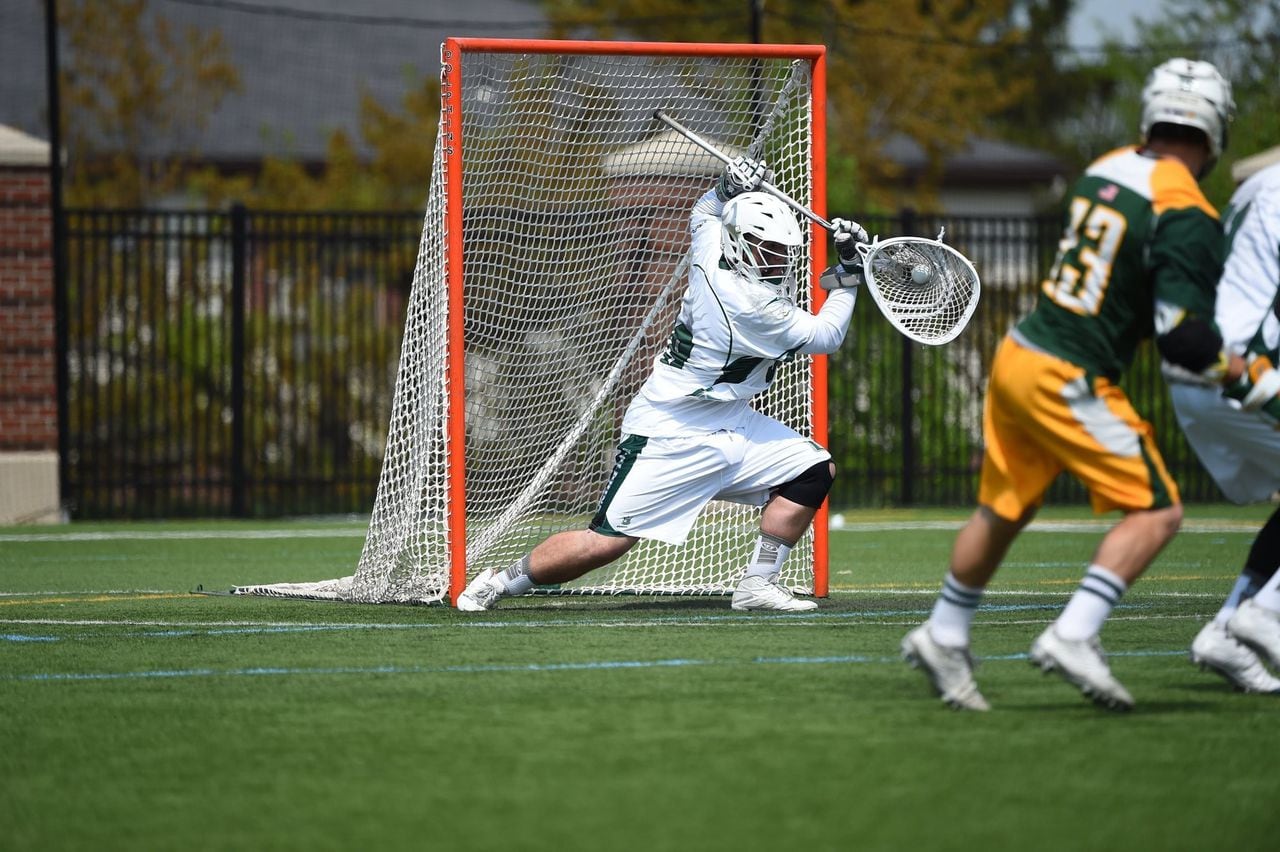
Players (their number, by the way, was not limited) were also encouraged by the fact that the fans, standing at the edge of the field with tomahawks in their hands, were ready to join the case in case of biased refereeing or few other complications.
The elders of the Indian tribes believed that lacrosse forged strong, uncompromising characters. Moreover, it is very useful for the health of those who remain alive and well after the match, and in fact one match could last up to two days in a row. The rules were not spelled out at that time, and no one really tried to follow them.
The basic rules of lacrosse
The rules of men’s lacrosse appeared in the middle of the 19th century and provided for the presence of 10 players on the field, with 9 allowedsubstitutions (women’s lacrosse has an unlimited number of substitutions).
The size of the playing field is 100x55m with square gates 1.8m wide. The gates are 72m apart.
The goal of the game is to score as many balls as possible using a special long-handled racket, the features of which will be discussed below.
Note that it is not allowed to grab the ball with your hands, but in the old days, tricksters were known to catch the ball with their mouths and deliver it in this way to the opponent’s penalty area line, where they spat it into their racket and shot into the goal. Now, in order to avoid such tricks, the balls have been increased in diameter to 6.4 cm, so now you just can’t take them on the tooth.
The ball is put into play by a kind of hockey-like throw-in. The game is very productive compared to football or hockey, on average 10-15 goals are scored in a game.
4 quarters of 15 minutes of pure time are played, that is, when the game is stopped, the time also stops.
Rules for removing players
The rules of lacrosse allow you to play with your opponent in the body, but the main thing is not to overdo it. A push in the back is a violation of the rules, but is not punished by removal, it simply allows the opposing team to take the ball without a fight.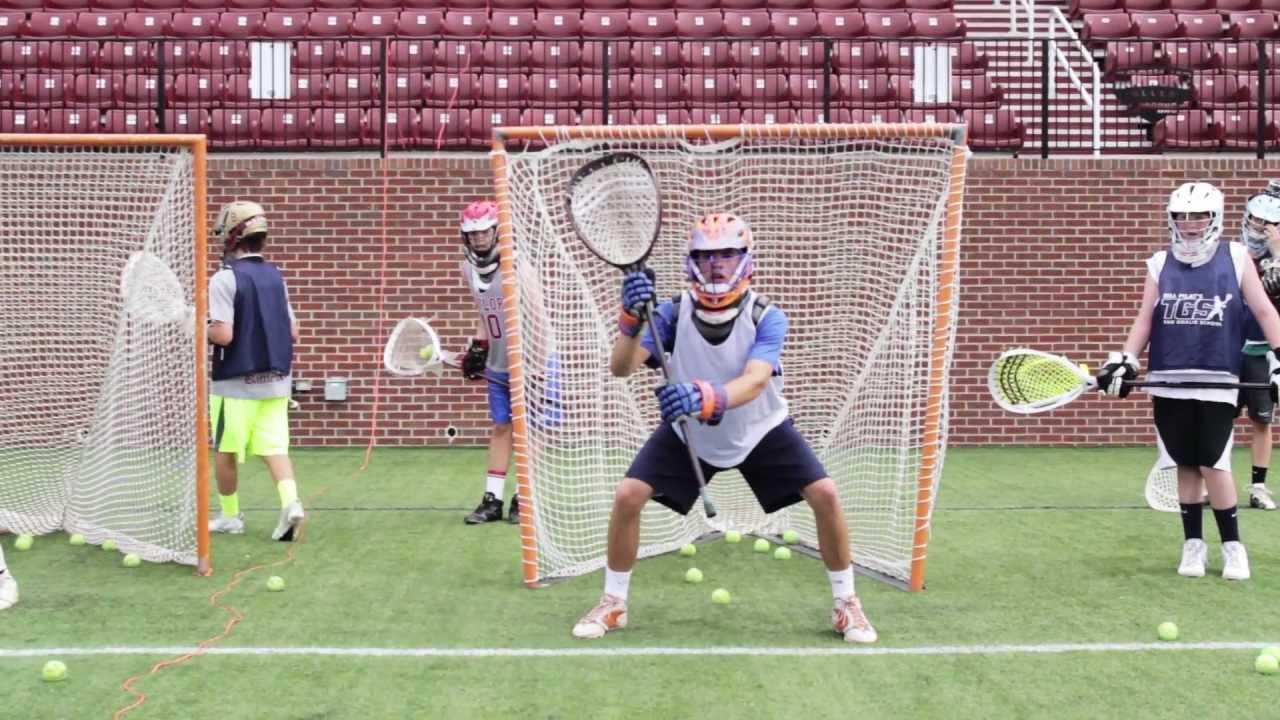
But what you can get a suspension for is for hitting the helmet and below the belt or tripping. For such violations of the rules in the game, they are removed from the field for a certain period, mainly from 30 seconds to 2 minutes.
There are offside rules, which are fixed when more than six field players of the same team are in one half of the field, that is, in fact, forwards and defenders are forbidden to cross the middle of the field. Offside is punishable by removal.
If the team, while on the power play, scores a goal, then, as in hockey, the excluded player returns to the field. But not in all cases, there are violations where it is impossible to leave the penalty area ahead of time.
Lacrosse rackets
Lacrosse is played with a special stick, which consists of a handle (shaft) and a “head” (head). Pens are made from various types of metal such as aluminum, titanium, or even alloys of different materials. The “head” is made of plastic, and the net in which the ball lies is stretched like on a football goal.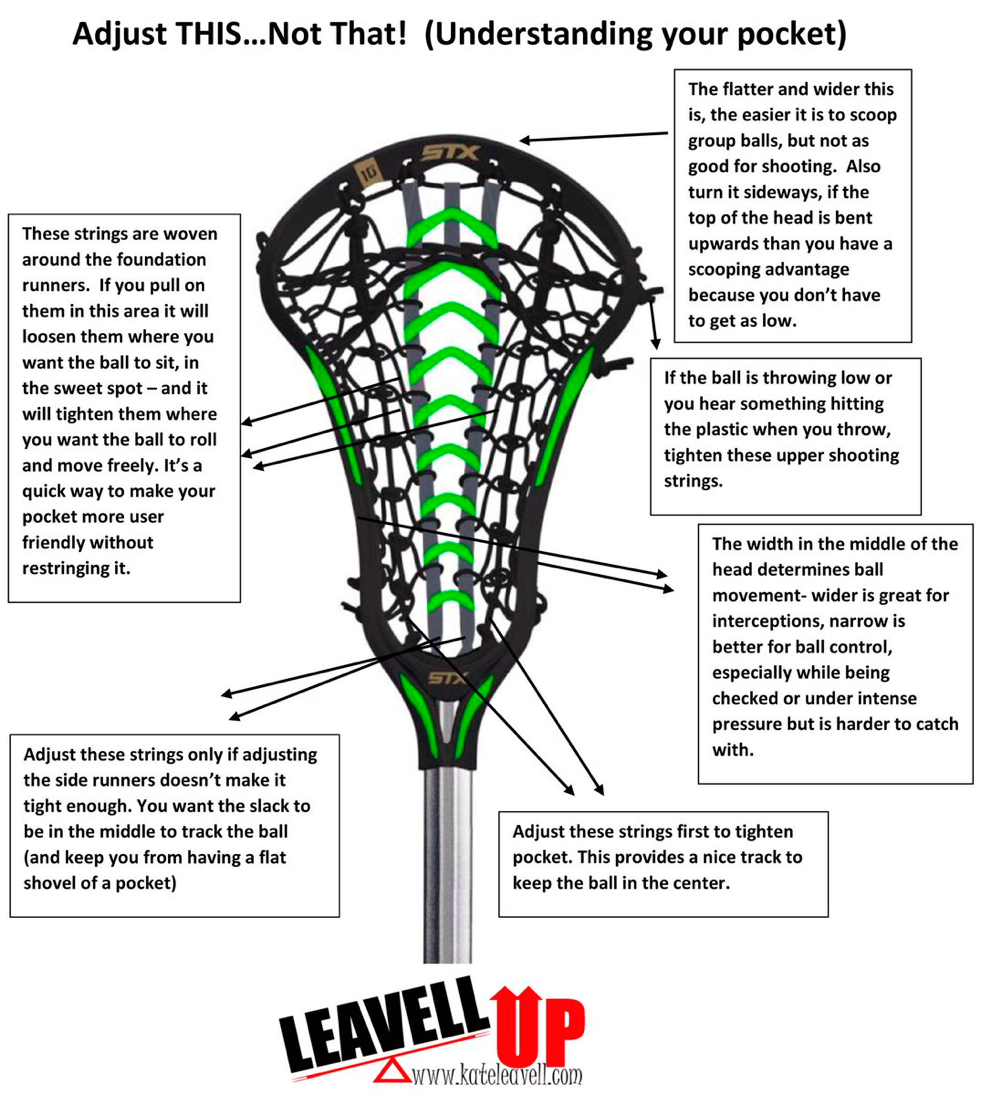 There are different clubs for each playing position.
In attack, players use short one-meter sticks, they are very light and allow attackers to hit with great speed – the ball flies at speeds up to 140 km/h during a shot on goal.
A short stick allows players to control the ball more easily and reduces the chance that a defender will reach a forward and recover the ball.
Defenders also have their trump cards. Their clubs are longer than attackers’ clubs – the length varies from 1.3 to 1.8 meters. A long stick allows you to throw the ball much further, as well as take the ball away from an opponent, being relatively far from him.
Goalkeeper sticks differ from defensive sticks only in a larger “head” to make it easier to catch the ball.
Lacrosse also has halfbacks. They may use both a long stick and a short stick, depending on the situation. Usually defensive midfielders play with a long stick, attackers with a short one.
Read also:
Baseball Rules
Curling Rules
Golf Rules
EA SPORTS – NHL 20 – Training & Management
EA SPORTS – NHL 20 – Training & Management
NHL 19
EA SPORTS NHL 20
Overview of game features
Gameplay Features
Cover Player Auston Matthews
Take Notice
World of CHEL
Team of the Year
EASHL
ULTIMATE TEAM
RATINGS
EDUCATION
NEWS
Overview of game features
Gameplay Features
Cover Player Auston Matthews
Take Notice
World of CHEL
Team of the Year
EASHL
ULTIMATE TEAM
RATINGS
EDUCATION
NEWS
Learn how to score goals, make passes, take shots, put pressure on opponents, and more. Once you’ve explored the Learning Hub, head over to the NHL™ 20 Training Camp to take your hockey skills to the next level.
EA SPORTS™ NHL™ 20
RIDING
If you are new to ice skating, watch this tutorial video to learn the basics of skating. Very soon you will be slicing through the ice like a real pro!
WATCH VIDEO
PUNCHES
Learn to hit the goal so that the goalkeepers are powerless in front of you. Learn all about the different types of shots on goal in NHL 20 and how to execute them.
WATCH VIDEO
PASS
To win in NHL 20, you need to learn how to pass the puck – whether it’s simple passes to break out of the zone or a tricky pass through the air for the subsequent attack on the net.