Mustard Seed Hill at Millersburg Military Institute
Mustard Seed Hill at the Millersburg Military Institute
Mustard Seed Hill has sought to restore the historic Millersburg Military Institute property to its former glory, while honoring the rich tradition and legacy. Even before it’s past as the home of the military institute, the Millersburg community was home to another institution of Kentucky education. Kentucky Wesleyan College was founded in 1858 by the Kentucky Conference of the Methodist Episcopal Church. While its campus has since relocated to Kentucky’s fourth largest city – Owensboro, the school originally opened its doors in 1866 in Millersburg, KY. What began as a training school for preachers quickly expanded with additional business and liberal arts curriculum being added. In 1890 the school was moved to Winchester and soon after women began to be admitted for the first time. In 1951, the school moved to its present location in Owensboro.
Building on its education roots, shortly after Kentucky Wesleyan moved to Winchester, the Millersburg Military Institute ( or “MMI”) was a military boarding school founded in 1893. The school was founded by Colonel C.M. Best, who purchased the land from the Kentucky Methodist Conference and converted the building into a military boarding school. In 1898, the first class of 17 students graduated from the school. By 1903, MMI’s growth had prompted the construction of additional buildings, but the school would soon face yet another turning point.
In 1920, the school was closed by Col. Best, but the citizens of Millersburg demonstrated their commitment to hosting this educational institution by establishing a corporation to continue the military school. The group purchased the home of Sanford Allen at the current location on Main Street in Millersburg. The Allen House, as it came to be known, is a Greek Revival home built in 1852, by William Nunn, a prominent citizen of Millersburg. Nunn, also supportive of education, later sold his home to the father of Sanford Allen, allowing it to become the center of this historic campus. In later years, MMI
added other facilities to the campus, including a classroom building, a gymnaisum, and a chapel. Upwards of 250 students were enrolled during the school’s peak operating times; however, class sizes steadily declined through the early 2000’s. In 2003, Millersburg Military Institute was renamed the Millersburg Military Academy and operated as a military boarding school until 2006. In 2008, the property was purchased by the U.S. Army Cadet Corps, and converted into its national headquarters, as well as a National Cadet Training Center. The facility served again as a military boarding school as Forest Hill Military Academy starting in August 2012. In 2014, the US Army Cadet Corps began a reorganization and closed the school.
Community Ventures, a Kentucky non-profit organization, purchased the campus in 2016 and the campus took on the name Mustard Seed Hill, symbolizing how a small amount of faith can flourish into something great.. For the Millersburg community, the campus continues to represents history, pride, and opportunity, hearkening back to a time when this community and school supported one another, a time when a thriving MMI meant job oppotunities and valuable investment into the greater town of Millersburg, and a time when its citizens watched as generations of young students achieved greatness before their very eyes.
The Community Ventures mission at Mustard Seed Hill is focused on driving visitors to Millersburg through events, weddings, corporate retreats, family reunions and athletics. Bourbon Christian Academy also resides on the campus and provides additional entrepreneurship and momentum for growth.
http://mustardseedhill.events/about/
Millersburg Military Institute – Abandoned
The Millersburg Military Institute is a former military academy in Millersburg, Kentucky.
History
Col. T.F. Johnson’s Female Seminary, a branch of his military school in Blue Lick Springs, opened in 1850 in the Baterton residence in Millersburg. 4 The Seminary closed in 1852 but reopened as the Millersburg Male and Female Seminary in September 1852. 5 It was operated by Rev. John Miller, pastor of Methodist Episcopal Church South. The Seminary passed into the hands of Rev. George S. Savage in 1854 and the name of the school was changed to the Millersburg Male & Female Collegiate Institute in 1856. 6
6
Rev. T.F. Shellman began work to establish a male and female conference school in September 1857, purchased acreage outside of Millersburg in 1858, and laid the foundations of a large school building. 7
The Kentucky Conference met in Millersburg in September to propose to the stockholders of the Millersburg Male & Female Collegiate Institute that, if they enlarged the building and converted it to a male-only college, the Conference would endow the school with $100,000. 8 The stockholders agreed to the offer and the Male Department of the Millersburg Male & Female Collegiate Institute was set off as the Kentucky Wesleyan College in 1859 while the Female Department continued on as the Millersburg Female College. 9
Facing overcrowded classrooms in the mid-1860s, some male students of the Kentucky Wesleyan attended the Female College. The Female College was consumed in a fire on December 29, 1878, but continued to operate the very next day in rented houses throughout the city. A new structure for the Female College was built between March and September 1879. 9
After suffering financial hardship, Kentucky Wesleyan was sold to Rev. Morris Evans in 1884, 13 and given to Rev. Cadesman Pope in 1885. In June 1897, Pope retired and Rev. C.C. Fisher assumed the leading role. Kentucky Wesleyan relocated to Winchester in 1890. 11
Fire once again struck the Female College on October 9, 1907, which was quickly replaced. 14 The Female College was renamed to Millersburg College in 1915.
Millersburg Military Institute
The Millersburg Training School was established by Col. C.M. Best of Virginia in the former Kentucky Wesleyan building in 1893. 17 The condition of the structure prohibited students from using it until renovations were completed in 1898, at which point the school’s name was changed to Millersburg Military Institute. 15 A new classroom building was erected in 1903 that allowed the Institute to enroll 28 cadets. 17 Other buildings were later added to hike the enrollment cap to 70.
Best sold the campus to the county in 1920 for Bourbon County High School, however, the Institute continued to meet in one of the school buildings. 15 In the spring of 1921, the old Allen homestead was acquired and used as the administration offices for the Institute. 3 15 Over time, six buildings were constructed. 15 16 In the 1930s, the Millersburg College became the home of the Junior Division of the Millersburg Military Institute, 14 and the campus grew to encompass the following buildings:
- Allen House: Administrative offices, faculty apartments, infirmary
- Gamble Hall: Cafeteria on the upper level with a student center and post exchange on the lower level
- Library
- Memorial Gymnasium
- Miller Hall: Dormitory for 70 students and three faculty members
- Moffett Hall: Junior ROTC activities
- Rankin Hall: 13 classrooms
- Rees Athletic Field: Football, softball, baseball, and track with tennis courts nearby
Millersburg Military Institute closed in early 2003 over financial concerns, but after a flurry of support from parents and alumni through fundraising, the students were able to complete the school year and have a commencement for the graduating seniors. 2 The school was able to reopen in 2004, but by 2005, it carried $1 million in debt. With such uncertainty, enrollment dropped from 80 students in 2003 to 45 students by early 2006.
The Institute began to explore the possibility of selling the school or rebranding it as Forest Hill Preparatory School in a bid to attract a more diverse student body and boost enrollment. 1 To try and fund the rebranding, the Institute attempted to auction school and military memorabilia in July with little success. The plans to de-emphasize military education also caught the ire of alumni who took the conversion news with disappointment. 2
On August 10, 2006, the Millersburg Military Institute closed after 113 years of operation. 1
United States Army Cadet Corps
The United States Army Cadet Corps, of Dayton, Pennsylvania, purchased the Millersburg Military Institute on September 12, 2008, with the goal of using it as its new national headquarters and training center for various Corps summer training programs. 18 The Corps wanted to offer an “army-oriented career exploration” program for males and females aged 12 to 18 and to give students a firsthand view of military life.
The Corps hosted the Millersburg Military Ball on April 24, 2009, with a keynote speech by James McEachin, an actor and a Silver Star and Purple Heart veteran of the Korean War who was also an Army Reserve Ambassador and a member of the Corps Board of Advisers. 20 The city hosted the Parade of Cadets on the following day that evolved into a celebration of military heritage. 21
Forest Hill Military Academy reopened on the grounds of the former Millersburg Military Institute in August 2012, which included a residential military high school and junior college. 12
In March 2013, a Pendleton County mother filed suit against the Corps, alleging that a former camp instructor made sexual advances against her son and that there was misconduct against her daughter by a fellow cadet. 24 In June, a fire inspector ordered the Corps to evacuate 70 teenagers and some staffers from two buildings after finding safety concerns, which included exposed electrical wiring, missing fire extinguishers, broken fire alarm systems, and missing or defective smoke detectors. 24
The state Attorney General filed suit in the county against the Corps in August 2013 over concerns of mismanagement at the Corps, which led to the resignation of the school’s leadership and board. 24 A court-appointed receiver was put in place to oversee the school’s finances and day-to-day operations until a new board was installed.
In September, following an investigation by the State Police, a grand jury indicted a former school employee on three counts of first-degree sexual abuse. 24 The court-appointed receiver filed an affidavit in December alleging that former Corps employees were interfering with the school’s operation.
Forest Hill Military Academy closed its boarding program in December 2014 over low enrollment 22 but reopened in August 2015 as the Millersburg Military Institute, 23 focusing on holding camps for high school youths.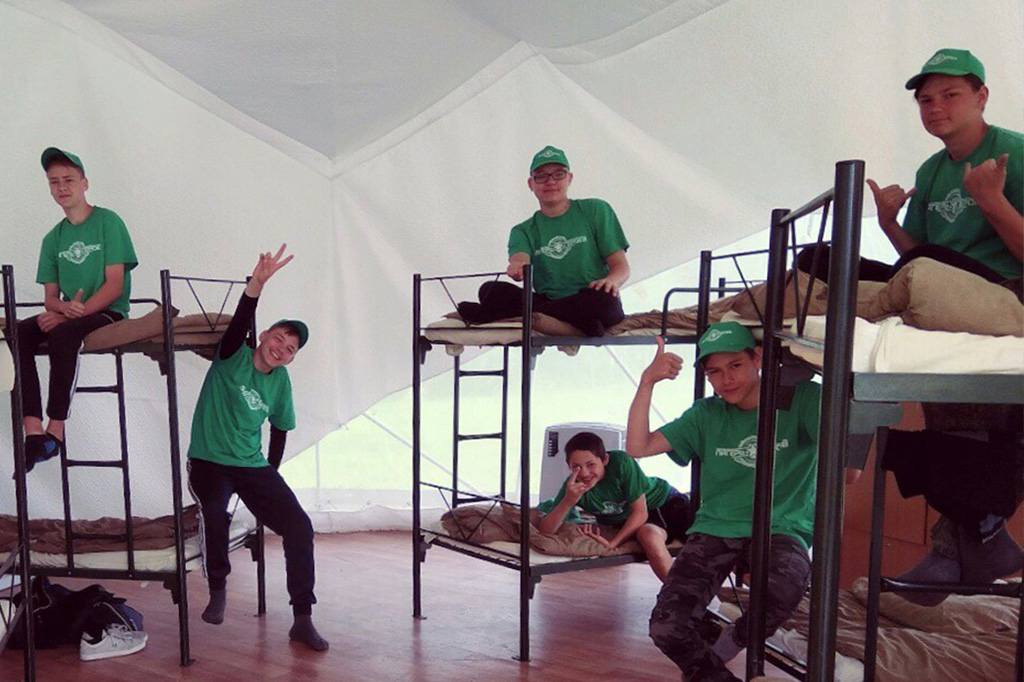 22 It closed in September after the Corps filed for Chapter 11 bankruptcy.
Mustard Seed Hill
Community Ventures acquired the former school for $450,000 on November 9, 2016, and began transforming the dilapidated campus into Mustard Seed Hill. 25 The historic Allen House was renovated into an event space for weddings and special events while the second floor became office space for the non-profit 25 while the gymnasium was restored for use by the Bourbon Christian Academy with a total project cost of $8.5 million. 26 Financing was derived from a $3 million bank loan, tax credits, grants, and fundraising. Mustard Seed Hill was dedicated on June 11, 2018.
Community Ventures plans to renovate a third building into ten guest rooms for weddings and corporate retreats and restore a fourth building so that it could start a boarding school. 26
Gallery
Share
Sources
- Lannen, Steve.
 “Historic military academy surrenders, closes doors.” Herald Leader [Lexington] 18 Aug. 2006. Web. 23 Aug. 2006.
 - Lannen, Steve. “Millersburg military school to stay closed.” Herald Leader [Lexington] 19 Aug. 2006. Web. 23 Aug. 2006.
- “Administration.” Millersburg Military Institute. 14 Feb. 2004. Web. 23 Aug. 2006.
- Newspaper clippings in a scrapbook kept by Lavina Letton.
- Lewis, Alvin Fayette. History of Higher Education in Kentucky. Washington, 1899. 237.
- Welch, James R. History of Education in Bourbon County. Diss. University of Kentucky, 1933. N.p.: n.p., 1933.
- Lewis, Alvin Fayette. History of Higher Education in Kentucky. Washington, 1899. 126-127.
- Ibid., 127
- Perrin, W. H. History of Bourbon, Scott, Harrison and Nicholas Counties. Chicago, 1882. 127.
- Ibid., 238.
- Lewis, Alvin Fayette. History of Higher Education in Kentucky. Washington, 1899. 126-130.
- “Background.” U.S. Army Cadet Corps. 2012. Web. 6 Dec. 2012. Article.
- Lewis, Alvin Fayette. History of Higher Education in Kentucky. Washington, 1899. 238-239.
- Millersburg College Catalogue. 1915-1916.
- Clarke, Nannie Deye. Bourbon the beautiful. 1927. 5, 13.
* Primary source for 4-15 above: Booth, Marietta and Mrs. Price Houston Jr. History of Millersburg, Kentucky. n.d. - “Education for Life and Leadership.” Millersburg Military Institute. Brochure.
- Scott, Jeanie. “Best chose Millersburg because of choice location.” Bourbon Times [Paris] 2 Dec. 1996: 1, 18. Print.
- Warren, Jim. “Summer military outfit purchases Millersburg site.” Herald Leader [Lexington] 12 Sept. 2008. Web. 12 Sept. 2008.
- Warren, Jim. “Millersburg Military Institute saved by eBay.” Herald Leader [Lexington] 12 Sept. 2008. Web. 12 Sept. 2008.
- “Millersburg Military Ball.” United States Army Cadet Corps 2009. 9 June 2009.
- “Parade of Cadets.” United States Army Cadet Corps 2009. 9 June 2009.
- Kocher, Greg. “Former Millersburg Military Institute files for bankruptcy, canceling master commissioner’s sale.” Herald-Leader [Lexington], 30 Sept. 2015.
- “Military academy to close temporarily, will re-emerge as Millersburg Military Institute.” KyForward, 11 Dec. 2014.
- Kocher, Greg. “Planned rebirth of Millersburg Military Institute this fall is uncertain after years of turmoil.” Herald-Leader [Lexington], 7 Feb. 2015.
- Musgrave, Beth. “Millersburg Military Institute gets a new owner and a new life.” Herald-Leader [Lexington], 28 Nov. 2016.
- Musgrave, Beth. “Can the renovation of Millersburg Military Institute revive this tiny Kentucky town?.” Herald-Leader [Lexington], 8 Jun. 2018.
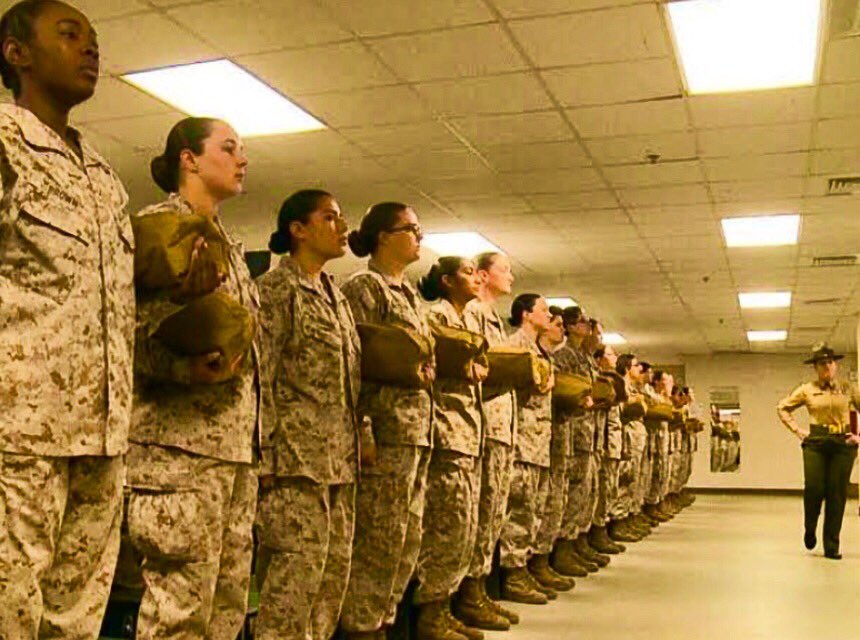 “Historic military academy surrenders, closes doors.” Herald Leader [Lexington] 18 Aug. 2006. Web. 23 Aug. 2006.
 Washington, 1899. 126-130.
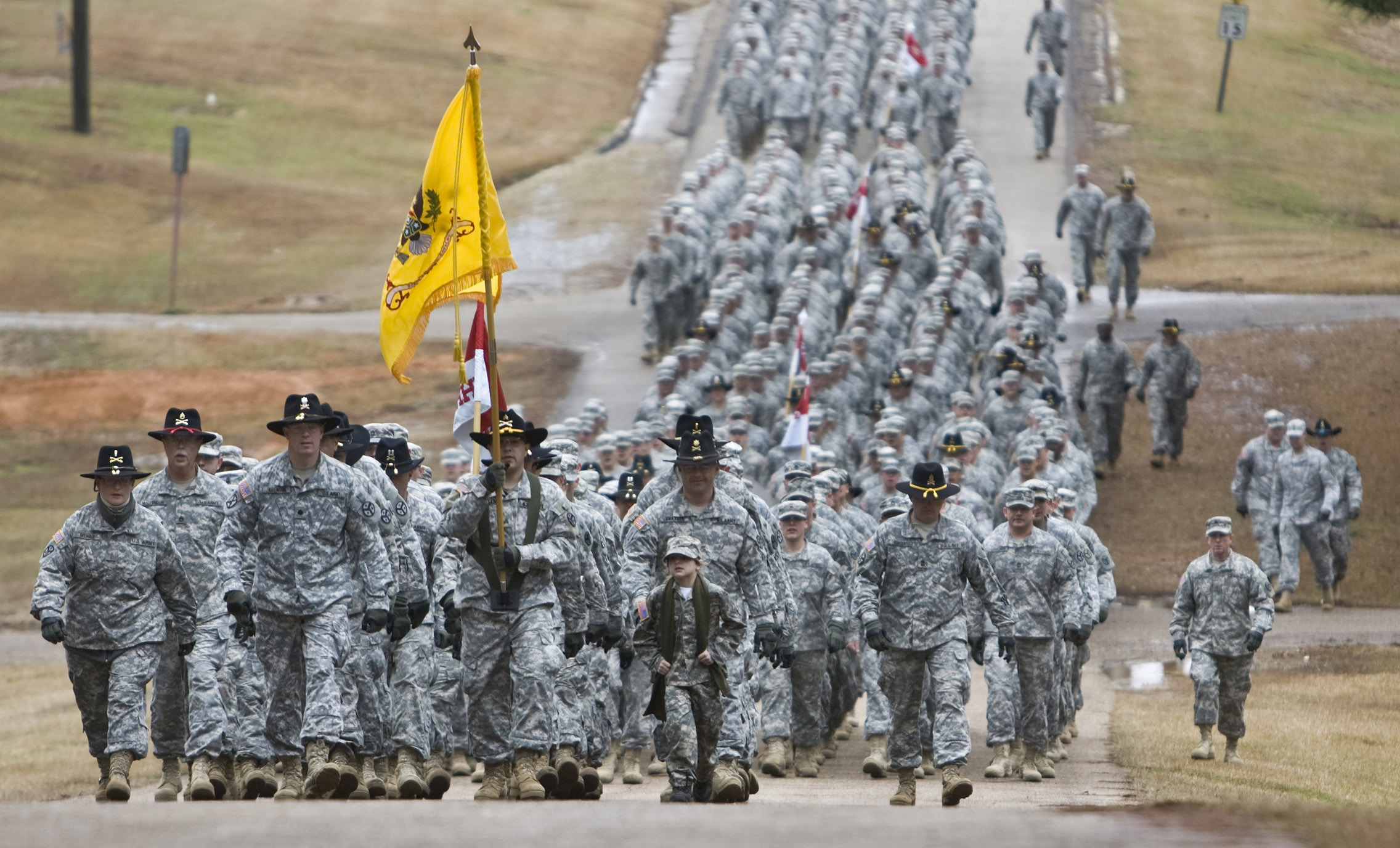 9 June 2009.
Military education in the USA in the project of Sarah Blessener — Bird In Flight
After visiting the military-patriotic camps in Russia, Sarah Blesener, an American, traveled the same way in her native country.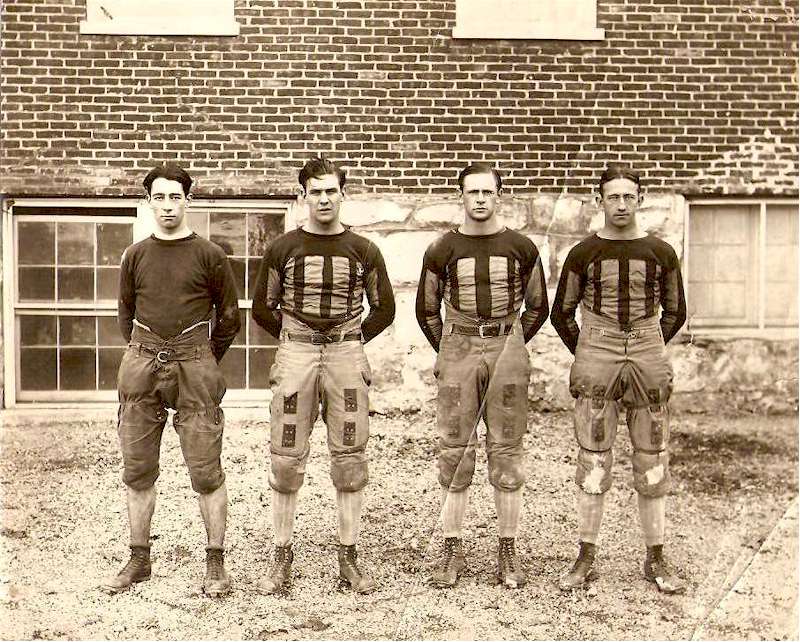 The photographer traveled to 12 states to find out how teenagers are raised to be future soldiers and simply patriotic citizens.
Sara Blasener
27 years
American documentary photographer. She has appeared in The Guardian, The New York Times, The Observer, Newsweek, Wired, Der Spiegel, Zeit, Amnesty International and TIME.
In 2017, the total defense budget of NATO countries amounted to almost a trillion dollars. Two-thirds of the funding comes from the United States, the state with the largest military budget in the world; it also allocates 3.5% of its GDP for military needs.
The states are also laying in the defense an impressive human resource: the number of military-patriotic camps and clubs in the country is growing. More and more new children come there who want to learn how to shoot, delve into military history, and in the future, perhaps become military personnel.
— A few years ago I filmed patriotic camps abroad. When I published the Russian pictures, the American media began to almost point a finger: they say, look how they do it all in Russia, they are rabid nationalists.
But there are similar, if not identical, patriotic education programs in the US. Why is what we consider patriotism in our own country, in relation to others we call nationalism? With such thoughts, I decided to shoot the next part of the project in the States.
Why do we call patriotism in our own country nationalism in relation to others?
There are several military-patriotic camps in America, and the JROTC program, a reserve officer training corps, is popular in high schools. I started with the Young Marines, a non-profit patriotic program that teaches young children about the military.
Gradually one program led me to another; I learned about some from conversations, since not all programs are widely advertised. I traveled to 12 states (New York, Virginia, Pennsylvania, Texas, Utah, Arizona, Minnesota, Wisconsin, North and South Dakota, Kentucky, Nebraska) and photographed participants in 10 state patriotic education programs.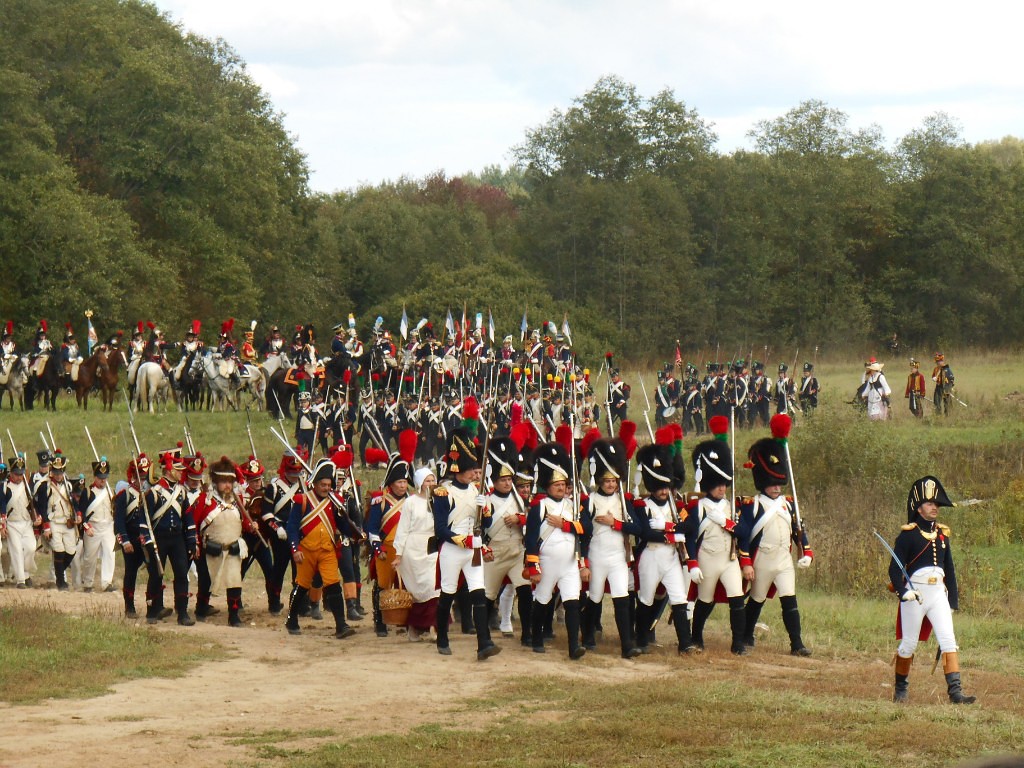
Pupils can stay in summer patriotic camps from five days to five weeks.
Camps were located both in cities and in rural areas. Some of them are summer, some function during the school year, and some only work on weekends. Schoolchildren can stay in summer patriotic camps from five days to five weeks. Participation in programs is free throughout the country.
Each camp has its own goals and objectives. In some children, they want to introduce the lifestyle of the military: enhanced military training, constant training, the development of tactical skills and shooting skills. Others emphasize history, the study of the Constitution, and “American values.” There are also those who study religion more and how to live in the USA according to its norms.
In general, it turned out that there are more patriotic camps and clubs in the States than in Russia. But less is known about them. It turned out to be much more difficult to get access to these camps in the United States than in Russia.
I spent a year on the American part of the project. I needed different opinions, different views. I even went to pick up the children from the camps to their homes to shoot without a uniform and in a different setting.
It turned out to be much more difficult to get access to these camps in the USA than in Russia.
Some program participants come from military families themselves, others go to camps and clubs to serve in the army. Someone just wants to unwind or comes for company with friends. It cannot be said that these children are from unhappy families.
All pages – Unionpedia
All pages – Unionpedia
New! Download Unionpedia on your Android™ device!
Install
Faster access than a browser!
All pages Previous (Tazakendi (Marneuli municipality, Alkendi)) Next (Taysaev, Kazbek Kutsukovich)
From: